In this article
Cozy can mean a soft folding scarf, a substantial sofa throw or a textured band you enjoy handling. Those objects do not all need the same fabric. A low compact stitch, a ribbed surface and a field of raised posts can look equally inviting while asking different things of your yarn, hands and finishing routine.
These fifteen stitch directions help you compare those differences before choosing a winter project. They use US names where applicable, and the selected pattern must define its actual repeat. The photographs illustrate texture families rather than verified stitch diagrams. Warmth, softness and yardage depend on the complete materials and fabric, so use a finished sample to judge them instead of relying on a stitch name or a plush-looking image.
Choose the kind of comfort you need
For a scarf, feel a finished sample against ordinary clothing and fold it around itself. For a throw, consider its larger area and storage bulk. Neither softness nor warmth can be read reliably from the names waffle, thermal or puff. Use those names to find a technique, then assess the complete yarn-and-fabric combination.
1. Half-double crochet fabric

Half-double crochet offers a relatively low stitch with more height than single crochet in US terminology. It can be a useful starting point for a scarf or a plain winter throw when you want repetition without elaborate relief. Warmth still depends on the yarn and finished fabric. Make a sample, inspect the gaps and feel its drape before choosing a whole project’s materials.
2. Back-loop single-crochet ribs
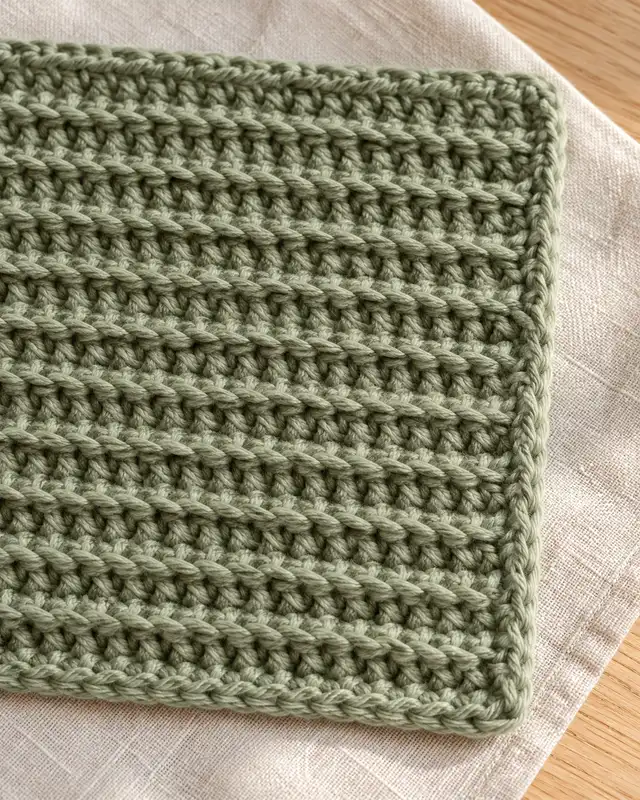
Back-loop single-crochet ribbing creates a corrugated surface through deliberate loop placement. It is worth considering for a band or narrow accessory when you want visible ridges without tall grouped stitches. Identify the back loop from the working position rather than from a fixed side of a photograph. Check the sample’s stretch and direction before using the ribs to determine a fitted size.
3. Back-loop half-double ribs
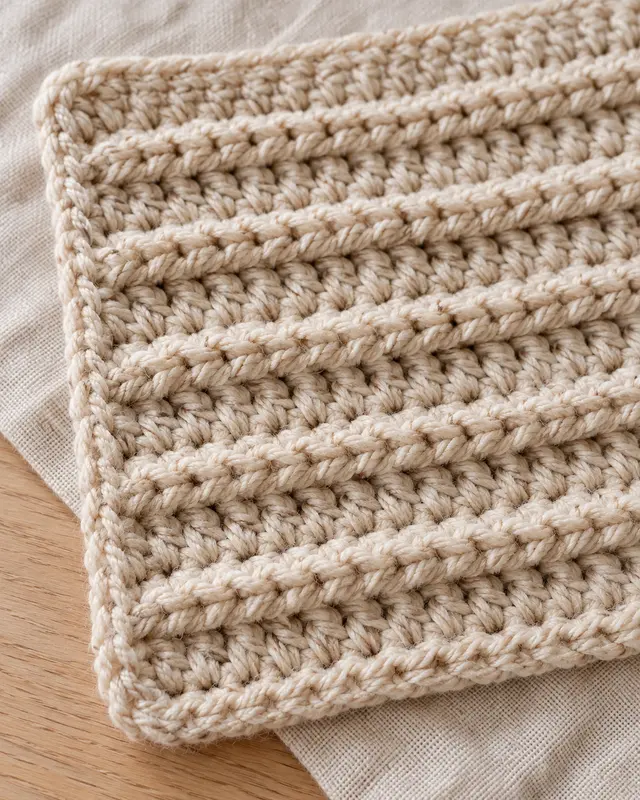
Back-loop half-double crochet produces a different ridge and scale from a single-crochet rib. The taller stitch changes the distance between rows and the feel of a folded sample. Follow the pattern’s exact loop placement, since half-double fabric offers more than one possible insertion point. Compare the edge and recovery after gentle handling before deciding that the texture suits a cuff or scarf.
4. Moss stitch

Moss stitch combines short stitches and chain spaces into a small repeating surface. Color changes can make it look woven, while one color keeps the texture quieter. It is not automatically a wind-blocking fabric: inspect the actual openings in your sample. Read the first and last stitch instructions carefully so the neat interior repeat does not gradually turn into an uneven scarf edge.
5. Lemon-peel texture

Lemon-peel texture alternates stitch heights to make a lightly pebbled fabric. It is a useful direction when you want texture that is less pronounced than bobbles or cables. Different patterns arrange their edges and turning chains differently, so use one complete version. Check several repeats after the intended finishing process; the visual pebbling alone does not tell you how soft the yarn will feel.
6. Suzette-style paired texture

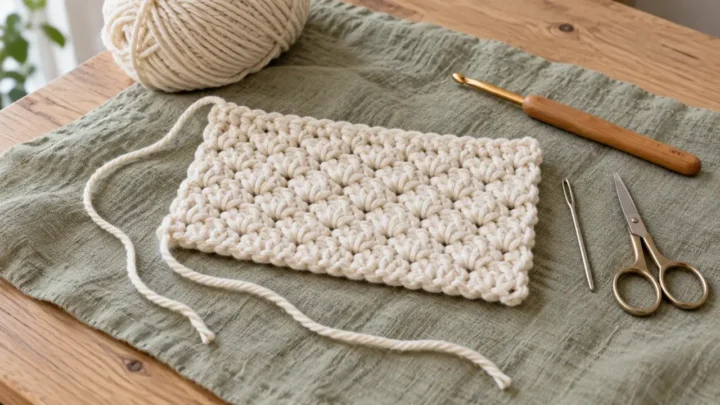
Suzette-style texture nests paired stitches into a repeating surface with a small diagonal rhythm. It can make a plain accessory feel more detailed without using large raised ornaments. Learn where each pair is anchored and how the next row locates it. Keep the first sample narrow enough to count, then inspect its thickness and drape before extending that repeat into a larger winter project.
7. Alpine-style raised points
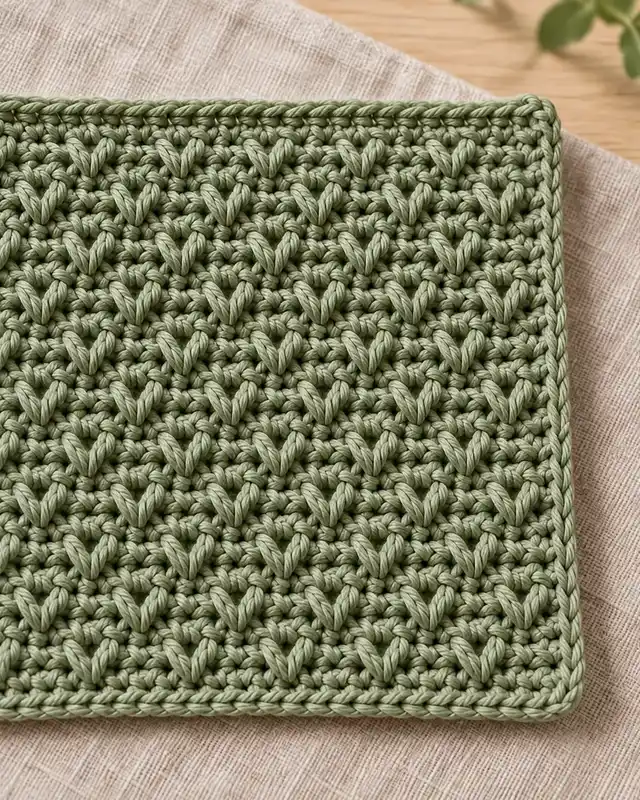
Alpine-style fabric uses raised post stitches against a lower ground to produce pointed relief. This adds placement decisions beyond basic rows, making a visible practice sample useful before a blanket. Read which previous row supplies each post and keep the background count steady. Compare the reverse and total weight as well as the front; a striking texture may be more substantial than you want.
A useful comparison before adding more relief
| Sample check | What it helps decide |
|---|---|
| Folded thickness | Whether the fabric suits a narrow accessory or a substantial throw |
| Visible spaces | Whether the actual surface offers the coverage you want |
| Reverse side | Whether both faces feel suitable for ordinary use |
| Finished measurements | A sound basis for the chosen pattern and size |
8. Waffle-grid texture

A waffle grid creates small recessed squares framed by raised crochet lines. The recognizable surface depends on consistent post placement and repeat alignment. Work enough rows to see complete squares, including the edge treatment, before judging the texture. For a winter accessory, consider the bulk at folds and seams, and use the actual sample to estimate materials rather than assuming all textured fabrics consume alike.
9. Basketweave posts
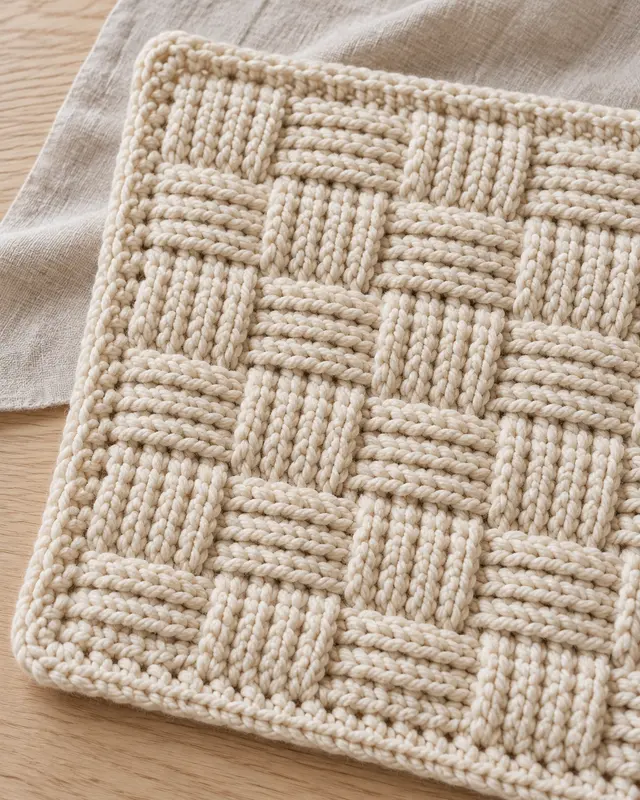
Basketweave crochet alternates groups of raised and recessed posts to form block-like fields. Its rhythm is broader than a narrow rib, so the sample should contain several whole blocks. Track the row where each group changes direction. This is a considered choice for a substantial throw, but check drape and reverse-side appearance before choosing it for an accessory that must fold closely around the body.
10. Front-post rib columns

Front-post rib columns make the lines themselves the main feature. They can create a strong lengthwise impression even when the object is a simple rectangle. Follow the specified post and background stitch arrangement, and pay attention to how the first and last columns finish. The finished ribs should be evaluated with the intended yarn; a raised surface does not establish a particular amount of stretch.
11. Sparse bobble fabric
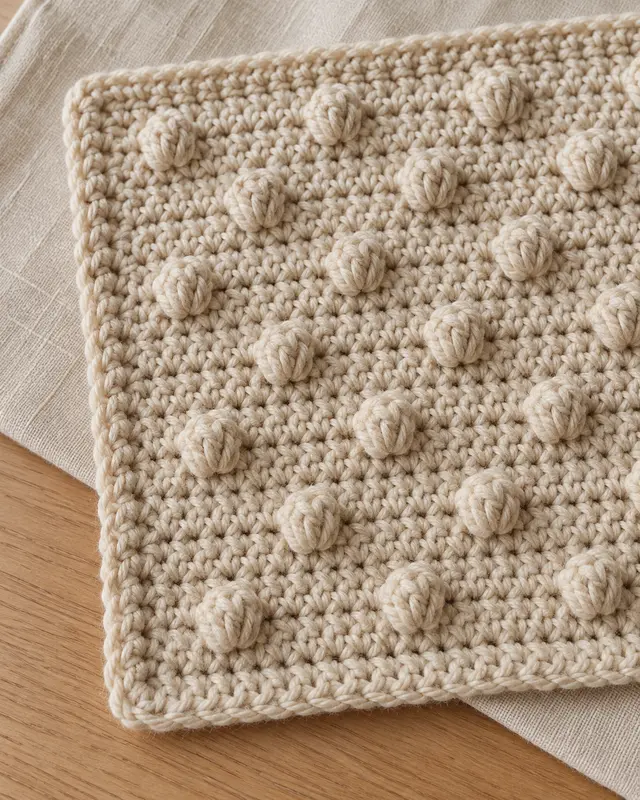
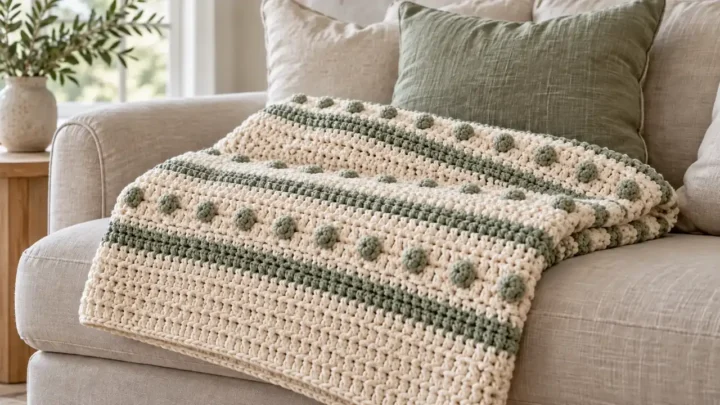
Sparse bobbles add small tactile accents while leaving much of the ground plain. That can be a useful compromise when an all-over bobble fabric feels too heavy visually. Practice the group and its closing action so each accent remains consistent. Count the ground stitches between accents, inspect the reverse and consider whether the extra relief suits the person’s preferences rather than treating texture as universally comfortable.
12. Puff-stitch rows
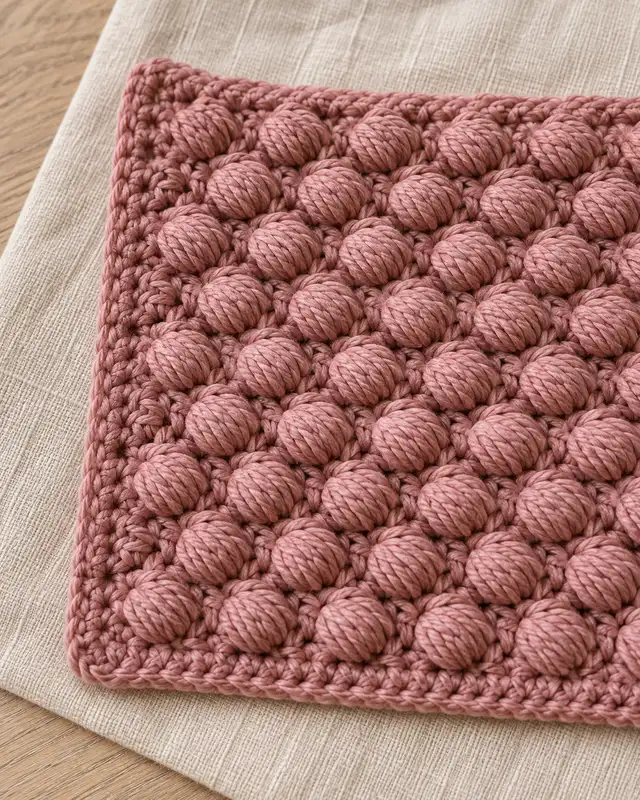
Puff-stitch rows create soft-looking raised groups made from gathered loops. The photograph cannot establish their exact loop count, so follow the pattern’s definition and keep the working loops consistent. Try the repeated motion on a small piece before a long scarf. Inspect how the puffs settle after compatible finishing and remember that their yarn requirement needs a sample-based estimate, not a guess from appearance.
13. Popcorn-stitch accents

Popcorn stitches form distinct compact clusters that stand away from the background. Their closing method differs from a bobble or puff, even when all three look rounded in a distant image. Use the definition supplied by the chosen design. A few accents can be enough for a winter panel; check their attachment, spacing and effect on folding before making a large all-over field.
14. Star-stitch texture
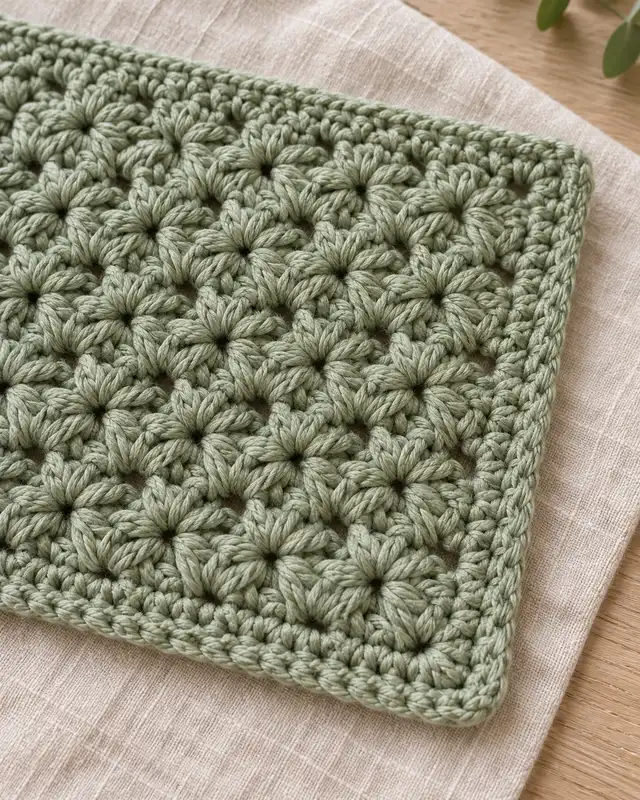
Star-stitch fabric has a grouped-loop texture whose repeat needs careful reading. Start with a version that explains the first group, the joining points and the return row clearly. The sample should show more than one complete repeat before you assess its appearance. Keep the edge count under review, and choose a smooth visible yarn while learning the structure rather than hiding unfamiliar placements in a fuzzy strand.
15. Crochet cable panel

A crochet cable panel brings crossings and raised posts into one focused area. It is a later step after you can identify stitch posts and track a repeat reliably. Work the cable in a small panel with plain margins before planning a whole garment or blanket. Inspect the crossings, reverse and finished thickness; a successful decorative sample still needs suitable measurements and assembly for the final project.
Keep the first project smaller than the learning task
A cable swatch or a complete textured band lets you concentrate on the unfamiliar motion. Once the count, edges and finishing work, choose the project size from the pattern. Changing the hook, yarn and texture at the same time makes the comparison harder to interpret.
Compare the compact-fabric options for bags and decor, or the raised-blanket collection for larger layouts. The technique hub keeps the related lessons together.
- How to Fasten Off, Weave in Ends and Fix Uneven Edges
Learn to fasten off, weave in crochet ends and diagnose uneven edges, with clear checks before cutting, trimming or adding a border.
- 23 Decorative Crochet Stitch Combinations for Throws
Find 23 crochet stitch combinations for throws, pairing plain fabric with ribs, cables, bobbles, mesh and motifs while planning stable transitions.
- 19 Openwork Crochet Stitch Ideas for Lightweight Projects
Browse 19 openwork crochet ideas, from mesh and V stitches to loop lace, with practical notes on tools, openings, shaping and finished drape.
- 13 Dense Crochet Stitches for Bags and Home Decor
Compare 13 compact crochet fabric options for bags and home decor, with practical checks for gaps, flexibility, seams, lining and construction.
- 21 Crochet Border and Edging Ideas for Blankets
Compare 21 crochet blanket borders, from narrow frames to shells, picots and sampler bands, with useful checks for corners, spacing and flatness.
- Crochet Stitches: A Guide to Essential Techniques
Understand essential crochet stitch names, choose a fabric for your project and plan a practice swatch before trying more complex textures.
- 25 Crochet Stitches and Texture Ideas to Explore
For a quiet surface, compare the basic rows and linen direction. For relief, look at ribs and raised blocks. For open space, investigate V-stitch and shell repeats.
- 17 Crochet Stitches for Beginners to Practice
Begin with a chain and plain single crochet rows. Compare half double crochet next. Save grouped repeats and openwork until keeping a steady count feels comfortable.
- Single and Half Double Crochet: Step-by-Step Lessons
Learn the difference between US single and half double crochet, with small-row practice, loop-count checkpoints and clear edge-counting conventions.