In this article
A basket is easier to make useful when its footprint matches a real place. A shallow drawer organizer needs different sides from a tall shelf bin, and a divided tray solves a different problem from a handled yarn basket. Start with the objects and the available space, then choose the construction.
These twenty-five directions compare storage roles and shapes. They are concepts for selecting complete patterns, not verified load limits or universal reinforcement instructions. The photographs show empty or modestly arranged examples and cannot establish structural performance. Measure the actual shelf, drawer or surface, including access and clearance. Make a representative base-to-side sample before scaling up, and keep the intended contents, any lining and compatible care in the same plan.
Measure the space that remains after access
Include drawer closing clearance, shelf lips and the room needed to lift the basket out. List the actual modest contents before choosing height. The home planning hub keeps that job clear, and the basket-shape guide addresses the base and wall before added decoration.
1. Round desktop basket
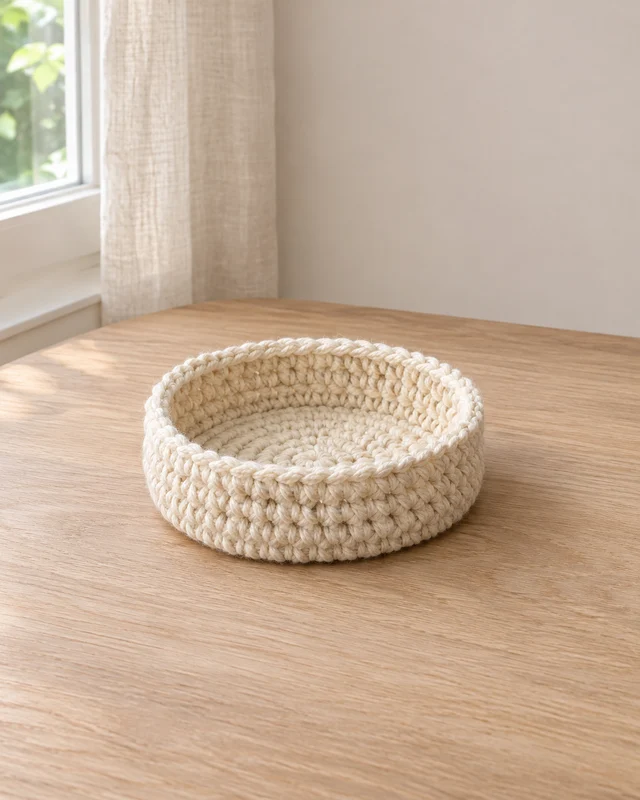
A low round basket keeps small desk items within easy reach. Choose the diameter from the objects it will actually contain, leaving room to see the bottom. The base and sides need a complete construction that rests naturally. A tidy empty circle cannot establish carrying strength or rigidity, so compare the assembled basket under a modest intended fill before repeating it.
2. Tall cylindrical storage bin
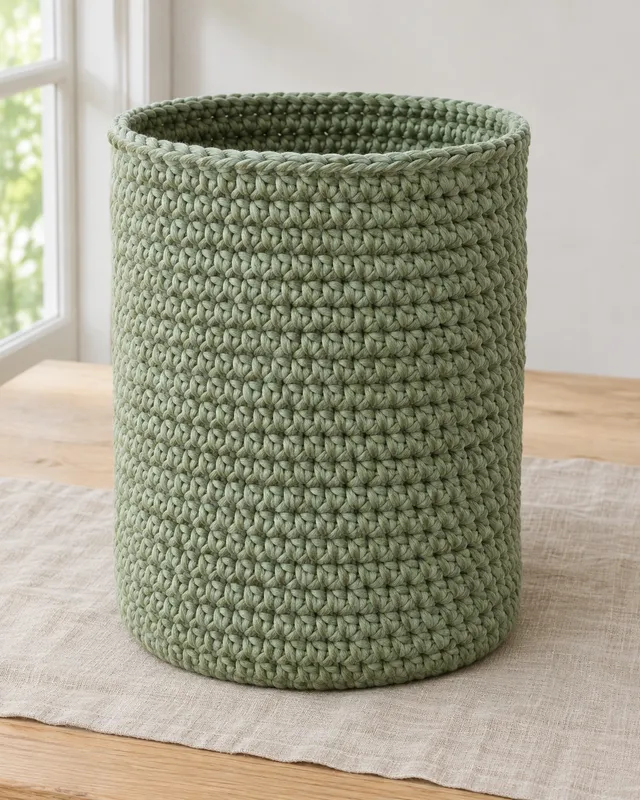
Tall cylindrical sides provide depth but can also reveal a fabric that does not support its own outline. Make a representative base-to-side sample and follow the pattern’s material guidance. Compare the opening and base with the intended storage space. A tall bin is not automatically useful for heavy contents, and a firm-looking photograph cannot supply a verified load rating.
3. Oval shelf basket
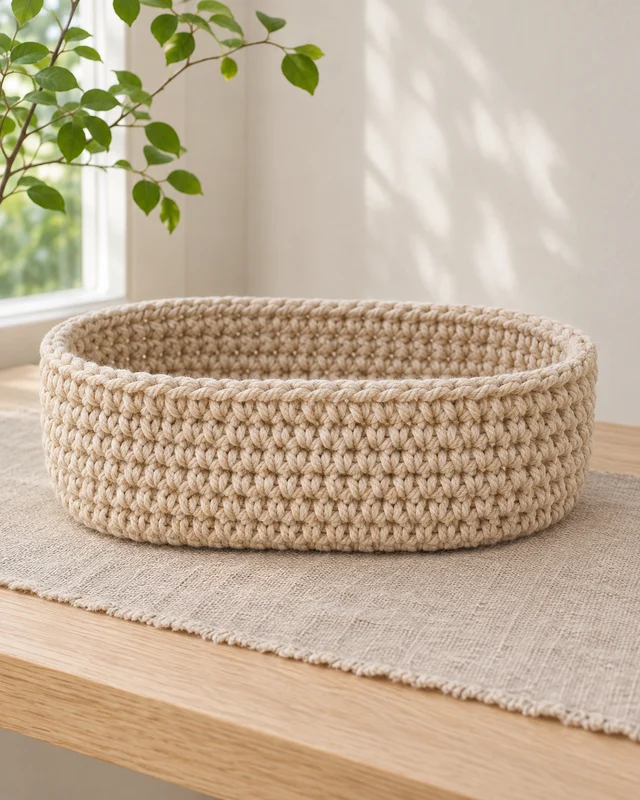
An oval footprint can use a narrow shelf more efficiently than a round basket. Measure the actual usable depth, including any door or shelf lip. The oval base’s increase distribution needs to lie naturally before sides are added. Keep the selected pattern’s counts and transitions together rather than trying to stretch a round construction into an elongated shape.
4. Square folded-corner basket
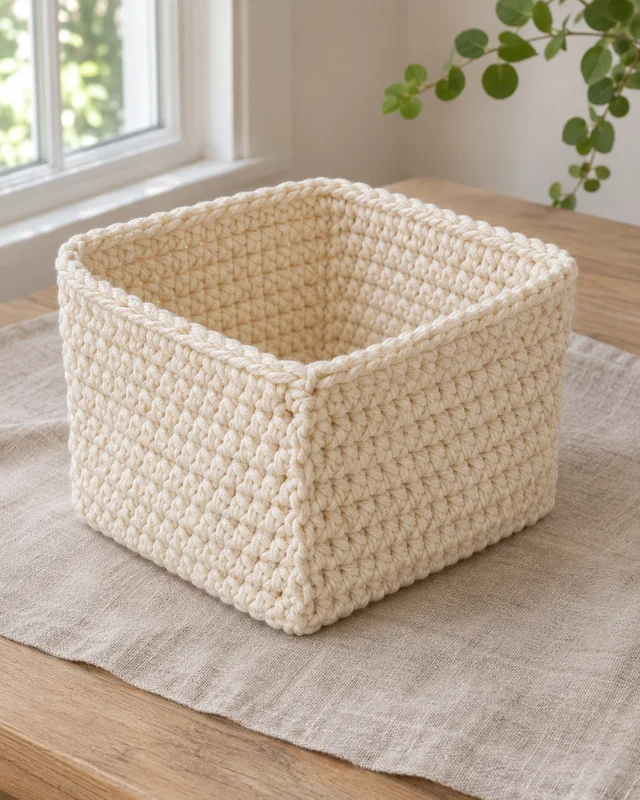
Defined corners make a square basket visually distinct and useful for orderly rows. Their folds or shaping must belong to the actual construction. Check that the base rests flat and the corners do not pull the sides unevenly. A square outline needs measurements on more than one edge, especially when the basket is intended to fit a specific compartment.
5. Rectangular drawer organizer
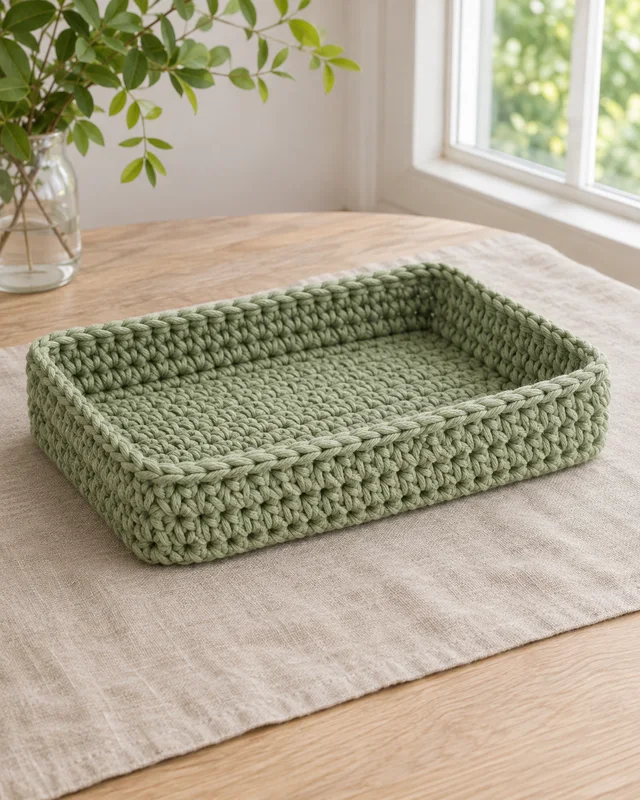
A shallow rectangular organizer keeps a drawer’s contents visible without adding unnecessary height. Measure the drawer with its closing clearance and any internal fittings included. The basket should sit freely rather than being forced into the space. Make the full base and sample corner before committing to the sides, since small differences become important in a fitted rectangular object.
6. Divided small-item tray
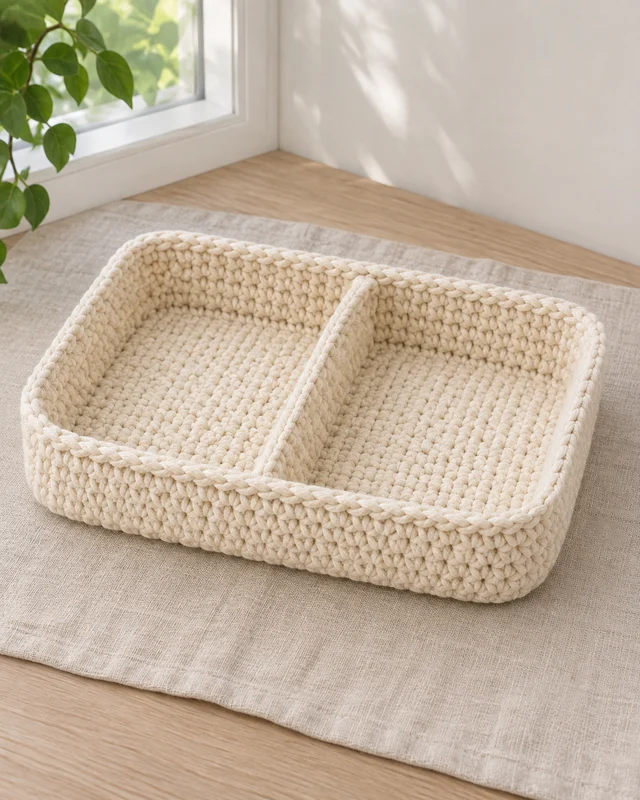
One divider can separate two small groups without requiring several separate baskets. Its attachment should reach the intended depth and allow the base to rest naturally. Plan it as part of a complete tray design. A strip joined only across the mouth may look divided from above while leaving the contents free to move between compartments underneath.
7. Nesting basket set
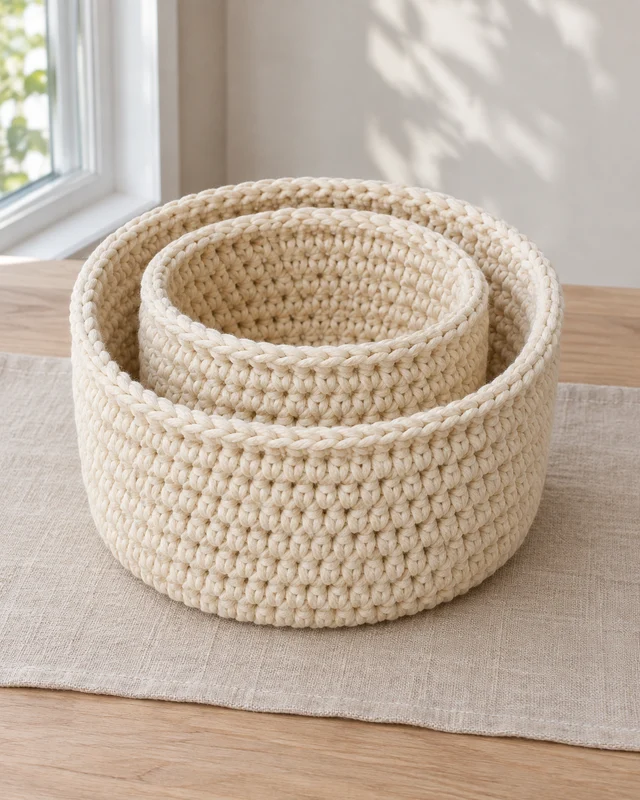
A nesting set needs the finished outside size of each smaller basket to fit the next one’s inside. Yarn thickness and folded rims can reduce that clearance considerably. Complete the smallest basket before finalizing the larger dimensions. This direction makes storage compact when empty, but each basket still needs its own sound base, side transition and supported finish.
8. Handled yarn basket
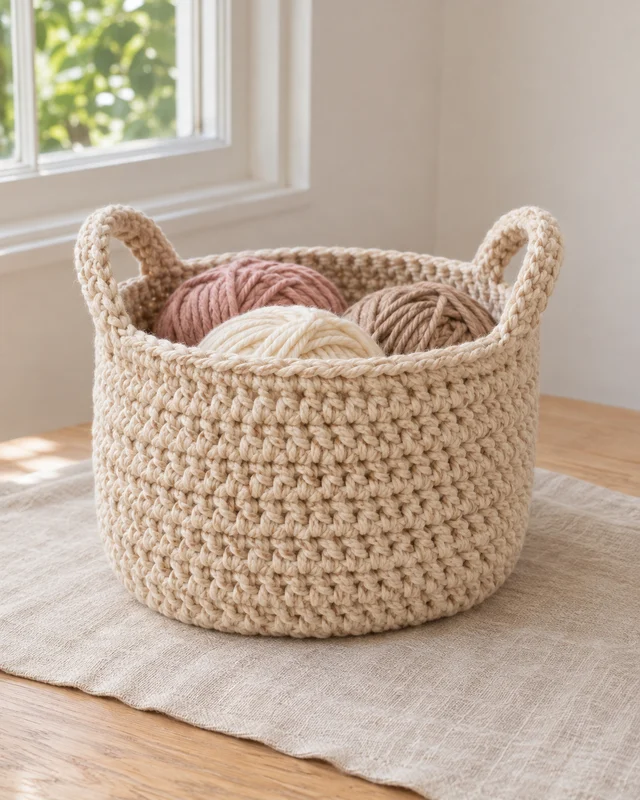
Short integrated handles can make a yarn basket convenient to move within a room. Their bridges and surrounding rim need a construction suitable for the intended modest contents. Keep needles and sharp tools in appropriate separate storage. Compare the filled outline and handle attachments without treating an ordinary usability check as proof of a carrying capacity.
9. Lidded round basket
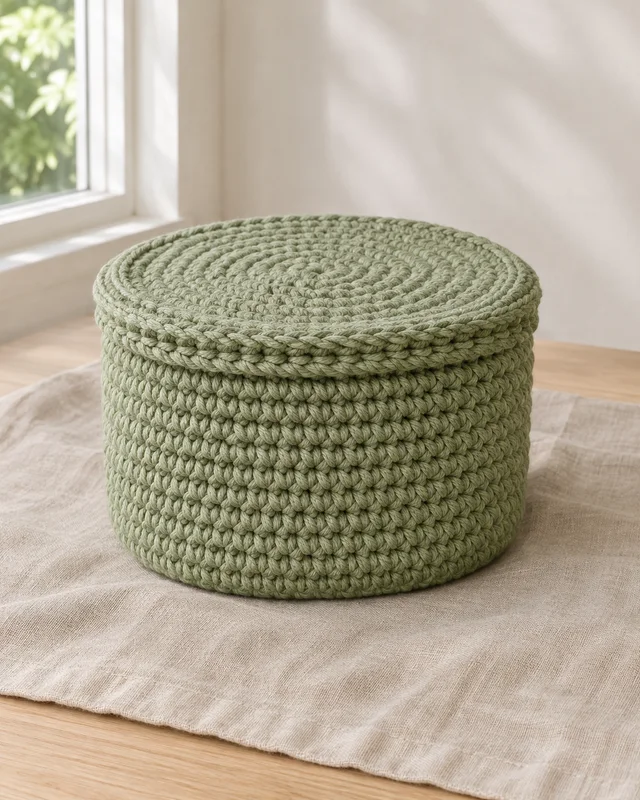
A fitted lid adds a second measured component and an opening that must remain easy to use. Complete the basket rim before judging the lid’s final fit. The edge should rest securely without forcing the sides inward. If the yarn changes after compatible care, compare both pieces again rather than assuming they will continue to match automatically.
10. Folded-rim basket
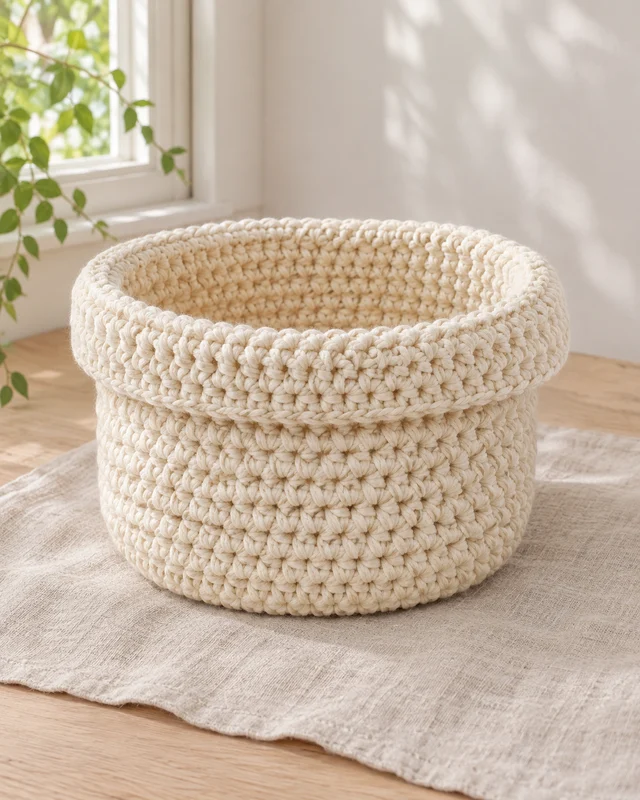
A folded rim gives the upper edge visual depth and can change the basket’s usable height. Its effect on firmness depends on the actual fabric and construction. Try the fold on a representative section before adding the full band. Keep the base dimensions and intended contents in view so a substantial-looking rim does not disguise unsuitable sides.
11. Color-block lower band
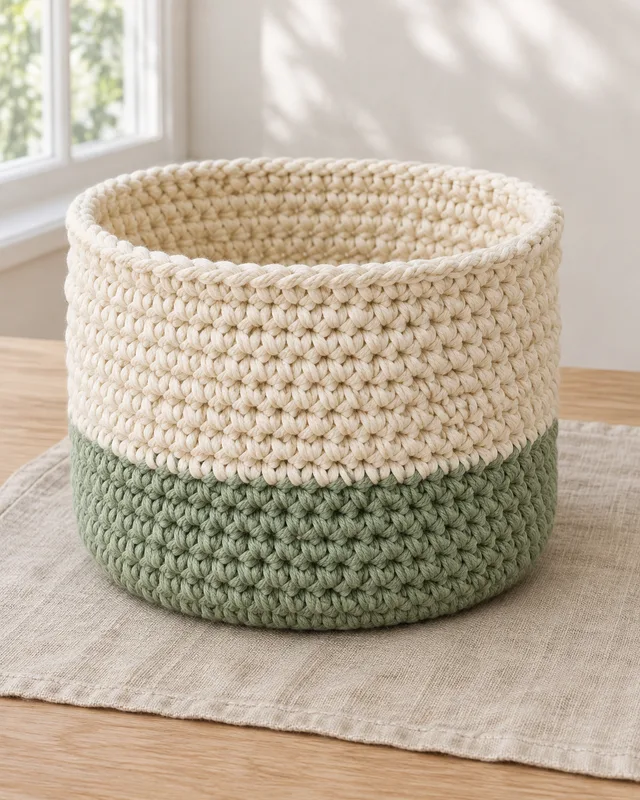
A broad lower color band divides the basket visually without adding a separate panel. Use compatible yarns and keep the color change from altering the stitch count. The base and side transition still need the actual pattern’s method. A stronger-looking dark band is decorative; color does not establish additional support or a different carrying limit.
12. Granny-panel basket

One motif panel can identify the front while the rest of the basket stays plain. The joined panel has to agree with the surrounding edge lengths and intended shape. Make a complete motif-and-join sample before building the whole body. Open square spaces may need a lining for small contents, which should be planned independently of the decorative center.
A rim cannot supply every kind of support
Check the base, side height and intended use separately. A folded edge may be part of a sound design, while a handle or wall loop introduces an additional connection. Use the complete construction for each. A firm-looking empty picture cannot establish carrying strength or the behavior of a much larger basket.
13. Wall pocket basket
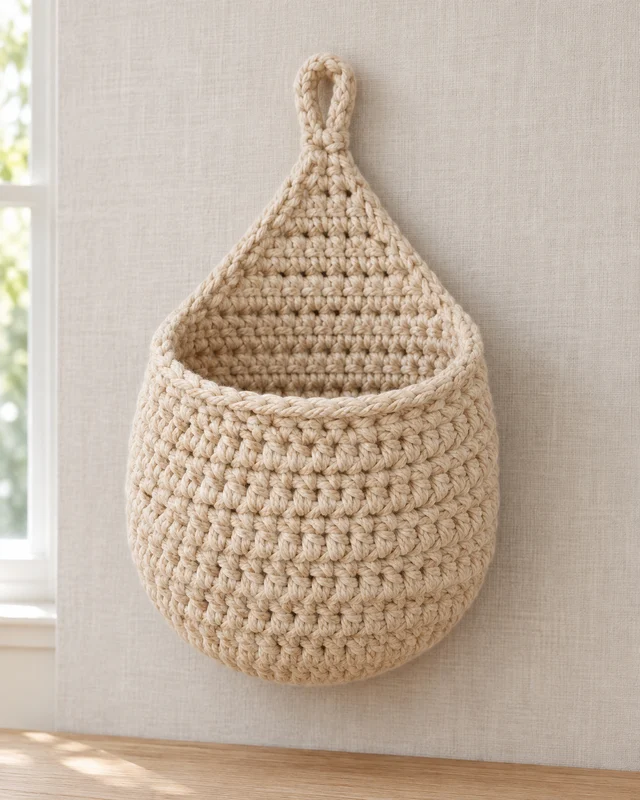
A wall pocket places the weight at a small hanging area rather than across a tabletop base. Its loop, backing and mount need an appropriate complete design. Keep the intended contents modest and the hanging point suitable for the actual surface. The attractive pocket face cannot establish support, and long loose loops should remain out of children’s reach.
14. Door-side catchall
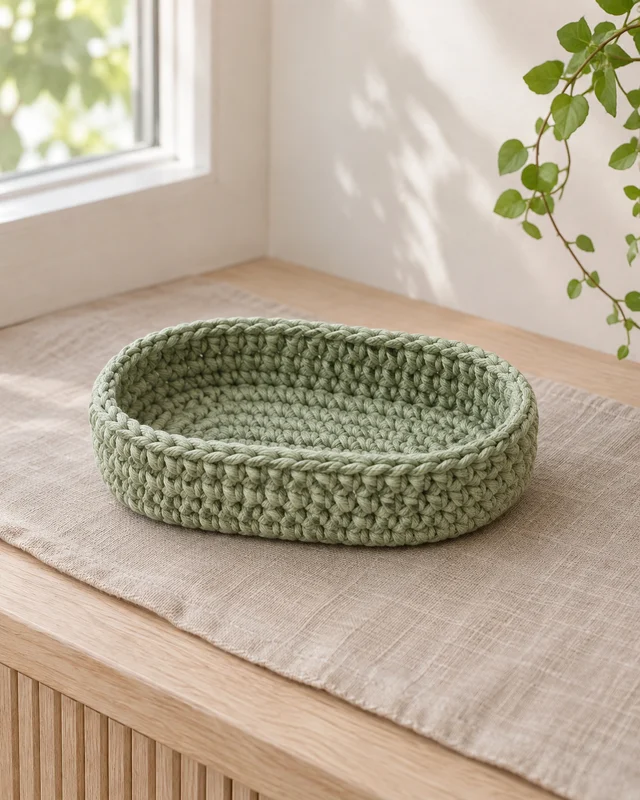
A low oval catchall can give a console a clear place for a few everyday items. Keep the footprint small enough to leave ordinary table use available. The base should rest evenly without relying on the contents to flatten it. Choose the object for its actual use rather than treating a decorative tray as suitable for every type of storage.
15. Low cable basket
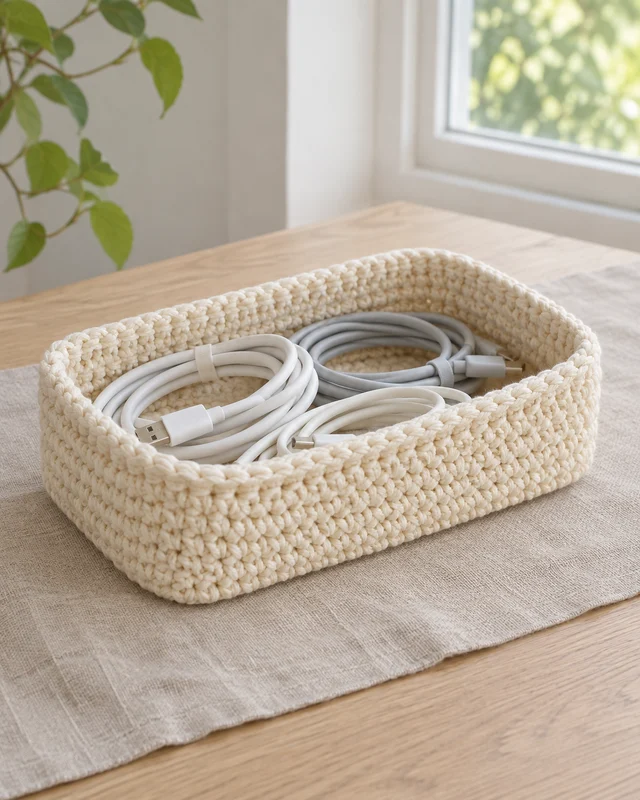
A shallow cable basket can keep a few unpowered cords together while leaving their ends visible. Use it for storage, with powered equipment and ventilation requirements handled separately. The low sides need a flat base and tidy rim. Compare the actual coils with the opening so the basket remains useful without compressing them or relying on an overly tight fit.
16. Two-handle laundry-size concept
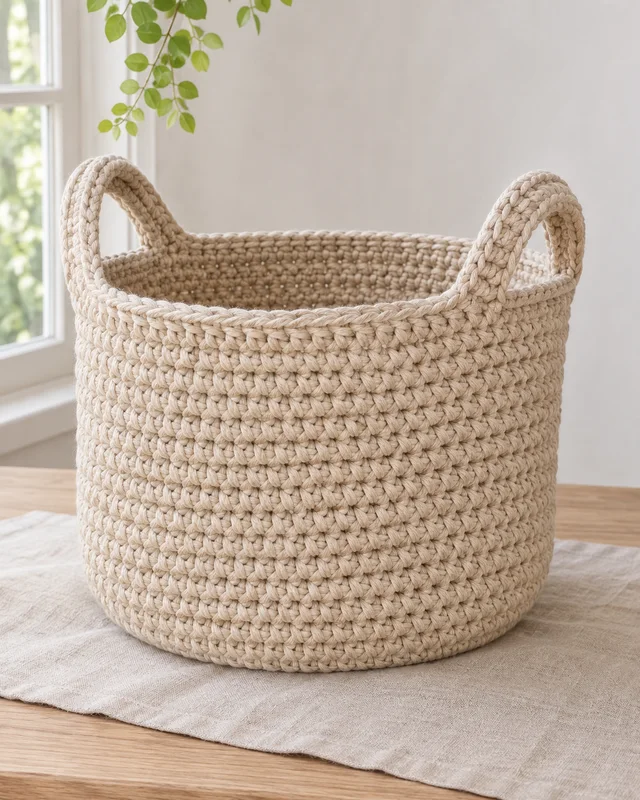
A larger laundry-style silhouette needs more structural planning than a small desktop basket. The handles, base and sides must suit the actual pattern and intended contents. A large empty image is not a load test. Make the specified samples and choose a complete supported construction; do not scale a small basket upward and assume the same fabric will behave identically.
17. Flat book basket
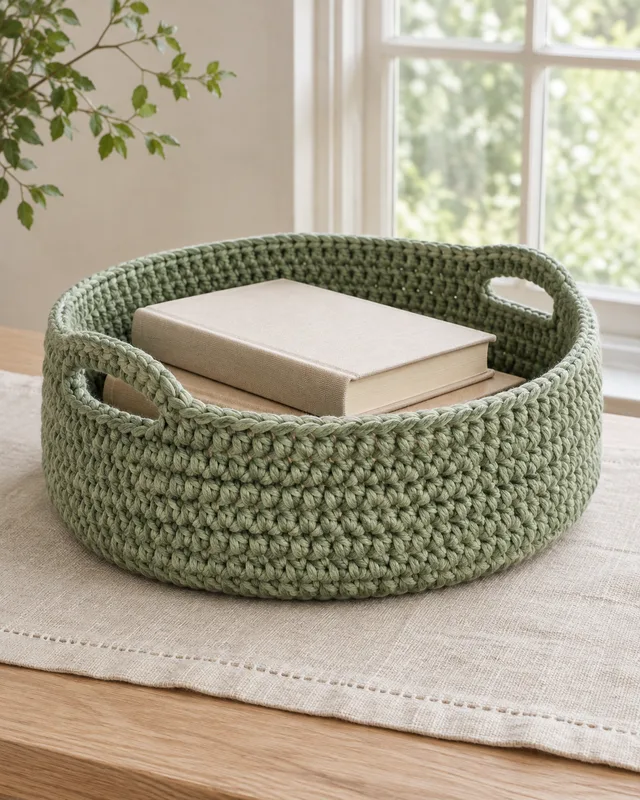
A wide low basket can hold a small group of books without hiding their edges. Check the actual book dimensions and keep the intended use on a stable surface. The basket is an organizer, not protective packaging or a carrying guarantee. A flat base matters because a decorative rolled edge cannot compensate for a floor that gathers beneath the books.
18. Rolled-towel basket
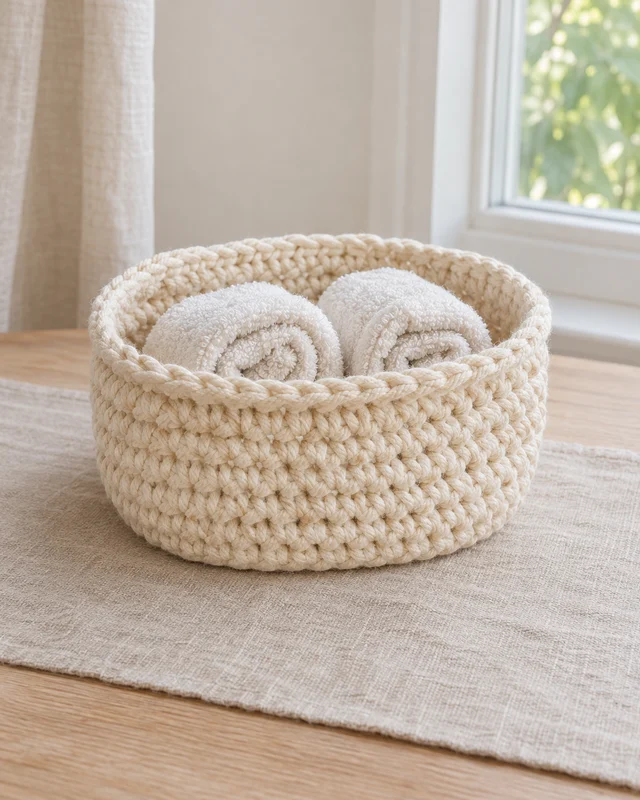
A towel basket benefits from an opening that admits the actual rolled cloths easily. Keep the storage area dry and choose compatible care for basket and contents. The low sides should support the intended arrangement without needing the towels to hold them upright. Complete the base-to-side transition before deciding how much extra height the basket really needs.
19. Nursery-shelf decor basket
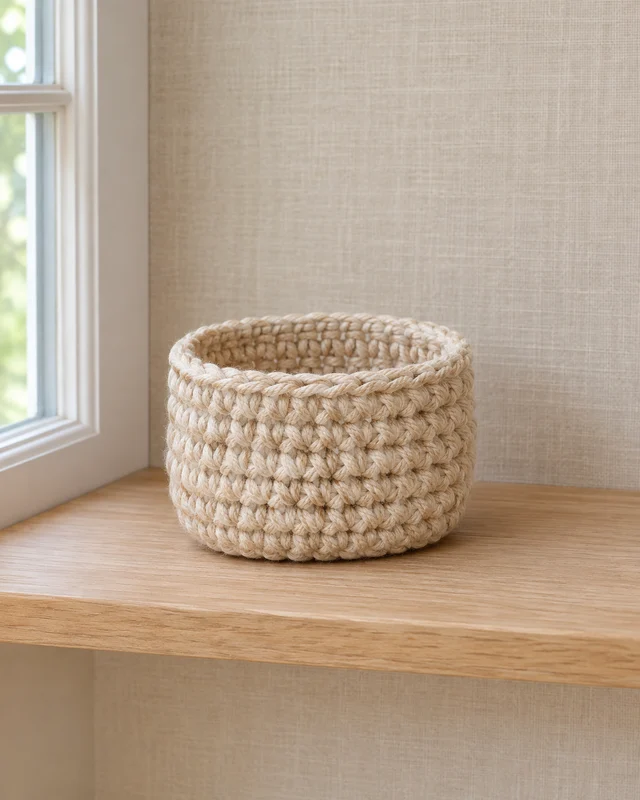
A small shelf basket can coordinate a nursery display without being a toy. Keep it empty or use it only for suitable adult-managed storage out of a child’s reach. The construction still needs tidy ends and no loose decorative components. Choose the shelf dimensions first, including access and clearance, rather than assuming a soft-looking basket is suitable for every nursery function.
20. Craft-tool divided basket
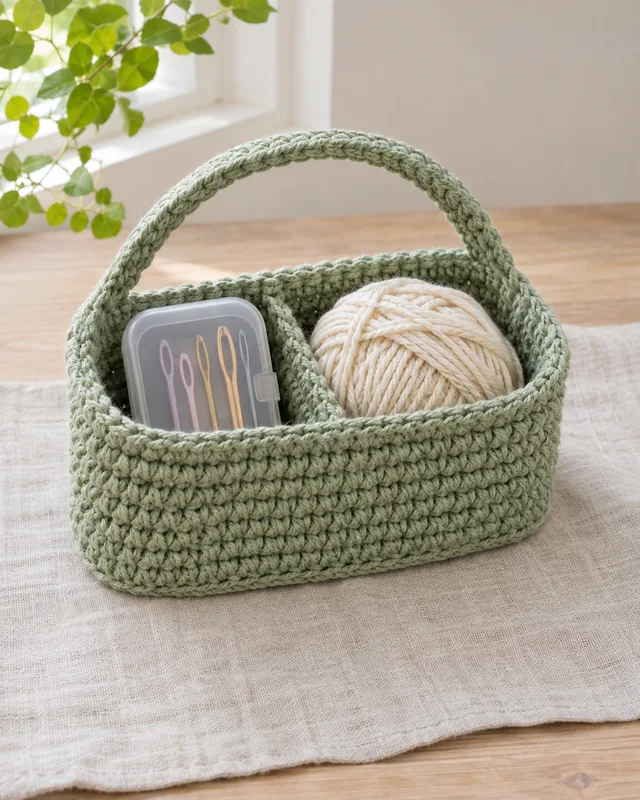
Two compartments can keep yarn and a closed tool case separate. The divider and base need a complete construction that remains stable when the contents are added. Store sharp tools in an appropriate case rather than relying on crochet gaps. Compare the compartments with the actual supplies before making several units for a shelf or craft cart.
21. Hexagonal basket
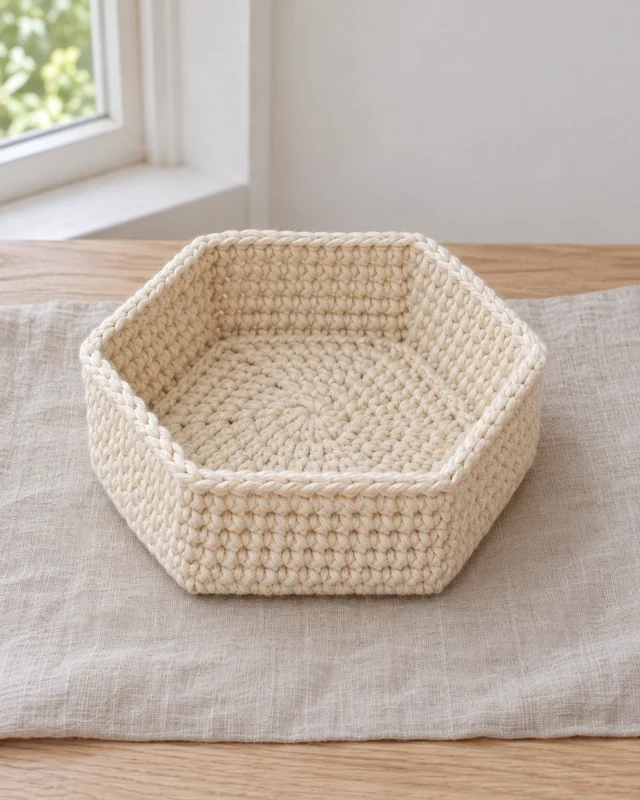
A six-sided base gives a basket a clear geometric outline. Its corner shaping needs consistent placement so the sides rise evenly. Check the flat base before continuing, then keep the transition counts recorded. The hexagonal footprint may leave unused space in a rectangular compartment, so compare the completed dimensions with the intended location instead of choosing the shape only for appearance.
22. Open-front shelf bin
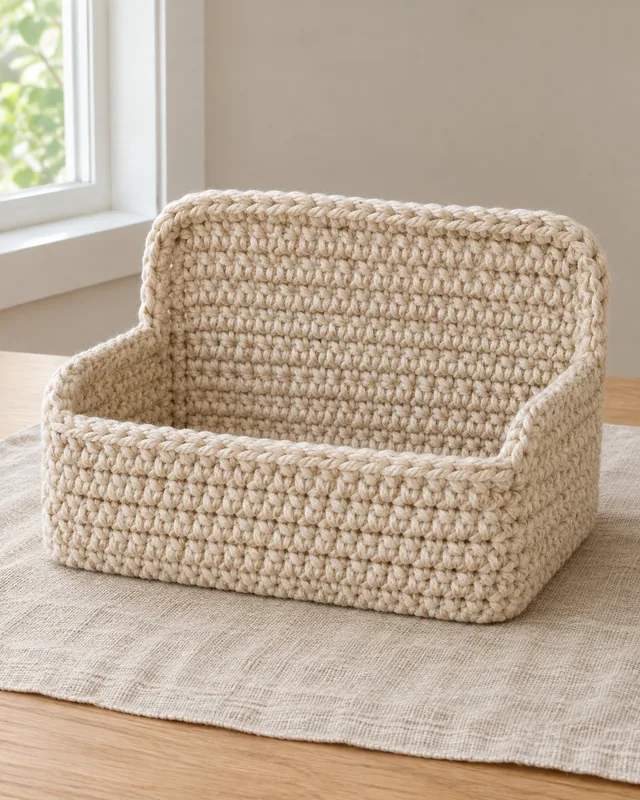
A lower front wall makes shelf contents easier to see and reach. The change in wall height needs a planned edge and supported corners. Check that the basket’s remaining sides rest naturally without pulling toward the open front. This is a specific construction direction, not simply stopping one side early in a pattern designed for an even continuous rim.
23. Small peg-style hanging basket
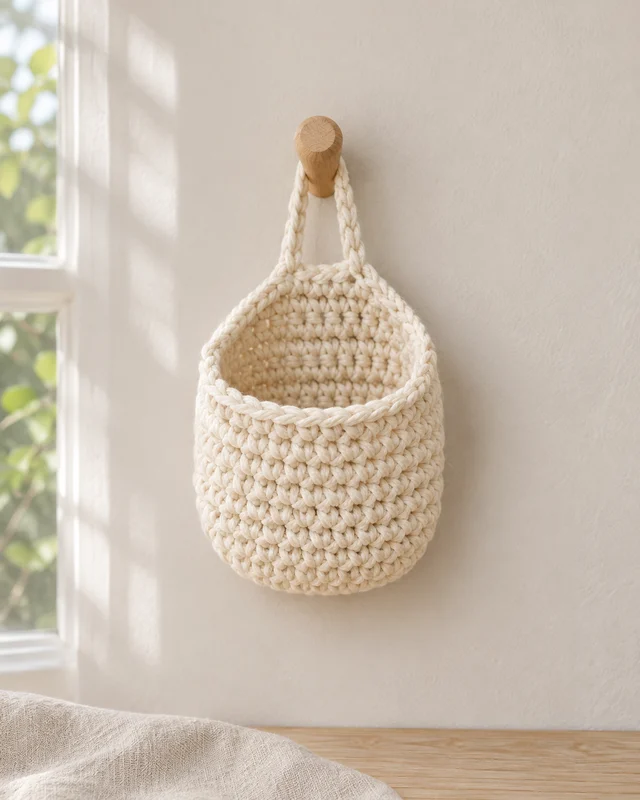
A small peg-hung pocket uses a short loop to keep the connection close to the backing. The peg and wall attachment must suit the actual modest contents independently of the crochet face. Keep the pocket clear of moving doors and children’s reach. Inspect the loop’s integration and the reverse before treating the decorative hanging pose as a finished storage system.
24. Wide rim catchall tray
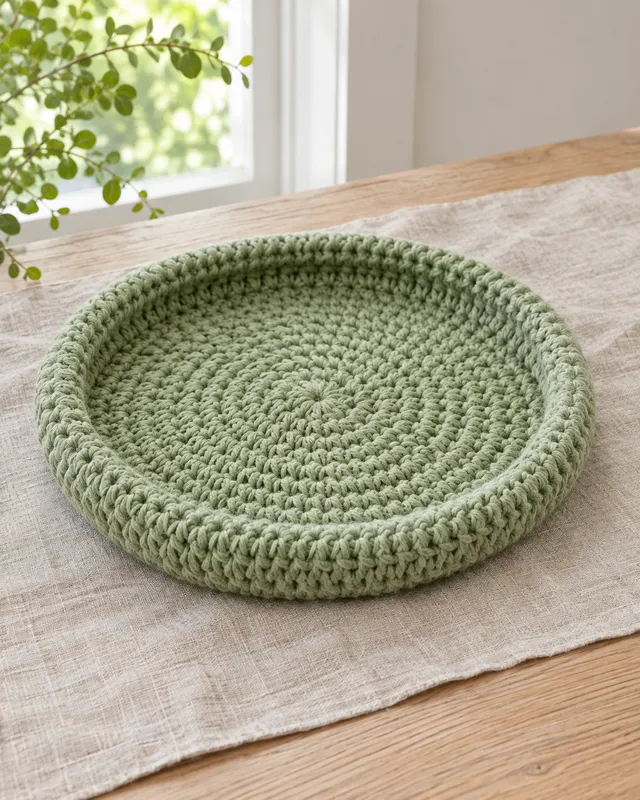
A broad rolled rim can make a shallow tray’s outline prominent while keeping the center open. Its usable interior is smaller than the total outer diameter, so measure both when planning contents. The roll should sit evenly without making the base rock. Follow the complete rim construction rather than adding bulk to hide a wavy or incorrectly counted perimeter.
25. Removable-lined basket
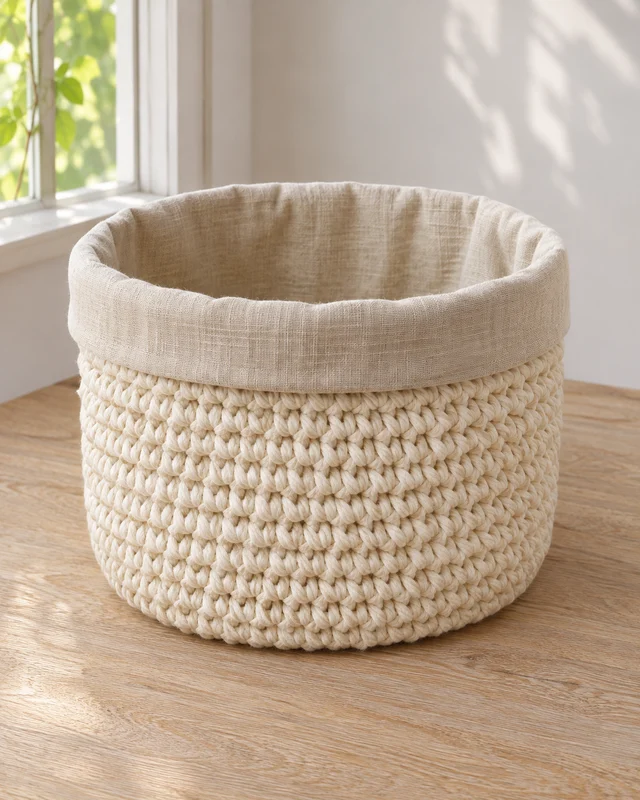
A removable liner can contain small items that would meet the crochet openings. Fit it to the actual interior without making it a tight suspended pouch. The liner should remain useful when the basket changes shape slightly under ordinary contents. Plan compatible preparation and care for both materials, and remember that containment does not establish carrying strength for the outer basket.
Keep the smallest useful construction as the reference
Finish the base-to-side transition and any representative attachment with the actual yarn. Compare empty flatness and ordinary modest storage use before making several units. The care guide helps include liners and finishes in the plan rather than choosing them after the basket is already complete.
- 15 Crochet Wall Hanging Ideas for Cozy Rooms
Explore 15 crochet wall-hanging ideas through shape, spacing, backing and mounting, with practical notes on finished dimensions and supported display.
- 21 Crochet Pillow Cover Style Ideas
Find 21 crochet pillow-cover ideas by opening, insert shape, texture and panel layout, with practical notes on fit, seams and removable construction.
- 19 Crochet Coaster Designs for Everyday Tables
Browse 19 crochet coaster designs through flat shapes, shallow textures and edges, with practical checks for useful size, care and actual table placement.
- Crochet Home Decor Ideas for Useful Handmade Spaces
Plan useful crochet home decor through storage, cushions, table textiles and wall displays, with practical routes for shape, fit, materials and care.
- 13 Crochet Soap Saver and Bath Accessory Ideas
Compare 13 crochet soap savers and bath accessories with practical notes on openings, dry storage, actual materials, cleaning access and complete patterns.
- How to Choose Fibers for Washable Crochet Home Projects
Choose fibers for washable crochet home projects with actual label care, complete samples, component checks and practical notes for the finished object.
- How to Make Crochet Baskets Hold Their Shape
Diagnose crochet basket shape through the base, sides and rim, then compare materials, transitions and supported finishes with a modest complete sample.
- 23 Crochet Table Runner and Placemat Inspirations
Explore 23 crochet runner and placemat ideas through footprint, repeats, borders and sets, with useful checks for flatness, dimensions and decorative use.
- 17 Crochet Plant Hanger and Pot Cover Ideas
Compare 17 crochet pot sleeves and hanger concepts, separating decorative fit from drainage, actual container weight, mounting and supported construction.