In this article
A bath accessory needs a realistic care routine as well as a pleasing stitch. A soap pouch must open, a cloth needs appropriate cleaning and a dry-storage basket belongs away from persistent splashing. Starting with those ordinary jobs makes the yarn and construction choices easier to assess.
These thirteen concepts are directions for suitable complete patterns and materials, not skin-care or hygiene claims. The photographs cannot establish absorbency, gentleness, drying time or waterproof containment. Choose for the actual personal use and follow the yarn and component instructions. Make a finished sample before producing several pieces, keeping removal, cleaning and inspection accessible. Small objects can still involve careful edges and closures, so the illustrated size does not determine the effort.
Plan the cleaning access before the texture
- Can the actual soap or container be removed?
- Which material care instructions apply?
- Can the object dry and be inspected appropriately?
- Is its job personal use or dry organization?
Use the washable-fiber guide for a documented sample. The home hub connects the broader material and placement decisions.
Contain soap through a usable opening
1. Drawstring soap pouch
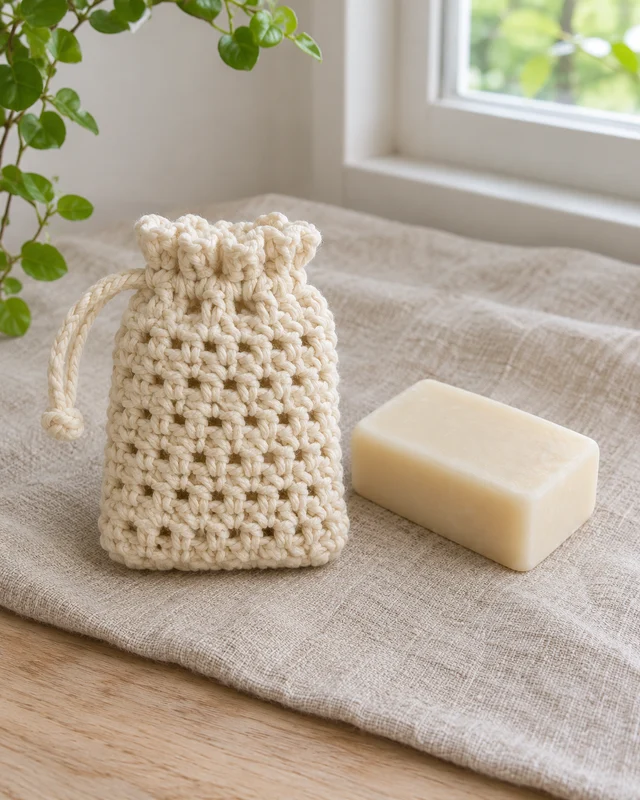
A drawstring pouch needs an opening that admits the actual soap without forcing the fabric. Keep the cord short and follow the complete design’s finish. The yarn and soap need a care routine that allows the pouch to be cleaned and dried appropriately between uses. A decorative picture cannot establish suitability for every skin type, soap or bathroom condition.
2. Open-mesh soap sleeve
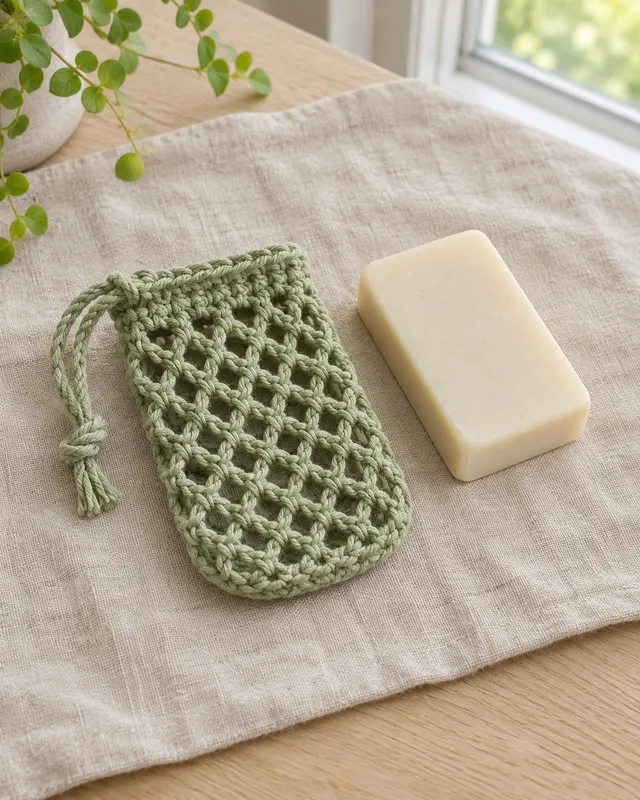
A mesh sleeve makes the soap visible while containing it within a repeated open fabric. Check the openings against the actual bar, including how it changes with use. The chosen construction should allow removal and cleaning. Airy crochet does not guarantee rapid drying in every setting, so assess the actual yarn and routine rather than relying on the photographed gaps.
Compare cloths and resting surfaces
3. Flat textured washcloth
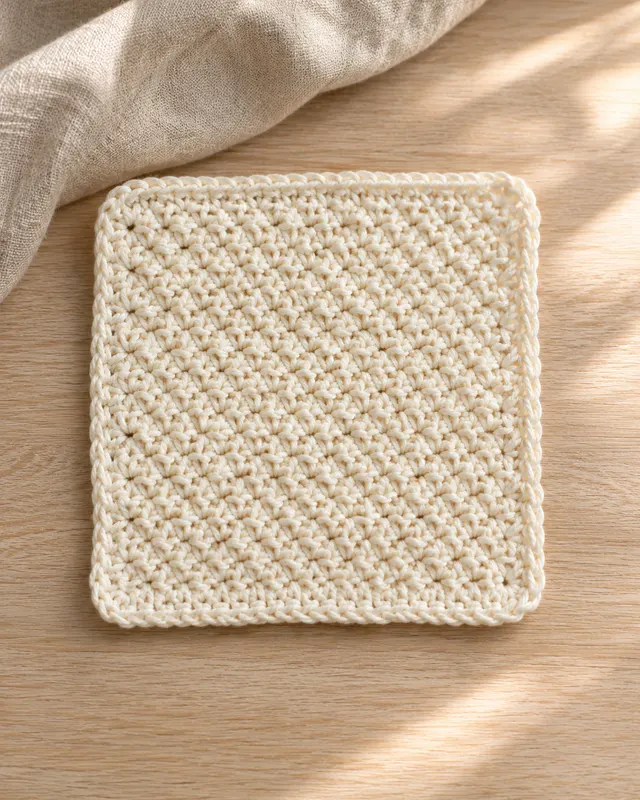
A flat textured cloth offers a simple shape for comparing the yarn’s finished feel. Keep the relief shallow and inspect the edges for secure ends. Choose materials and a care process appropriate to the intended personal use. Texture alone does not establish gentleness or exfoliating benefit, so avoid turning a stitch name into a skin-care claim.
4. Small round cleansing cloth
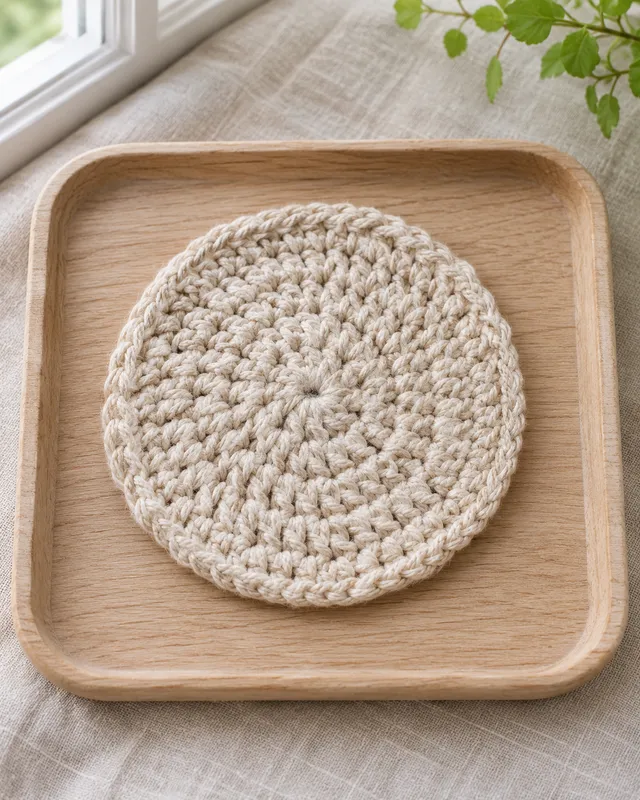
A small disk can be a compact washable cloth when the complete materials and construction suit that purpose. Check the finished surface and any center join before use. Keep the cloth’s cleaning and drying routine explicit. Small size does not make it automatically suitable for sensitive areas or every user; evaluate the actual finished textile rather than its soft-looking image.
5. Ridged hand cloth
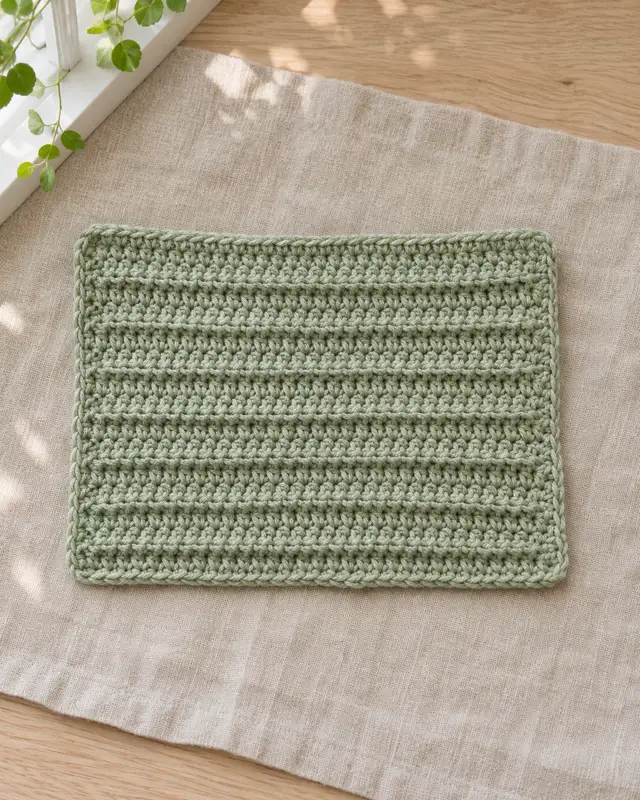
Shallow crochet ribs create a directional texture on a rectangular hand cloth. Sample the actual stitch repeat and compatible care before making a matched set. The finished fabric should remain manageable when wet and dry. Keep the intended use practical, without promising absorbency or a particular feel from the yarn category or raised surface alone.
6. Soap-rest mat
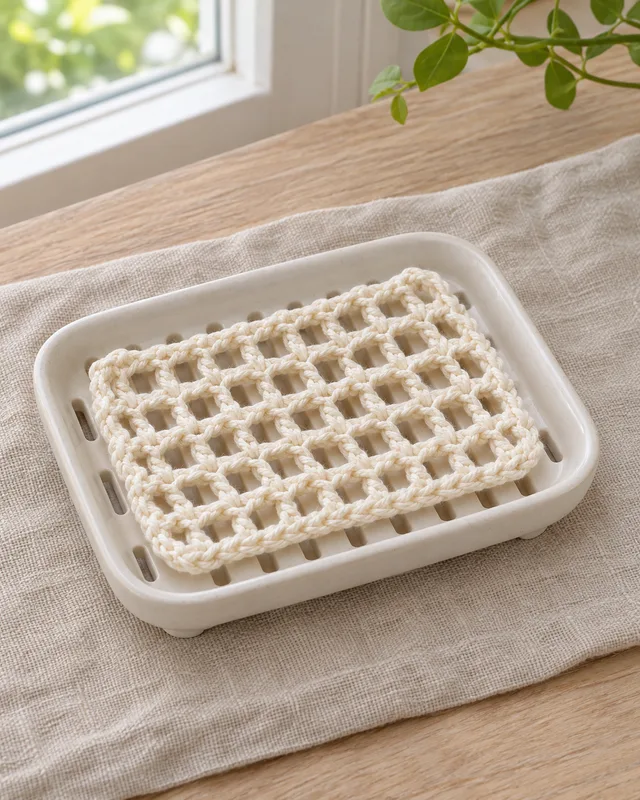
A separate draining dish keeps the soap’s resting surface distinct from the crochet decoration. The mat should not block drainage or create an inaccessible damp layer. Make removal and cleaning straightforward. A small open grid can be attractive, but its presence does not establish hygiene or protection for the counter beneath the complete soap-rest arrangement.
7. Loop-corner washcloth
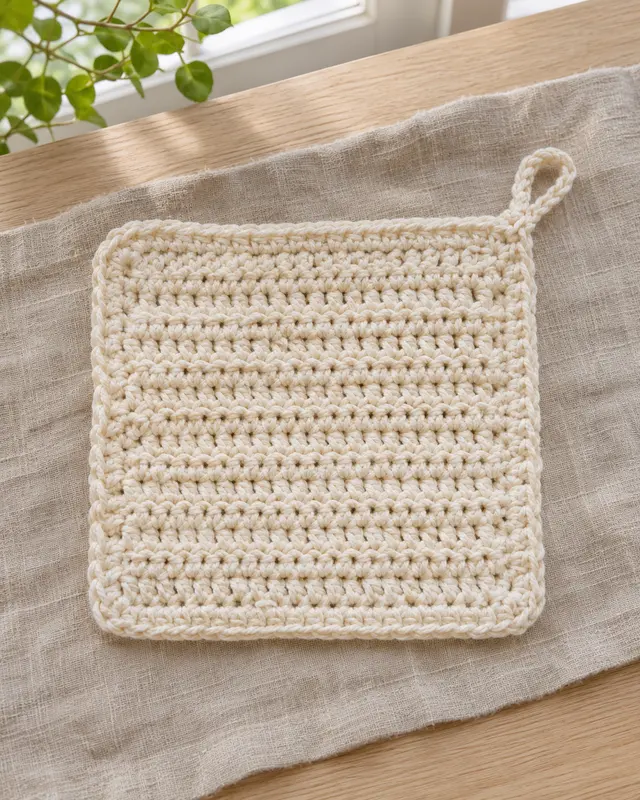
A short corner loop can make hanging convenient after the cloth is cleaned. It needs a secure connection and a suitable hook location where the textile can dry appropriately. Keep the loop’s job separate from the cloth’s main stitch pattern. Inspect both the loop and final ends during ordinary care, rather than assuming a small opening cannot wear or loosen.
Keep storage and travel containment separate
8. Two-compartment bath pouch
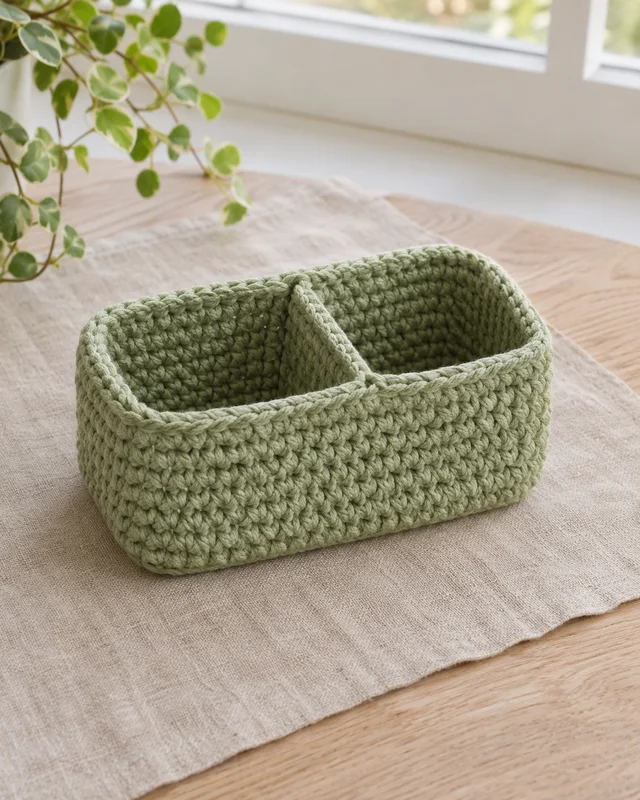
Two compartments can separate a modest set of dry bath items. Their divider and base need a complete construction that remains accessible for cleaning. Avoid storing damp contents indefinitely inside a textile pouch. Fit the organizer to the actual intended objects, with toiletries in suitable separate containers rather than relying on crochet to contain liquids or spills.
9. Travel soap wrap
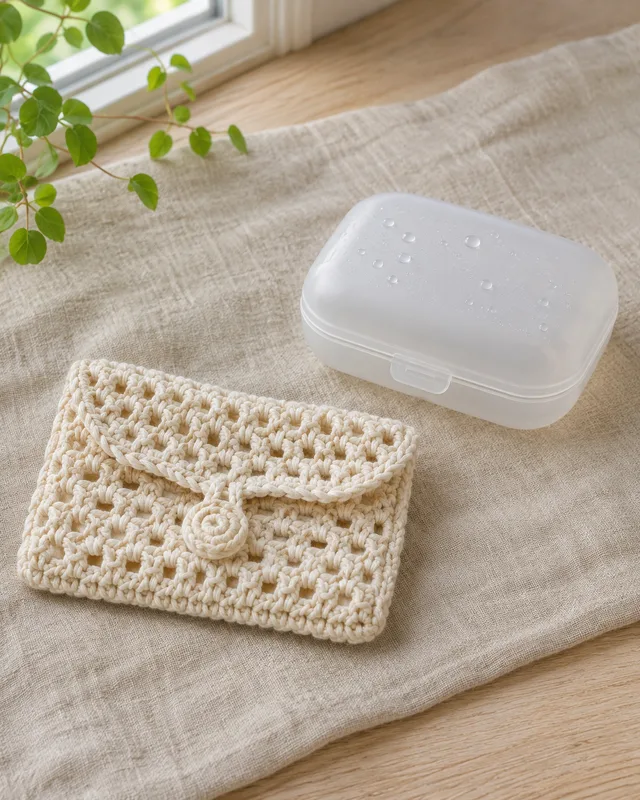
A flat wrap can keep a soap bar together for presentation, while a separate suitable case handles travel containment. Let the soap and cloth dry as their use requires before packing. The crochet is not a waterproof travel barrier. Choose the complete materials and care routine for the actual journey rather than treating the wrapped photograph as evidence of leak protection.
10. Hanging washcloth pocket
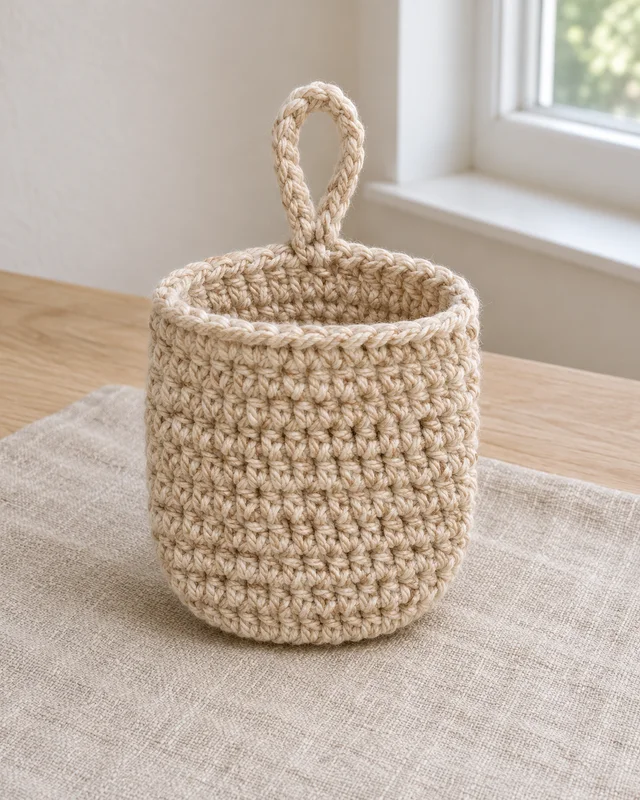
A small pocket and short hanging loop create a defined place for a dry cloth. The support needs to suit its modest contents and remain clear of moving fixtures. Keep the pocket removable or accessible for appropriate care. A decorative bathroom organizer should not become inaccessible damp storage simply because it is placed close to the object it holds.
11. Mini towel basket
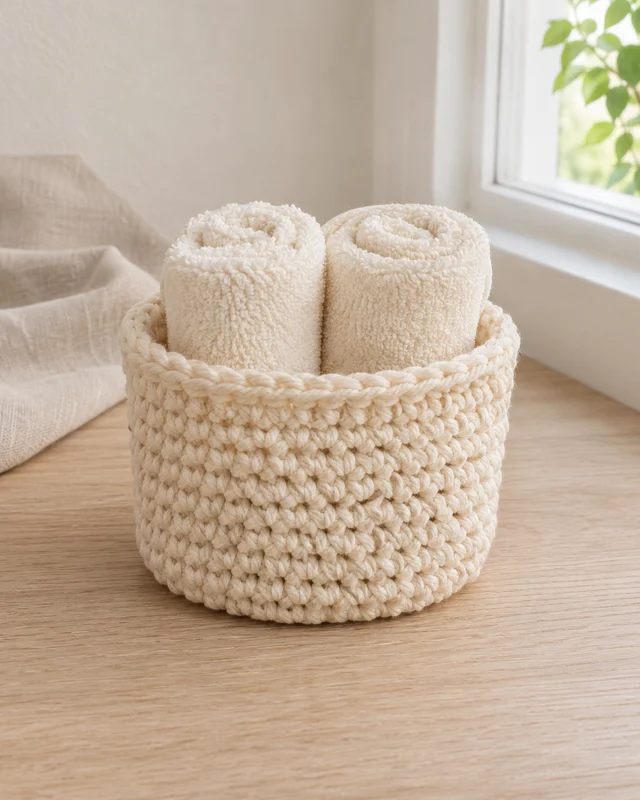
A small basket can organize a pair of clean dry cloths on a counter. Its base should remain stable and separate from splashing or persistent moisture. Choose a complete basket construction rather than expecting rolled towels to hold soft sides upright. Keep both basket and contents on compatible cleaning routines, with enough access to inspect the interior between refills.
12. Closed-edge cloth set
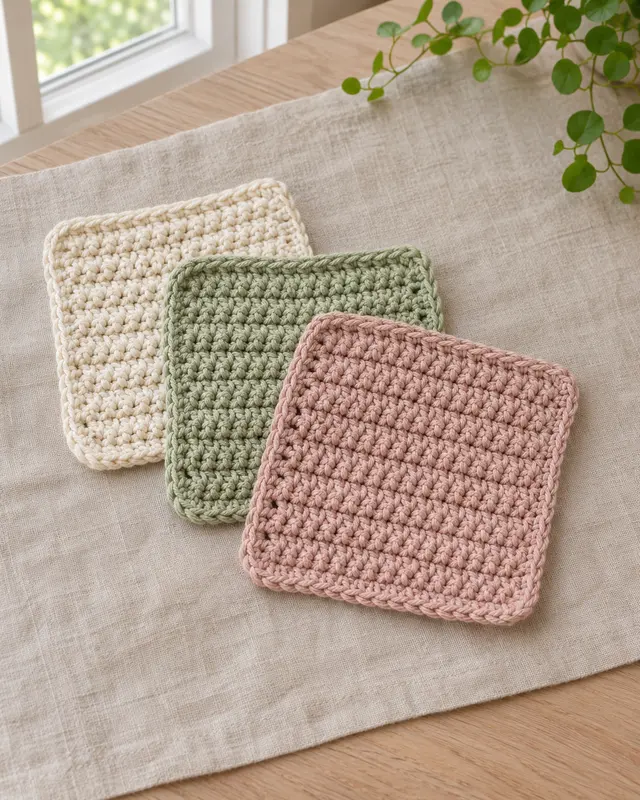
A small set of plain cloths can share one edge finish while using different colors. Complete and care for the first reference sample before repeating the rest. Check color behavior and dimensions with the actual yarn combination. The set’s usefulness depends on the intended personal routine and finished material, not a promise of identical absorbency from matching stitch counts.
13. Removable bottle sleeve
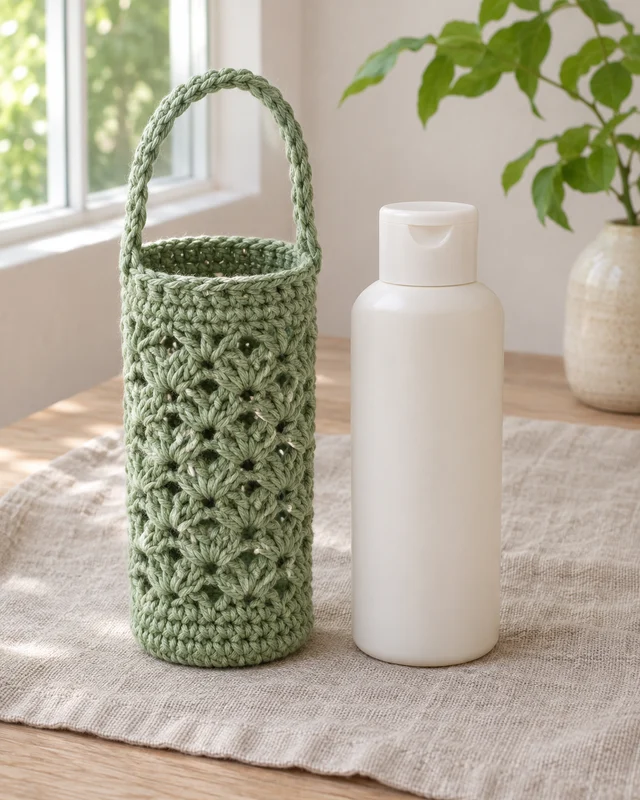
A removable sleeve can decorate a dry toiletry container without replacing it. Keep the bottle’s lid, label information and any dispensing mechanism accessible. The sleeve needs compatible care and a fit that allows removal for inspection. Crochet does not supply leak containment, and a plain illustrative bottle cannot establish suitability for a particular product or bathroom use.
Write down the routine that belongs to the real sample
Keep the actual yarn, component instructions and permitted cleaning and drying method together. Do not promise absorbency, gentleness or hygiene from a stitch name or image. If the first completed object does not suit the intended personal routine, choose another material or design before making a matching set. The housewarming ideas applies the same care record when someone else receives the object.
- 15 Crochet Wall Hanging Ideas for Cozy Rooms
Explore 15 crochet wall-hanging ideas through shape, spacing, backing and mounting, with practical notes on finished dimensions and supported display.
- 21 Crochet Pillow Cover Style Ideas
Find 21 crochet pillow-cover ideas by opening, insert shape, texture and panel layout, with practical notes on fit, seams and removable construction.
- 19 Crochet Coaster Designs for Everyday Tables
Browse 19 crochet coaster designs through flat shapes, shallow textures and edges, with practical checks for useful size, care and actual table placement.
- 25 Crochet Basket Ideas for Home Organization
Explore 25 crochet basket ideas by footprint, opening, dividers and lining, with practical checks for storage fit, base shape and complete construction.
- Crochet Home Decor Ideas for Useful Handmade Spaces
Plan useful crochet home decor through storage, cushions, table textiles and wall displays, with practical routes for shape, fit, materials and care.
- How to Choose Fibers for Washable Crochet Home Projects
Choose fibers for washable crochet home projects with actual label care, complete samples, component checks and practical notes for the finished object.
- How to Make Crochet Baskets Hold Their Shape
Diagnose crochet basket shape through the base, sides and rim, then compare materials, transitions and supported finishes with a modest complete sample.
- 23 Crochet Table Runner and Placemat Inspirations
Explore 23 crochet runner and placemat ideas through footprint, repeats, borders and sets, with useful checks for flatness, dimensions and decorative use.
- 17 Crochet Plant Hanger and Pot Cover Ideas
Compare 17 crochet pot sleeves and hanger concepts, separating decorative fit from drainage, actual container weight, mounting and supported construction.