In this article
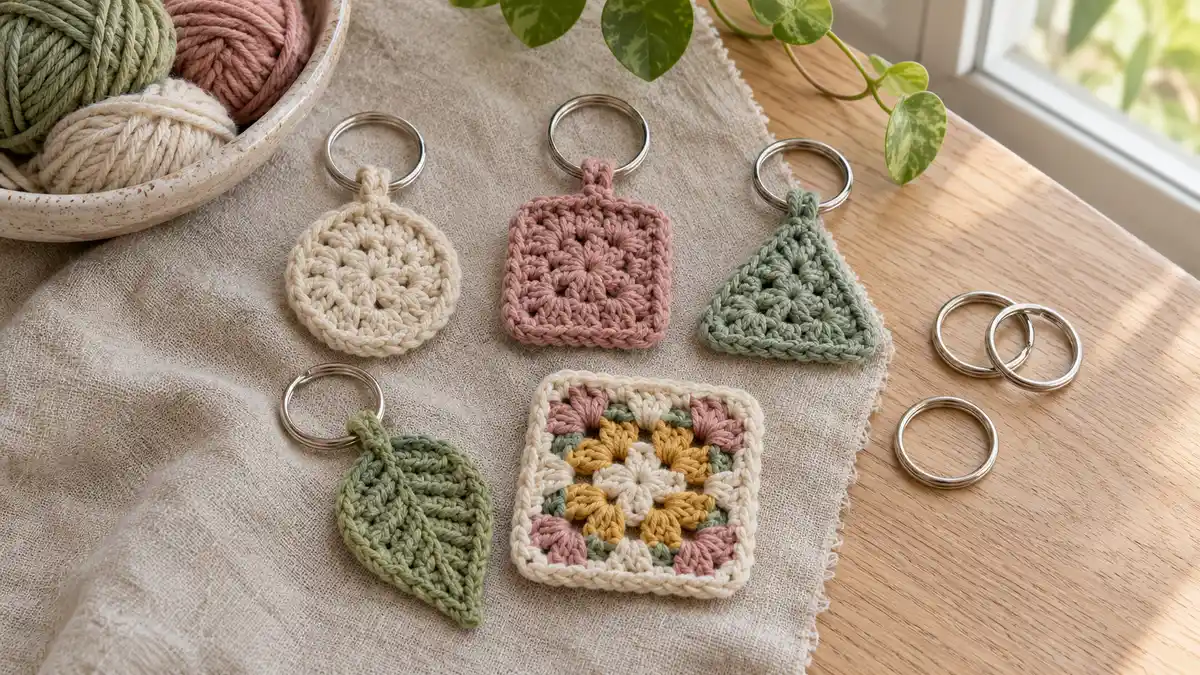
A key tag or bag charm is seen from several directions as it moves. A clear silhouette and tidy reverse can be more useful than many tiny decorative parts. The supported attachment matters just as much as the front, especially when the object hangs beside keys or a moving zipper.
These seventeen directions focus on adult accessories with geometric and miniature-object forms. They are not complete tested patterns, toy specifications or verified load ratings. Choose suitable hardware and a complete construction, keeping the finished pieces and small parts away from young children. Tiny openings and repeated color ends can require careful finishing despite modest dimensions. Compare the complete sample in its intended hanging position before making a set.
1. Flat initial-free tag

A plain tag can identify a key group through its outline and color without lettering. Keep the attachment short and supported by the complete construction. The reverse and closing seam need tidy finishing because both faces will turn into view. This is an adult accessory direction; small hardware and the finished tag should remain away from young children.
2. Geometric triangle charm
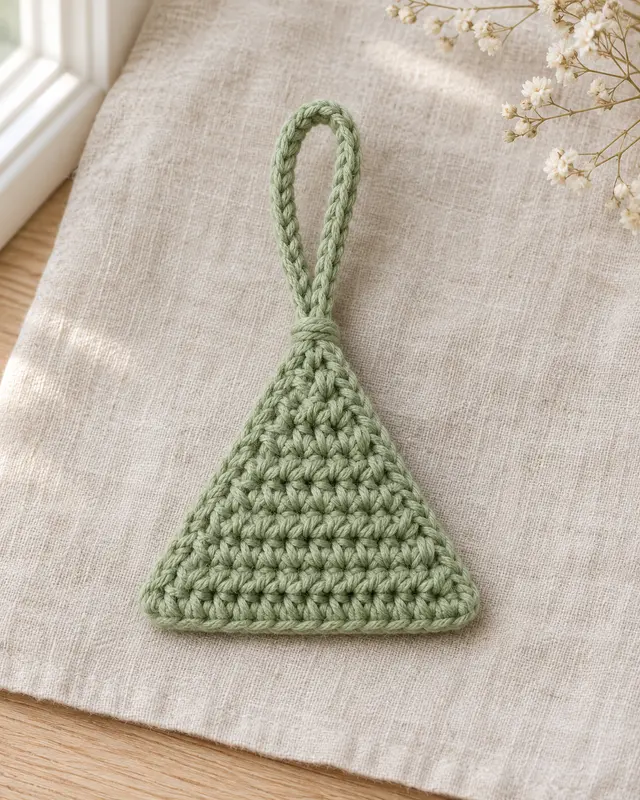
A triangle makes a small geometric charm readable without several tiny details. The point should hold its intended shape through the pattern rather than an exposed stiff insert. Position the loop to preserve the chosen hanging angle. Compare both sides before closing any padded construction, especially when the internal attachment will become inaccessible after finishing.
3. Mini granny-square charm

A miniature granny square uses a familiar motif in a different handling context. Its final ends and top loop need secure finishing, not simply the same loose display treatment as a practice square. Keep the motif small enough for the intended bag. Tiny stitches and several color tails can add effort, so small dimensions do not establish quick making.
4. Round texture charm
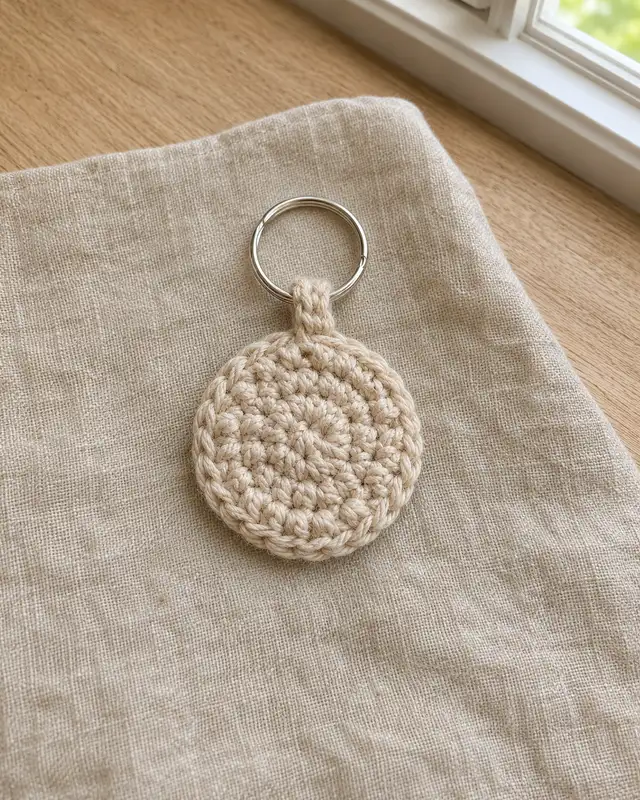
A shallow textured disk gives a key tag surface interest without long projections. The edge and attachment should remain compact enough to avoid unnecessary catching. Check how the finished piece hangs beside the actual ring. A plain circular body still needs its supported loop and secure ends; a neat front photograph cannot reveal those hidden connections.
5. Leaf bag charm
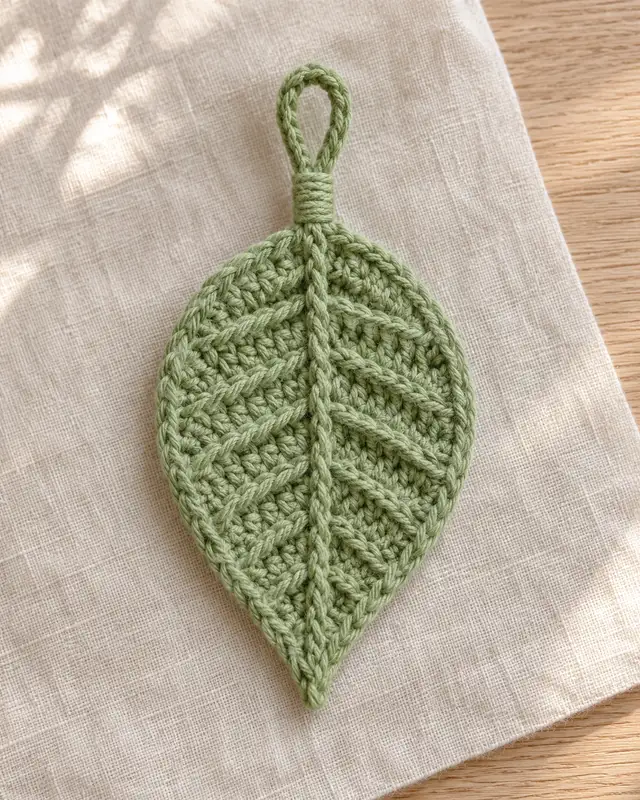
A flat leaf supplies a clear directional silhouette with relatively few surface details. Keep its tip and stem modest so they do not become long loose elements. The hanging connection should use the actual pattern’s supported area rather than one decorative vein. Inspect the reverse and perimeter before attaching the ring, since the charm will frequently turn during use.
6. Flower disk charm

A flower disk can stay compact when its petals remain shallow and broad. The center should not need beads or separate hard decoration to be recognizable. Keep the loop structurally separate from a fragile petal tip. Compare the finished charm in its hanging position before making a set, preserving a clear distinction between the decorative face and the connection carrying it.
The attachment has a different job from the motif
A petal, leaf tip or miniature handle may identify the design without being suitable to carry it. Use the actual pattern’s supported connection and compatible hardware. Keep all parts away from young children. The gift and small-project hub helps choose a useful adult accessory scope.
7. Tiny envelope charm

An envelope outline gives the charm a visible flap and a compact rectangular body. It can remain closed as a decorative miniature rather than pretending to hold belongings. The flap and perimeter still need secure finishing. Place the top loop where the selected design supports it, keeping the miniature seam neat enough to look intentional from more than one angle.
8. Braided-look wrist tag

A short broad wrist loop changes the key tag’s use from a small hanging ornament to a handled accessory. Its ends and hardware need a complete suitable construction. Compare the actual loop opening and connection before treating it as finished. Crochet appearance alone cannot establish carrying strength, and a decorative sample should not be used to claim a load rating.
9. Mini tote charm
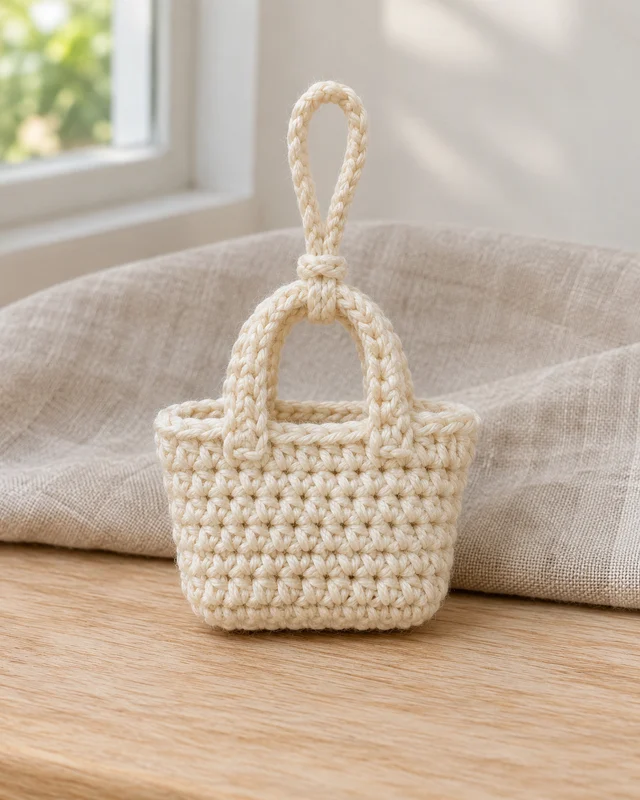
A tiny tote shape can refer to handmade bags without becoming a usable carrying bag itself. Its miniature handles are visual details; use a separate supported attachment if the complete pattern requires one. Keep the body simple enough for the silhouette to remain readable. Inspect every tiny seam before attaching hardware, because small openings can make later correction difficult.
10. Padded diamond charm

A padded diamond adds depth to a clean geometric outline. Match the two faces before joining and avoid using extra filling to hide unequal edges. The hanging loop should preserve the top point without pulling the seam open. Make the complete sample with the intended materials, keeping any stuffing contained and all final ends securely finished.
11. Stacked square tag

Two closely joined squares create a layered tag without a long dangling chain. Their connection and combined thickness need to suit the intended key ring. Compare the reverse and the space where the pieces touch during movement. A coordinated color pair still requires secure individual finishing, especially if one square is made later and differs in gauge from the first.
12. Mini basket charm

A miniature basket gives the charm a distinct open-looking silhouette without loose contents. The rim and body need tidy edges that remain recognizable at the small scale. Use a supported top loop rather than assuming a decorative tiny handle can carry the attachment. This adult accessory concept does not establish a suitable storage function for the miniature basket.
13. Striped capsule charm

A closed oval capsule can make stripes visible around a compact body. Keep the color-change ends secure internally before the final opening becomes too narrow. The closure seam should remain neat on both faces. Compare the hanging orientation early so the stripe direction and attachment placement work together instead of turning the finished form sideways unexpectedly.
14. Shell-outline charm

A scallop-shell outline can stay readable through a broad fan and shallow ribs. Keep the points restrained and the reverse tidy, since the charm will turn during ordinary use. The actual complete pattern should explain the edge and top connection. A shell-like surface is a decorative direction rather than a counted diagram for reproducing exact ridges.
15. Tiny scarf tag

A short folded scarf shape can become a compact key tag without long loose tails. Its fold and connection need a suitable complete method rather than a strip casually looped around hardware. Check that the short ends remain finished and do not interfere with nearby keys. Keep the adult accessory away from children and inspect its attachment for wear during use.
16. Buttonless pouch charm
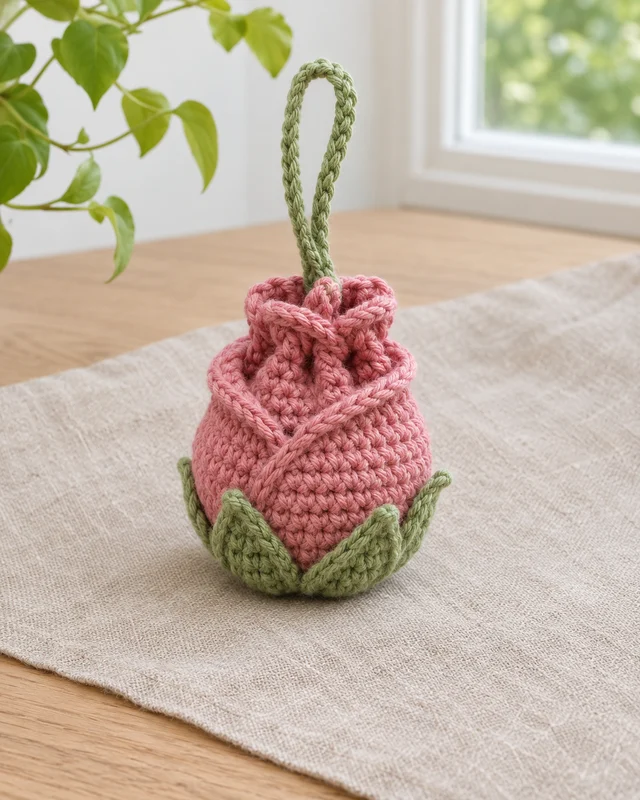
A tiny pouch silhouette can suggest a useful object without a working closure or loose contents. Keeping it buttonless reduces one separate component but does not establish safety or attachment strength. The top loop needs its own supported finish. Check the completed outline from several angles before choosing hardware, since a bulky seam can dominate such a small object.
17. Two-sided color disk

Different colors on the two faces make the tag change as it turns. Their fabrics need compatible size and tension before the perimeter is joined. Keep the edge count and attachment point deliberate. A simple disk can be a manageable sample, but every hidden end and connection still needs finishing appropriate to an adult accessory that will move frequently.
Inspect it while it hangs, then turn it over
Compare the front, reverse, perimeter and hanging angle on the actual ring or bag connection. Look for loose ends, exposed filling or a projection that catches nearby. These are ordinary finishing observations, not proof of a load limit. Keep the loop and hardware under inspection during use. The recipient-selection guide is a practical route, while the housewarming ideas offers another gift function.
- 15 Crochet Gifts for Housewarming Parties
Compare 15 crochet housewarming gift ideas by real space, useful fit, cleaning and presentation, with notes on complete constructions and care records.
- How to Estimate Crochet Project Time Before Gifting
Estimate crochet gift time from an ordinary sample, named assembly tasks and real calendar sessions, with clear example arithmetic and no fixed promises.
- 27 Scrap-Yarn Crochet Gift Ideas
Explore 27 scrap-yarn crochet gift ideas, with practical ways to sort remnants, reserve finishing yarn and choose a useful small project.
- How to Choose the Right Crochet Gift for a Recipient
Choose a crochet gift from the recipient’s actual use, dimensions, care and available time, then finish a useful sample and handover record.
- 19 Practical Crochet Gift Ideas for Men
Explore 19 crochet gift ideas for men, including fitted accessories, book sleeves and desk organizers, chosen around real habits rather than stereotypes.
- 23 Small Crochet Gifts for Coworkers and Teachers
Compare 23 small crochet gifts for coworkers and teachers, with useful desk and reading ideas plus practical notes on batch making, care and gift policies.
- 21 Cute Crochet Gifts for Friends
Find 21 crochet gift ideas for friends, from reading accessories to project bags and cushions, with thoughtful ways to match a gift to real preferences.
- 25 Small Crochet Gift Ideas for a Creative Weekend
Browse 25 small crochet gift ideas for a creative weekend, with practical notes on fit, materials, finishing and choosing a project for your available time.
- Crochet Gift Ideas by Recipient, Budget and Time
Plan a crochet gift around the recipient, full materials budget and time available. Compare useful projects, fitting needs, finishing and care before choosing.