In this article
A useful crochet gift begins with the person who will receive it, not the project that happens to be popular. A reader may welcome a flat bookmark, while someone with little storage may struggle to place a large ornament. Choosing one ordinary use gives you a practical way to compare ideas before buying yarn or starting a set.
This guide builds a recipient brief from known preferences, dimensions, care and the occasion. It offers an original planning method rather than a ranking of universally suitable gifts. The illustrations are concepts, not tested patterns or evidence of fit and performance. Use complete instructions for the actual object, check its terminology key and make a representative finished sample when its fabric or assembly matters.
Write the recipient brief in four ordinary facts
Start with something the person already does: reads on a commute, uses cloths in a particular kitchen, carries a certain notebook or enjoys a small seasonal display. Name the object and setting as precisely as you can. A real book format is a better constraint than a broad label such as gifts for readers, because its dimensions and opening can actually be checked.
- One intended use or place.
- A known preference for color, texture or style.
- The dimensions or fit information available.
- The care routine the recipient can reasonably follow.
Leave unknown details marked as unknown. Do not turn a guessed room color or an assumed clothing size into a requirement. If you can ask one discreet question, choose the one that changes the project most: the actual insert size, preferred care, or whether a display object is wanted at all.
Choose a job before choosing a motif
| Recipient fact | A useful direction | What still needs checking |
|---|---|---|
| Reads a known book format | Sleeve or flat bookmark | Opening, thickness and low-bulk finish |
| Uses a small dry shelf | Modest catchall or display panel | Footprint, contents and placement |
| Has a known cushion insert | Removable cover | Finished size and closure |
| Likes seasonal decorating | One small complete motif | Support, storage and care |
The table narrows a question; it does not certify a finished object. A bookmark should still lie appropriately in a book, and a basket still needs a suitable base and opening. The housewarming collection shows several useful functions, while the scrap-yarn ideas suits a smaller material allowance.
Decide whether fit is actually available
Wearable gifts need more information than an appealing color. Compare the actual wearer, intended ease and finished dimensions in a suitable pattern. Keep body measurements separate from finished garment figures. If the required information is unavailable, a measured nonwearable item can be a more practical choice than inventing a universal size or assuming a stretchy fabric will solve the uncertainty.
The same principle applies beyond clothing. A book sleeve, pot cover and cushion all fit something specific. Include the container or insert when appropriate, or measure the real one. The garment measurement guide explains the distinction for wearables; household objects need their own complete construction and measured opening.
Match care to the whole finished object
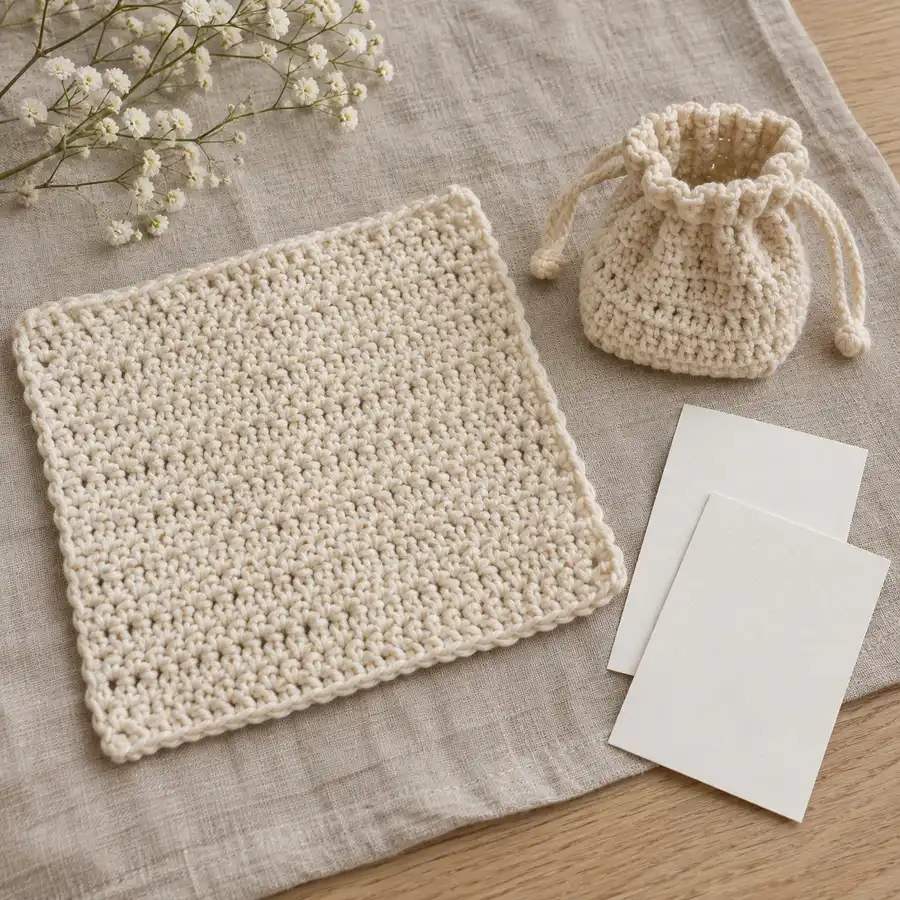
Read the actual labels for every yarn, lining and attached component before committing to the combination. A removable part must really be accessible in the finished object. Consider whether the recipient will understand how to remove it, which instructions apply and how to reassemble the gift. Do not assign one washing method to every product carrying the same broad fiber name.
The Craft Yarn Council care-symbol reference supports keeping yarn-label information with a handmade gift. Use the actual product instructions for the finished combination; the symbol reference is not a substitute for identifying an unknown remnant or checking a separate fastening.
Choose a scope you can finish completely
A gift is not complete when its main rectangle is made. Openings, joins, ends, any permitted care process, drying and presentation still take time. Compare the unfamiliar tasks as well as the visible area. A tiny lined pouch with hardware can require decisions that a larger plain cloth does not. The project-time planning guide helps separate active work from calendar time.
When a deadline is close, reduce the object count or choose a construction you already understand. Keep the practical purpose intact. Removing a necessary lining or closure to save time changes the finished gift, whereas making one complete coaster pair instead of a large set can preserve the original useful idea.
Make the first reference before the whole set
Finish one actual sample through the intended care and assembly before repeating it. Record the yarn, hook, finished dimensions and any supported pattern adjustments. Try its ordinary opening, resting position or attachment with the real companion object. This is a comparison for your own finished piece, not permission to claim that an illustrated concept has been tested for everyone.
If the first version does not suit the brief, change direction before using all the supplies. Keep a declined sample as information rather than forcing it into the gift package. A smaller project in the right material can be more considerate than a larger one whose shape, care or purpose remains unresolved at the handover date.
Give permission for ordinary use
Presentation should make the object understandable. Include the known yarn information, compatible care and a short explanation of removable parts. Identify a decorative object as decoration when that is its intended role. Avoid unsupported claims about warmth, protection, load capacity, skin effects or making time, and do not imply a personal testing history that has not occurred.
A clear handover also leaves the recipient free to use the gift in their routine. Keep packaging modest, separate edible contents appropriately and make opening straightforward. The finished item should not require a preserved arrangement of loose accents to work. Use the small-project and gift hub to compare another direction if the recipient brief still has more unknowns than useful constraints.
- 17 Crochet Keychain and Bag Charm Ideas
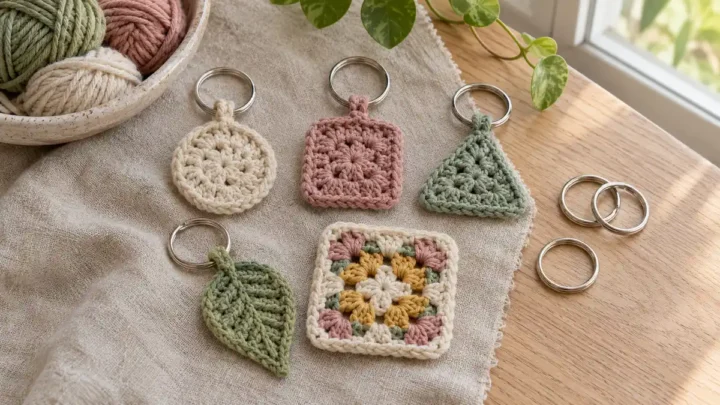
Find 17 crochet keychain and bag-charm ideas through flat geometry, miniature objects and supported loops, with practical finishing notes for adult accessories.
- 15 Crochet Gifts for Housewarming Parties
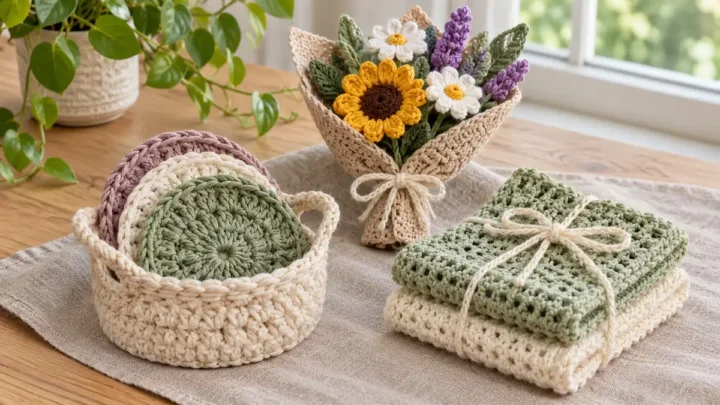
Compare 15 crochet housewarming gift ideas by real space, useful fit, cleaning and presentation, with notes on complete constructions and care records.
- How to Estimate Crochet Project Time Before Gifting
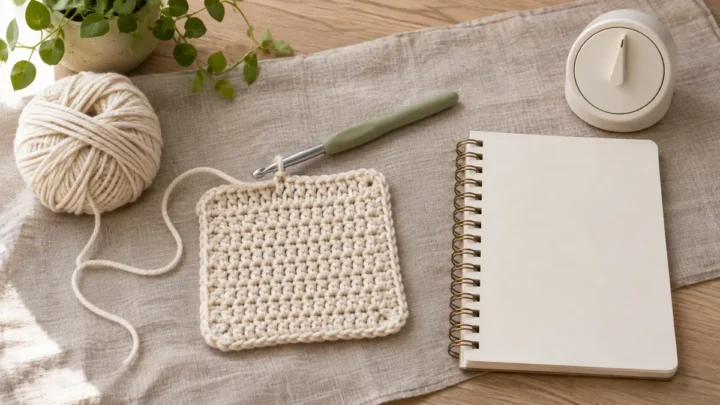
Estimate crochet gift time from an ordinary sample, named assembly tasks and real calendar sessions, with clear example arithmetic and no fixed promises.
- 27 Scrap-Yarn Crochet Gift Ideas
Explore 27 scrap-yarn crochet gift ideas, with practical ways to sort remnants, reserve finishing yarn and choose a useful small project.
- 19 Practical Crochet Gift Ideas for Men
Explore 19 crochet gift ideas for men, including fitted accessories, book sleeves and desk organizers, chosen around real habits rather than stereotypes.
- 23 Small Crochet Gifts for Coworkers and Teachers
Compare 23 small crochet gifts for coworkers and teachers, with useful desk and reading ideas plus practical notes on batch making, care and gift policies.
- 21 Cute Crochet Gifts for Friends
Find 21 crochet gift ideas for friends, from reading accessories to project bags and cushions, with thoughtful ways to match a gift to real preferences.
- 25 Small Crochet Gift Ideas for a Creative Weekend
Browse 25 small crochet gift ideas for a creative weekend, with practical notes on fit, materials, finishing and choosing a project for your available time.
- Crochet Gift Ideas by Recipient, Budget and Time
Plan a crochet gift around the recipient, full materials budget and time available. Compare useful projects, fitting needs, finishing and care before choosing.