In this article
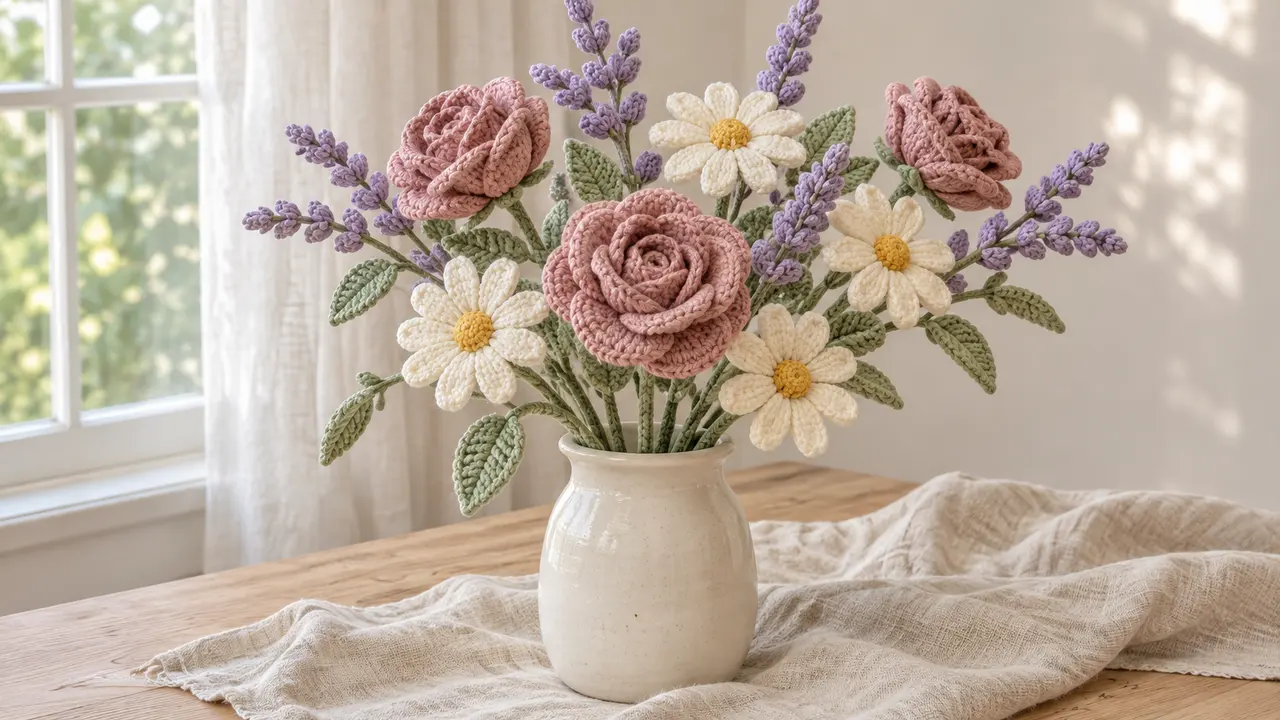
Crochet flowers can become a single stem, a compact gift bouquet or a larger decorative arrangement. The useful starting point is the display you want to make and the construction you want to learn. Flat petals, rolled strips, clustered florets and supported stems each ask for different decisions before color enters the plan.
This hub connects those decisions with the flower collections and practical guides in the CrochetNyla plan. It is an edited route through handmade decor and related floral details, not a complete flower pattern or a claim that illustrated designs have been tested. Start with one finished bloom and its intended support, then compare the display, spacing and care. Use a complete pattern for exact stitch counts and assembly, with US terminology checked against the designer’s notes.
Choose the display first
| Display direction | Begin by comparing |
|---|---|
| One stem in a small vase | Head shape, stem connection and vase stability |
| Mixed bouquet | Contrasting bloom sizes, open spaces and height |
| Compact rose arrangement | Layering, repeated heads and overall depth |
| Attached floral detail | The backing, fastener and object receiving the flower |
Set the empty vase or other display base where the finished work will usually be seen. A table viewed from all sides asks for a different composition from a shelf viewed mostly from the front. Note the available height and width before making a group of large heads. The vase should remain stable with the finished stems; the apparent lightness of yarn does not settle the balance of a tall arrangement.
If you prefer flowers without stems, choose a complete design for that particular use, such as an attached decorative motif. A flat applique is a different object from an upright flower head. Turning one into the other may require a new base and support method. Keep the intended use clear rather than assuming every floral picture can serve as both a wearable detail and a vase flower.
Find the next useful flower collection
Compare the main bloom families
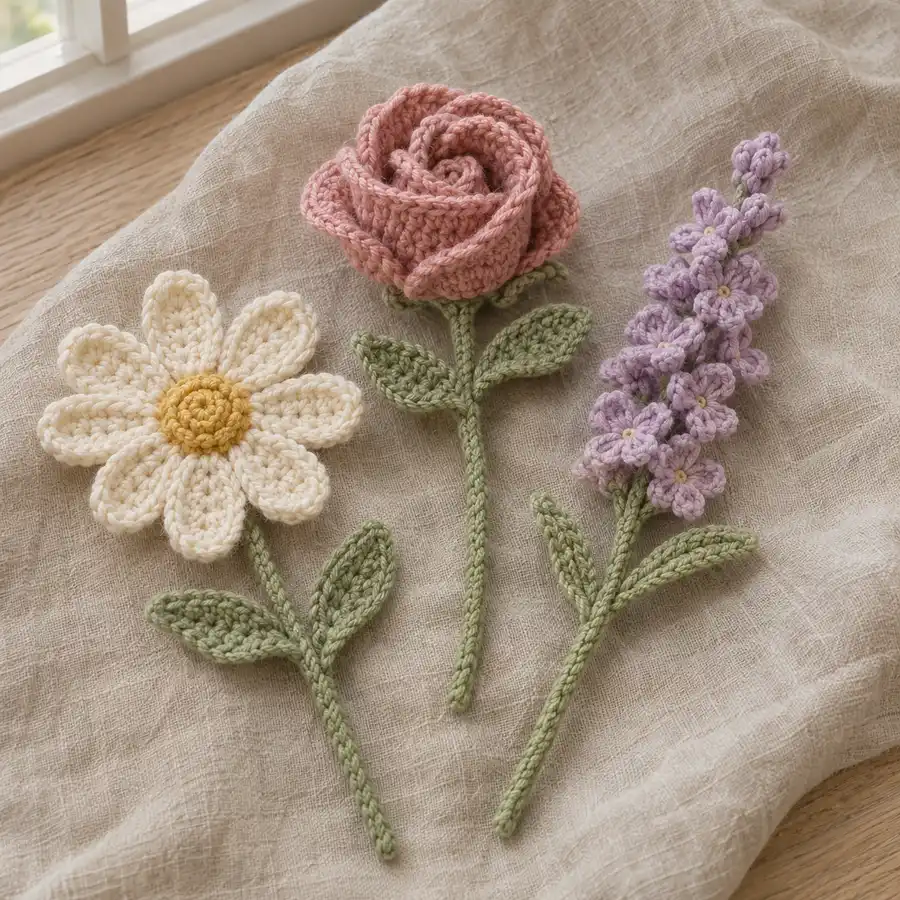
25 Crochet Flower Ideas for Colorful Bouquets is the broad starting collection. It compares open daisies, layered roses, cups, bells, spikes and clustered heads so you can choose contrasting forms. Use it to select one focal flower and one quieter companion instead of copying a large mixed arrangement all at once.
21 Crochet Rose Arrangement Ideas focuses on layered roses and their grouping. 17 Crochet Sunflower Decor Ideas explores a broad central disk and a strong petal outline. These narrower routes are useful when the main bloom family is already decided and the next question concerns its setting or arrangement.
19 Crochet Tulip Bouquet Color Combinations approaches the compact cup-shaped flower through palette choices. Keep the actual yarn colors beside the vase and compare their proportions before buying a whole bouquet’s supply. A color idea does not replace the tulip construction or establish the size of the finished flower.
Follow the destination of the flower
15 Small Crochet Flower Ideas for Hair Clips and Pins turns toward small attached motifs. The backing and fastener become part of that project, so a stemmed bouquet flower is not an interchangeable substitute. Match the complete accessory design to its intended wearer and inspect all components rather than judging only the petal face.
23 Crochet Floral Home Decor Ideas moves beyond the vase to flowers used around the home. 13 Crochet Flower Gift Wrap and Embellishment Ideas focuses on decorative finishing for gifts. Both routes ask you to consider how the flower connects to another object and how that object will be handled or cleaned.
Some planned resources may still be in preparation. Their titles describe the intended route, not a promise that every collection is already published. The related-article module at the end shows the resources currently available. Keep a note of the construction question you need answered so a visually appealing gallery does not substitute for a missing practical method.
Connect the flower head with its support
How to Choose Yarn, Stems and Support for Crochet Flowers is the practical route for comparing materials and the connection below the bloom. A pleasing petal face is only one part of an upright stem. The base, covered support, leaf attachments and vase stability need to work together. Do not infer hidden details from a photograph.
How to Assemble and Display a Crochet Flower Bouquet addresses the larger arrangement. Read the complete selected flower designs before choosing materials for a coordinated set. A rolled rose, a layered cup and a branching spray have different finishing needs even when their individual stitches are familiar. Their completed dimensions are more useful than an estimated size from a gallery.
A small learning route through the first arrangement
Start with a readable head
For an early flower project, look for clear stitch definitions, manageable repeats and an assembly explanation you can follow. A flat flower may offer a more visible surface to read, while a rolled flower introduces positioning and securing. Neither shape guarantees a universal beginner rating. Choose the complete pattern for the techniques it actually requires and make one head before multiplying the work.
Add one change at a time
After the first bloom is finished, change one main feature for the next: a different petal silhouette, a taller stem or a finer filler spray. Keep enough materials and notes to understand the difference. Several unfamiliar constructions in one bouquet can make it difficult to tell which yarn, shaping or attachment choice caused a problem. A small coherent arrangement is a useful finished project in its own right.
Use the vase as a working constraint
Arrange the completed stems loosely before shortening or fixing anything permanently. Look from the usual viewing position and check the side profile. Leave open space around fine florets and avoid stacking every flower face at the same height. Turn or reposition stems first; adding more heads can make an already crowded arrangement harder to read rather than more complete.
Materials that deserve a deliberate sample
Smooth yarn can help show petal edges and small stitches. Cotton is a common candidate, but the selected design’s gauge and support needs still matter. A substitute can change the head’s size, weight and ability to retain its intended curve. Make the complete bloom with its base before judging whether the yarn suits a long stem or a tightly packed vase.
For supported stems, follow a complete method that fully encloses any internal wire and secures its ends. Keep tools and exposed supports away from children while working, and treat the completed arrangement as adult decor. Avoid displaying loose components where children or pets can reach them. The crochet surface does not turn internal hardware into an appropriate toy construction.
- Keep the selected yarn, hook and finished head dimensions in the project notes.
- Inspect the flower underside and stem connection as well as the front.
- Choose compatible care for yarn, supports, adhesives and container.
- Check the vase after the final stems are arranged, including its stability.
Keep the display useful after the last petal
A flower arrangement still needs a realistic place to live and a care method compatible with all its parts. Do not assume a supported bloom can be washed like an unattached yarn swatch. Keep it away from incompatible heat and moisture, and follow the materials’ instructions for cleaning. If a head or leaf loosens, repair its actual attachment instead of hiding the problem among neighboring stems.
For foundational stitch learning, visit the beginner crochet guide. For surface decoration beyond bouquets, compare the home decor planning route as that resource becomes available. Return to the flower collection with a specific display, a manageable bloom count and a complete construction in mind; those choices give the illustrations a practical purpose.
- 25 Crochet Flower Ideas for Colorful Bouquets
Explore 25 crochet flower ideas by petal shape, bloom depth and bouquet role, with practical notes on supported stems, arrangement and complete patterns.