In this article
The best crochet bag idea starts with what you want to carry. A notebook needs a different opening from a bottle; a market shopper can be open and flexible, while keys and small accessories need somewhere more enclosed. Decide on the contents and carrying style first, then choose the texture and colors that make the bag feel like yours.
This guide helps you compare totes, openwork market bags, crossbody styles and small pouches. It brings together visual ideas and the practical questions behind them. Use it to narrow your direction, then follow a complete pattern for the stitch counts, dimensions, assembly and finishing. The collections show possibilities rather than supplying a pattern for every pictured bag.
Choose the bag’s everyday job
- For books or a project: compare a dense tote with enough opening width and a suitable base.
- For a few larger groceries: compare an openwork market bag and check the mesh against the contents.
- For hands-free essentials: compare a small crossbody and measure the phone, wallet and strap drop.
- For things that disappear in a larger bag: compare a lined pouch or a simple organizer.
Make a short contents list before you browse. Measure the largest item in its normal case or packaging, and consider the thickness of the whole group. An attractive bag can still be inconvenient if its opening is narrow, its body too deep or its strap awkward over a jacket. A small paper mock-up can help you understand dimensions before committing to yarn.
Totes: room, panels and a useful opening
A tote usually gives you a generous opening and two handles, but its construction can vary widely. A flat two-panel design is easy to picture; a gusseted or oval-base version adds depth. Joined motifs introduce color planning and seams, while a plain dense fabric lets the outline and handle proportions do most of the work.
Compare 25 crochet tote ideas by construction rather than choosing solely by color. A pocket, boxed corner or shaped upper edge can make a real difference to the way the bag works. Check what the complete pattern says about reinforcement and lining before assuming a dense-looking fabric can carry a heavy everyday load.
Market bags: openness and flexible shape
Mesh shoppers can fold small and give simple yarn a lively surface. They also change shape around their contents. A solid base, a defined rim and broad handles are worth comparing alongside the diamond, square or fan-like openings. Think about what could fall through, catch on the stitches or distort the mesh.
Browse 17 openwork market bag ideas for the differences between a produce sack, bottle carrier, shoulder shopper and shallow market tote. A separate pouch can organize small objects without changing the main bag. Choose the actual pattern and yarn for the intended use; openness is a design choice, not a promise of carrying strength.
Crossbody bags: scale, depth and strap position
A crossbody keeps a few essentials close, so proportion matters more than capacity alone. A tall phone pouch, rounded flap bag and box-gusset rectangle may have similar overall height but very different usable space. Check the opening and the thickness of the contents, then try a strap length over the clothes you expect to wear.
Use 21 crochet crossbody ideas to compare those silhouettes. Read the strap attachment and closure steps before making the body. A long strap can stretch, and a small attachment point can concentrate strain. The pattern should account for the complete accessory rather than leaving the handle or hardware to guesswork at the end.
Mini bags and pouches: small does not mean unfinished
Small pouches are useful studies in fitting and finishing. A zip, drawcord, frame or folded flap each changes how the opening works. Start with the object you want to keep inside, then choose a shape that gives it room without making the pouch unnecessarily bulky. A flat notions pouch and a boxed cosmetic pouch solve different problems.
Compare 19 mini bag and pouch ideas when you want a manageable accessory project. Sewing and hardware may take as much attention as the crochet. If this is your first lined bag, a plain two-panel shape is a useful way to learn the fitting process before adding curves or several compartments.
Match the fabric to the construction
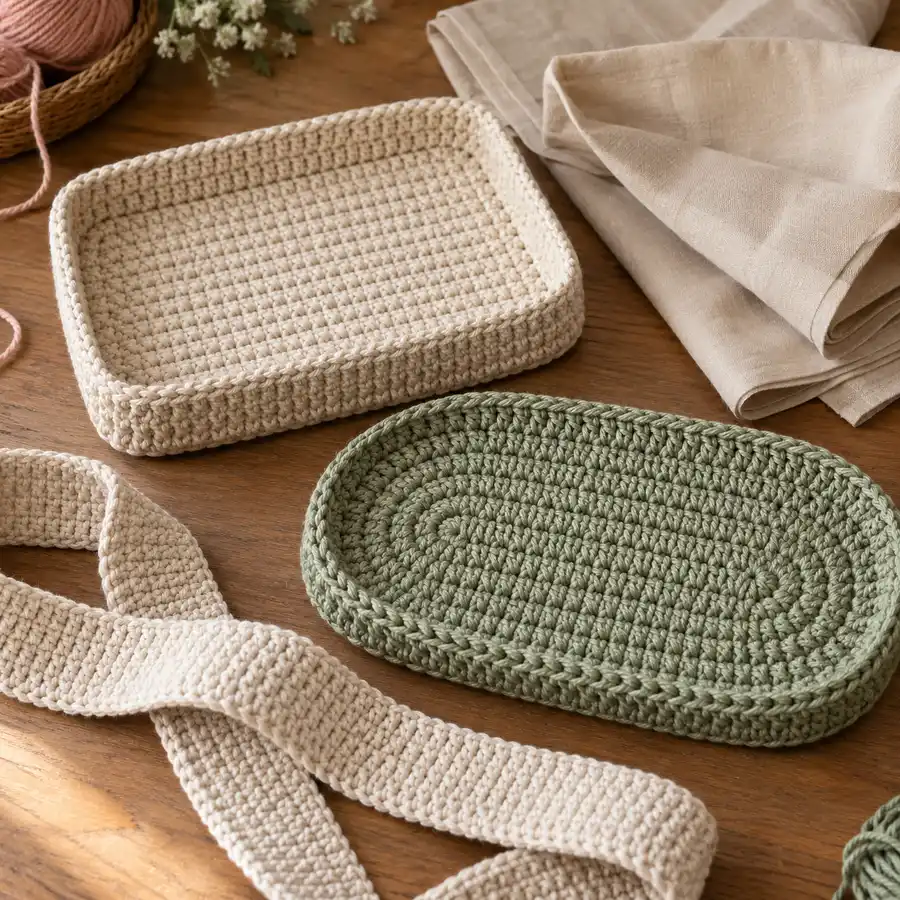
Make a swatch that includes the texture you actually intend to use. Look at the reverse side, bend it, and check the care instructions. Open motifs, raised textures and plain dense rows do not behave identically, even in the same yarn. When a pattern combines them, matching finished panel dimensions matters as much as matching individual stitch counts.
The Craft Yarn Council’s yarn categories help you read a materials list, but a category does not fully describe firmness or stretch. Use the pattern’s gauge and a finished sample to assess your own fabric.
Plan the lining and base before the last row
A lining can cover open stitches, organize the interior and create a smoother surface for small contents. It must fit the finished shell without pulling it upward or gathering the opening. A flat bag can use a simpler lining than a curved or gusseted body. Decide on pockets and zips before attaching the lining, while their seams remain accessible.
Read the bag lining and base guide for a simple fitting route and checks for the lower seams. A lining does not automatically reinforce every handle or turn a soft bag into a protective case. Base inserts, if the pattern uses one, bring separate questions about fit, edges and care.
What to check in a complete bag pattern
- Finished interior dimensions and opening size, not just an attractive front view.
- Yarn, hook, gauge and care requirements that suit the intended use.
- A clear base, panel and handle assembly order.
- Lining and closure instructions, including actual hardware dimensions where needed.
- A way to inspect and secure every seam and yarn end before regular use.
Frequently asked questions
Which bag shape is a useful first project?
A plain flat tote or simple rectangular pouch can make the construction easier to understand. Read the whole pattern first: adding a zip, lining or complicated handle may make the finishing more demanding than the main panels.
Does every crochet bag need a lining?
No. The pattern, fabric and contents determine the need. An open shopper for larger items and a pouch for small loose objects have different requirements. Check how the chosen design is intended to work rather than adding or omitting a lining automatically.
Can I use any strap I already own?
Only if its size, care and attachment method suit the actual design. A strap change affects how strain reaches the shell and how the bag hangs. Follow compatible pattern and hardware instructions, then inspect the connections with the intended contents.
Find your next bag project
Choose one carrying style, then shortlist a silhouette and opening. If the skills are new, use the beginner project ideas or the single and half double crochet lessons before starting a larger accessory. Return to the collections when you are ready to make the design decisions, and leave time for finishing as part of the project.
- How to Choose Yarn and Stitch Density for Crochet Bags
Choose crochet bag yarn and stitch density through a practical sample, comparing gauge, gaps, seams, lining, straps and care for the complete construction.
- 13 Crochet Bag Strap and Handle Design Ideas
Compare 13 crochet bag strap and handle ideas, with practical notes on grip, length, backing, hardware, attachments and care for adult accessories.
- 15 Crochet Beach Bag Ideas for Summer Trips
Compare 15 crochet beach bag ideas by opening, capacity, lining and carrying style, from mesh shoppers to gusseted totes and compact crossbody bags.
- 23 Granny Square Crochet Bag Designs
Explore 23 granny square crochet bag designs, comparing motif layouts, gussets, folds, openings and handles before choosing a complete bag pattern.
- 17 Openwork Crochet Market Bag Designs
Compare 17 openwork crochet market bag ideas, including mesh shoppers, produce sacks and bottle carriers, with guidance on openings, bases and handles.
- 21 Crochet Crossbody Bag Ideas for Casual Style
Find 21 crochet crossbody bag ideas, from slim phone pouches to rounded flap bags. Compare useful shapes, openings, straps and lining choices.
- 19 Crochet Mini Bag and Pouch Ideas
Explore 19 crochet mini bag and pouch ideas for organizing small essentials, from zip pouches to hook wraps, with practical notes on fit and finishing.
- How to Line a Crochet Bag and Secure the Base
Learn how to fit a simple fabric lining to a crochet bag, check the lower seams and plan base support without pulling the shell out of shape.
- 25 Crochet Tote Bag Ideas for Everyday Outfits
Explore 25 crochet tote bag ideas, from flat book totes to gusseted shoppers and motif bags. Compare shape, lining, handles and everyday practicality.