In this article
A first crochet project is easier to choose when you can see the skill it asks you to practise. The ideas here begin with flat shapes and gradually introduce folding, joining and simple fit decisions. You can use the list to choose a direction without committing to a large blanket or a complicated toy. Start with a shape whose edges and stitch count you understand, then look for complete instructions that match it. These are fifteen distinct project concepts, not fifteen tested patterns. Materials, finished size and completion time depend on the pattern and your experience, so compare the practical notes before buying supplies or promising a finished gift.
Quick picks
Start with the practice square for counting, the washcloth for a useful rectangle or the envelope pouch when you are ready to fold and join.
Before you choose
- Keep the first stitch familiar so that shape and edge counting remain manageable.
- Read the whole pattern, including seams and any opening, before choosing a yarn quantity.
- Check measurements against the actual object or recipient; a small project may still depend on fit.
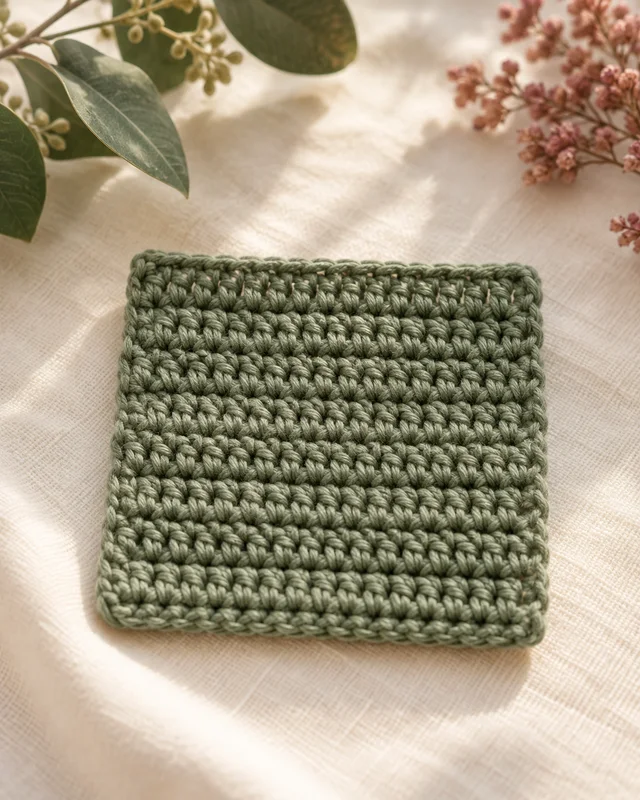
1. Straight-edge practice square
A plain square gives you a clear place to watch your stitch count and edges. The sage sample keeps decoration out of the way, so its outline is the main feature. Choose smooth yarn and a basic stitch lesson that explains turning. Treat it as practice rather than a measured pattern; repeat the square before adding shaping or joins.
2. Square cotton coaster
The square outline makes this coaster a useful lesson in stopping at a planned size. A light cotton yarn can show the rows clearly, while the empty cup suggests its everyday purpose. Check your chosen pattern for dimensions and care. Keeping four sides even is the main challenge; a coaster still needs flat fabric rather than a curled sample.

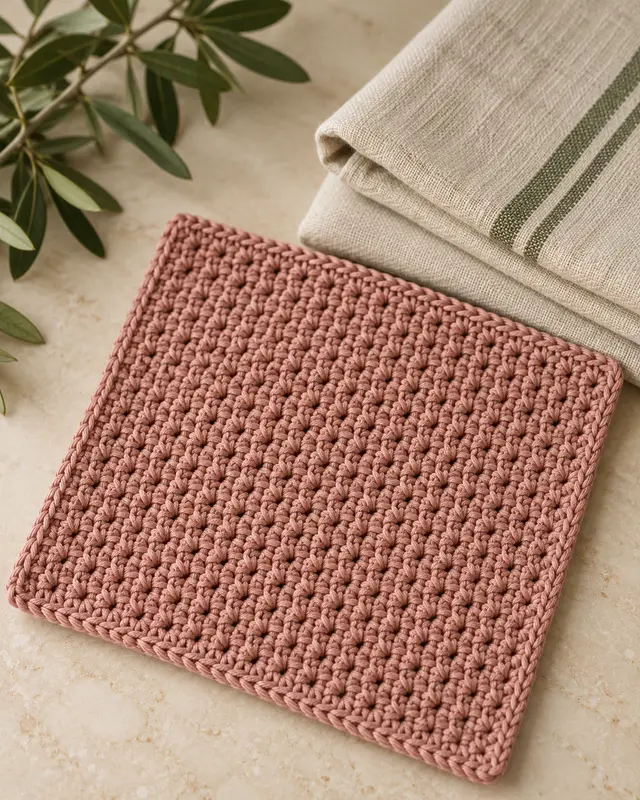
3. Simple rectangular washcloth
A small washcloth turns plain rows into something you can keep near the sink. The dusty rose fabric has no hanging loop or fancy edging, leaving the rectangular shape easy to inspect. Consider a washable fibre appropriate for the intended use. Compare the finished feel after following the yarn's care instructions, and secure the ends before putting it into service.
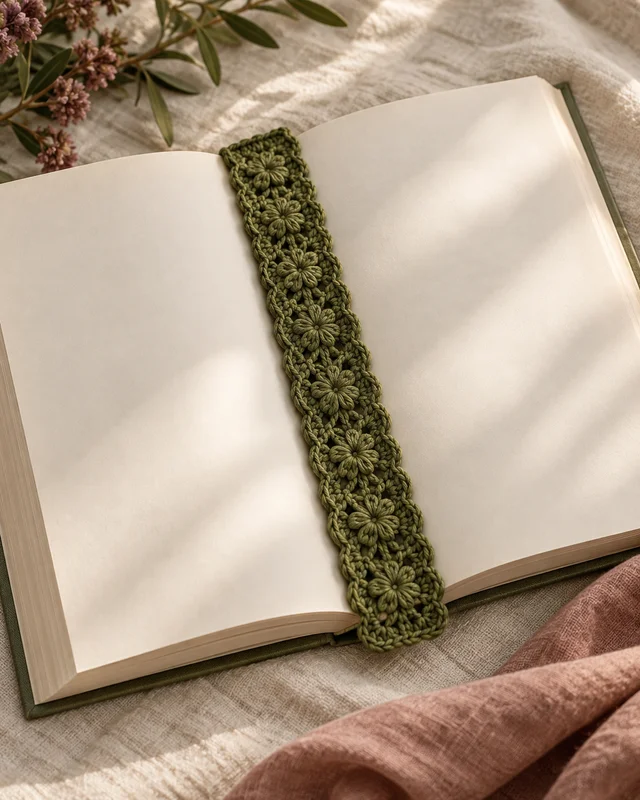
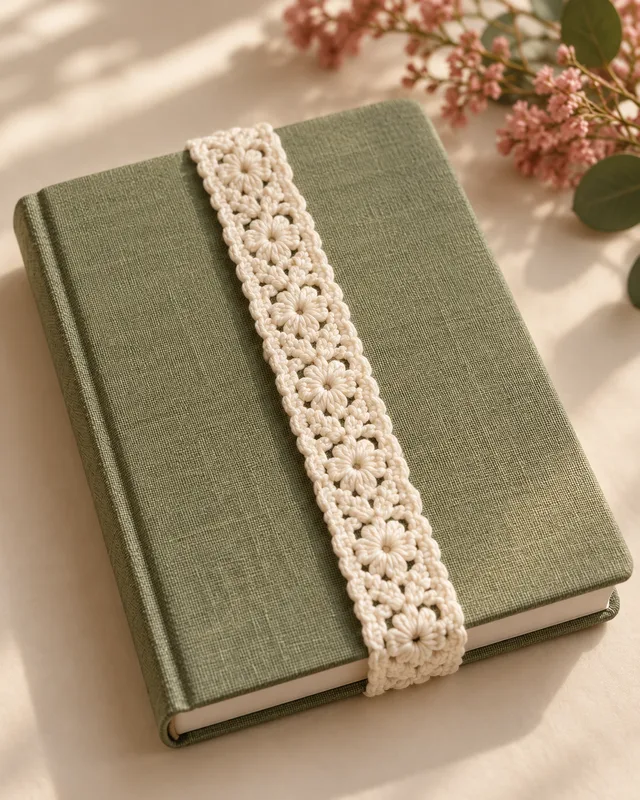
4. Slim stitched bookmark
A narrow bookmark asks for fewer stitches across each row than a cloth, but its long edges make accidental increases obvious. This olive strip keeps the finish flat, without beads or tassels that could press into a book. Use a yarn and hook combination that makes a suitably thin fabric. Check its thickness between closed pages before making several gifts.
5. Plain mug rug
A mug rug gives a little more space than a coaster, enough to explore a rectangle and a simple edge. The oatmeal colour makes the shape easy to read beside a small cup. Choose a washable material and check how the fabric lies on the table. Keep it for ordinary table use; this concept is not a tested heat-resistant pad.

6. Single-seam glasses sleeve
A glasses sleeve introduces one useful step after flat crochet: joining the sides of a folded rectangle. The sage example leaves the opening uncomplicated so the seam can be the main lesson. Measure the actual glasses and allow for fabric thickness. A soft sleeve may help separate items in a bag, but it does not replace a protective hard case.

7. Folded phone sleeve
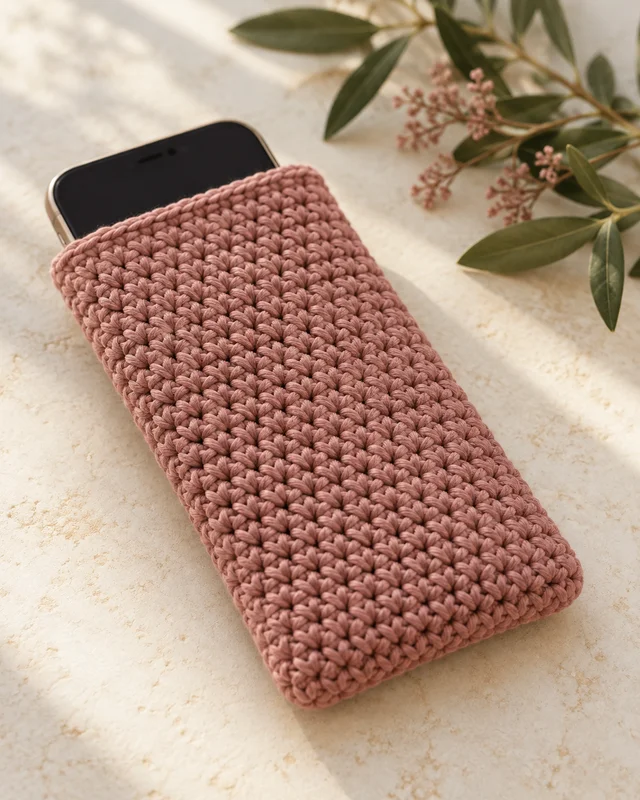
A phone sleeve uses familiar rows to make a simple folded pocket. The dusty rose version has no closure or strap, so its main decisions are fit and seam placement. Make a small sample and measure the intended device before choosing a pattern size. Leave room for its case, and do not assume the sleeve provides impact or water protection.
8. Flat envelope pouch
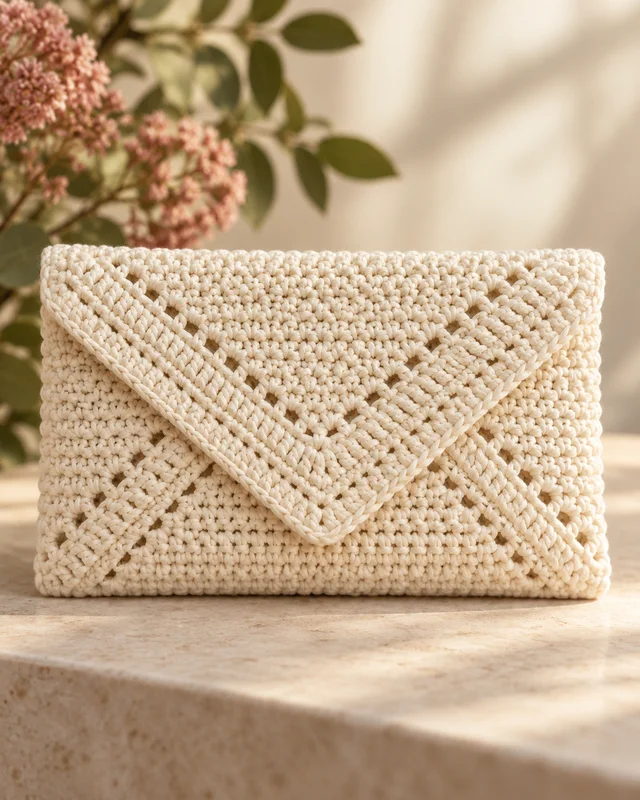
An envelope pouch changes the outline through folding rather than requiring a complicated surface stitch. The cream version keeps the front flap visible and avoids extra hardware. Read the construction notes before choosing a pattern: a triangular flap may introduce shaping even when the body is plain. Practise the seam on a spare sample before joining the finished pieces.
9. Simple crocheted headband
A joined strip can become a straightforward headband without the shaping of a hat. This sage version keeps a broad plain surface and a single joining area. Fit matters more than it does for a coaster, so check the pattern's measurement instructions and the stretch of your sample. A seam that looks neat flat should also feel comfortable when worn.

10. Short neck warmer
A short neck warmer offers a smaller commitment than a long scarf while introducing a closed loop. The rose example is deliberately plain, with the join forming part of its construction. Choose a pattern with a clear finished circumference rather than guessing from a photograph. Check the fabric against the intended wearer's preferences before buying a larger quantity of yarn.

11. Two-panel cushion cover
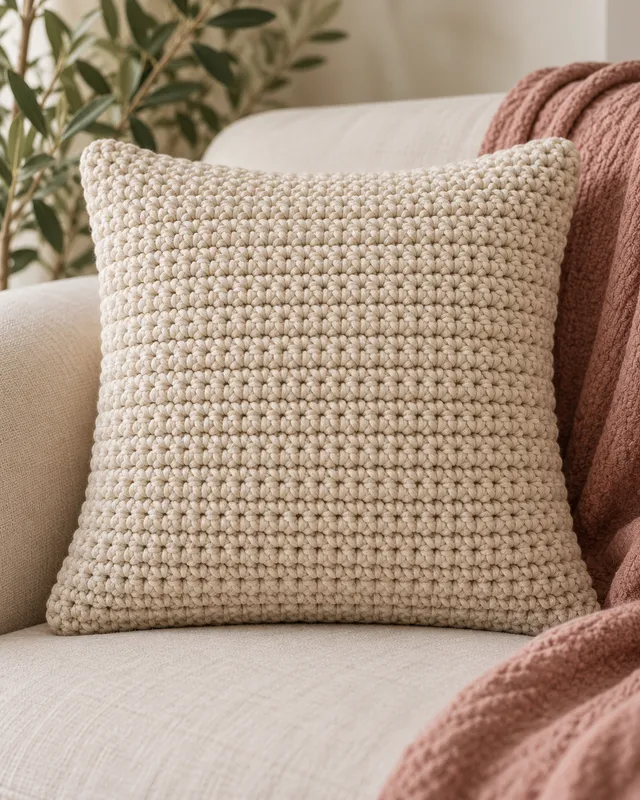
Two matching flat panels make the front and back of a simple cushion cover. The oatmeal example lets you concentrate on producing equal pieces and joining them neatly. Measure the cushion insert and follow a pattern that accounts for fit and an opening. This is a larger practice project, so sample first instead of assuming two rectangles will automatically match.
12. Plain table mat
A plain table mat provides room to practise a wider row without adding decorative shaping. The sage rectangle works as a quiet base for ordinary table settings. Use a fibre whose care instructions suit frequent handling, and check the mat lies flat. Its size does not prove heat resistance; keep hot cookware on an appropriate tested protective surface instead.

13. Small rectangular scarf
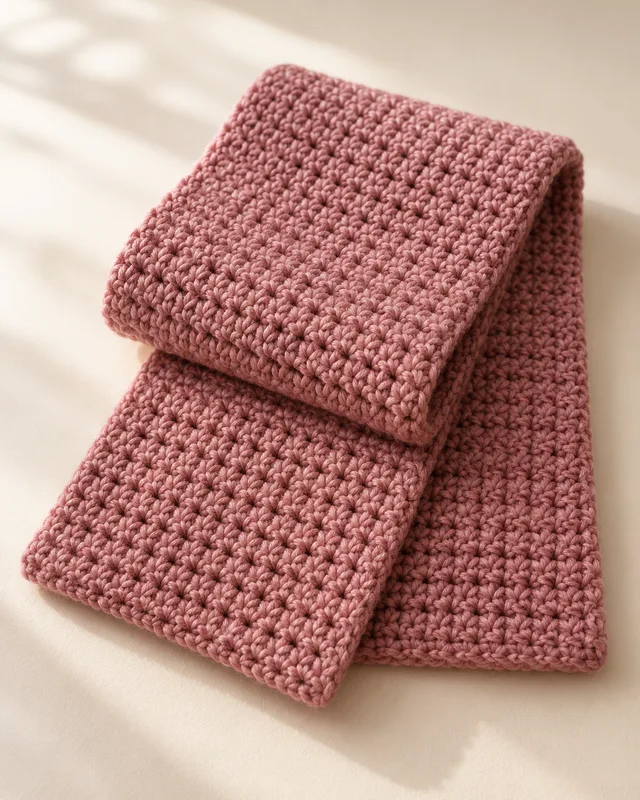
A small scarf repeats the same actions for longer than a coaster, helping you notice whether your tension changes over time. The dusty rose version has straight ends and no fringe to finish separately. Choose its length from a pattern and the intended wearer rather than from the illustration. Budget yarn for the actual dimensions, not a promised finishing time.
14. Stitched journal band
A journal band gives a simple strip a clear purpose: holding around a closed notebook. The cream example avoids buttons and elastic, making the join the main additional step. Measure the notebook with its cover closed and sample the fabric's stretch. A band that is too tight can distort the stitches, while a loose one will slide away in use.
15. Patchwork practice panel
Joining four practice squares turns separate lessons into one small panel. Cream and sage help the joining lines stand out without requiring intricate colour work inside each square. Make the pieces to matching dimensions and compare their edge counts before joining. The extra work is in consistency and assembly, so keep the first panel small enough to inspect comfortably.

Choose the direction that fits your project
A practice square, coaster or cloth is a useful choice when you are still learning to find the row ends. A sleeve or pouch becomes a sensible next step when you can make an even rectangle and want to learn a join. Choose the project with one new demand rather than several unfamiliar tasks at once.
Keep your first project manageable
Choose a smooth, light-colored yarn so you can see the loops and count the edges. Pair it with the hook size in your chosen pattern, and make a few practice rows before starting the finished object. A plain rectangle gives you fewer things to keep track of while your hands learn the movements.
Leave time for the last steps: joining a pouch, weaving in ends or checking the finished size. If the first attempt comes out uneven, keep it as a practice piece. Repeating a small shape is a useful way to notice what has become easier.
Frequently asked questions
Which crochet project is best for a complete beginner?
A small practice square is a useful starting point because you can concentrate on holding the yarn, forming stitches and counting. A washcloth is a practical next choice once you can keep the edges reasonably even.
What should I know before making a pouch?
Practice a rectangle first, then read how the pouch is folded, joined and closed. The seams and opening may introduce more new skills than the main fabric.
Are the ideas complete crochet patterns?
These are project ideas to help you choose what to make. Use a complete pattern for the stitch counts, dimensions, yarn quantity and finishing instructions.
Frequently asked questions
Are these complete patterns?
No. The entries help you choose an idea and compare its demands. Follow a complete pattern with dimensions, material quantities and construction instructions before making the object.
Can I use a different yarn?
Check the pattern’s permitted substitutions and required gauge. A different fibre, thickness or hook can change the feel and dimensions. Make a suitable sample before deciding on a full quantity.
How long will a project take?
That depends on size, the actual pattern, your experience and its finishing work. Plan around the tasks you already know, leaving extra time for new techniques and assembly rather than treating a title as a time guarantee.
What should I learn next?
Use the beginner crochet guide to choose a route, then look for the crochet starter-kit guide. For another design comparison, explore 21 small crochet projects.
- 25 Crochet Project Ideas for Learning New Skills
Choose from 25 crochet skill-building project ideas, from color changes and shaped samples to zips, lining, textures and fitted basket lids.
- How to Hold Yarn, Make a Slip Knot and Start a Crochet Chain
Learn to hold crochet yarn, make an adjustable slip knot and build a short chain, with practical counting and troubleshooting checks.
- 19 Beginner Crochet Projects That Make Useful Gifts
Explore 19 useful crochet gift projects with a beginner focus on steady fabric, simple assembly, fit and a complete finish before wrapping.
- 11 Crochet Mistakes Beginners Can Avoid with Better Setup
Avoid 11 common crochet setup mistakes with practical checks for yarn visibility, hooks, counting, working space, finishing tools and care information.
- 13 Small Crochet Project Ideas for One Ball of Yarn
Compare 13 small crochet project ideas for a single yarn ball, with a practical yardage-first approach to size, paired pieces, finishing and fit.
- 17 Crochet Practice Projects for Learning Basic Stitches
Find 17 crochet practice projects organized around useful skills: steady rows, counting, shaping, borders and simple joins, with clear checks for progress.
- Crochet Supplies for Beginners: A Simple Starter Kit
Start with one useful yarn-and-hook pairing, a few finishing tools and a pattern you can follow. Add specialist supplies when a real project needs them.
- How to Crochet for Beginners: A First-Project Guide
Choose a manageable first crochet project, understand the supplies you need and build a learning path without buying a cupboard full of yarn.
- 21 Small Crochet Projects for a Creative Weekend
For the simplest outline, shortlist the page marker or small cloth. For a useful organiser, compare the notions pouch and hook roll. For a decorative project, consider a very short garland.