In this article
A useful beginner gift begins with a result you can finish confidently, not simply an object that looks small. A plain coaster needs to lie flat, a sleeve needs an opening that works, and a simple cloth needs appropriate yarn and care. Those checks help turn a learning project into something another person can comfortably use.
These nineteen directions focus on the skills behind modest everyday gifts. Start with the stitches and joins you already understand, then choose a complete pattern for the actual dimensions and finishing. Some later ideas add a closure, pocket or assembly task and are better saved until the plain versions feel reliable. The pictures are design references, not tested patterns or promises about completion time, strength or protective performance.
A learning sample becomes a gift after the finish works
Before choosing several presents, finish one item completely and try the actual opening, surface or join. The recipient should not need to guess which part was left unfinished. Keep the first gift within the techniques you can inspect and repeat, and let a new closure or lining be a separate learning decision.
1. Plain mug coaster
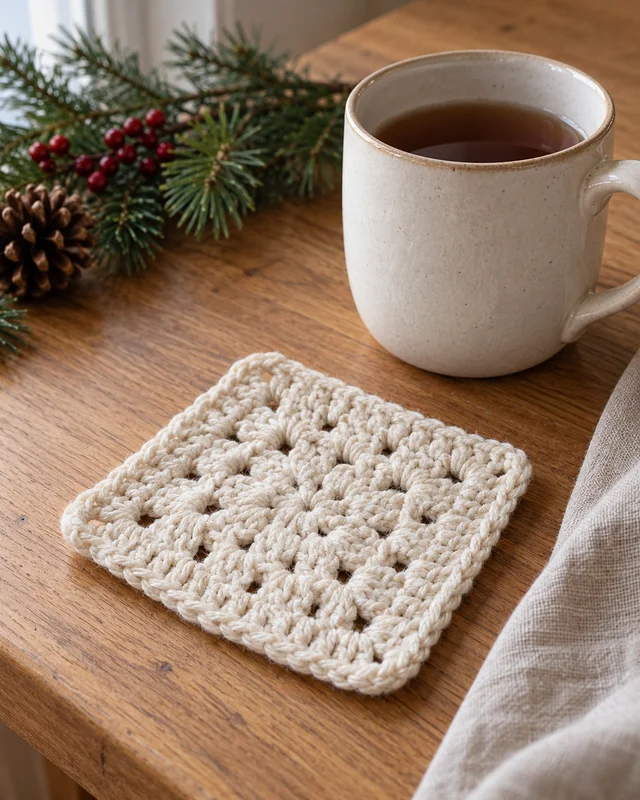
A plain coaster is a useful first gift candidate when you can already keep a small rectangle even. Finish one completely and check that a cup sits steadily after the intended care process. That final check teaches more than adding several decorative borders. Choose a complete pattern and inspect the ends on the reverse so the gift feels finished rather than like a practice square handed over too early.
2. Cotton face-cloth square
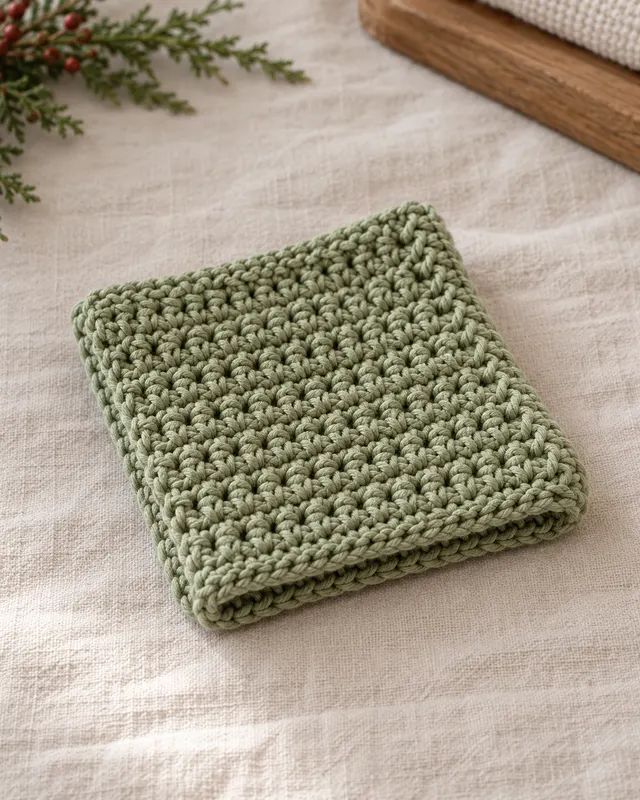
A small face-cloth square can turn steady rows into a useful textile without adding a closure. Select the yarn and texture for the recipient’s preferences and actual washing routine. Keep the edge simple enough to finish neatly. Before gifting, assess a washed and fully dried sample; a yarn’s appearance does not establish skin-care benefits or guarantee that a particular surface will suit everyone.
3. Flat reading bookmark

A reading bookmark rewards a thin, even fabric and carefully buried ends. Those are useful beginner finishing goals without the complexity of fitting a sleeve. Test the finished piece in a spare book and check that it does not create a bulky ridge. A restrained design can feel personal through color, while a small amount of secure finishing matters more than extra decorative details.
4. Simple glasses sleeve

A glasses sleeve is a suitable next direction after you can make and join matching rectangles. Measure the folded frames and include room for seams or any lining. Try the opening before closing the final edge. Keep the claim practical: the sleeve organizes glasses, while protection from crushing or impact requires an appropriate case rather than an assumption about the thickness of crochet.
5. Small zip-free pouch
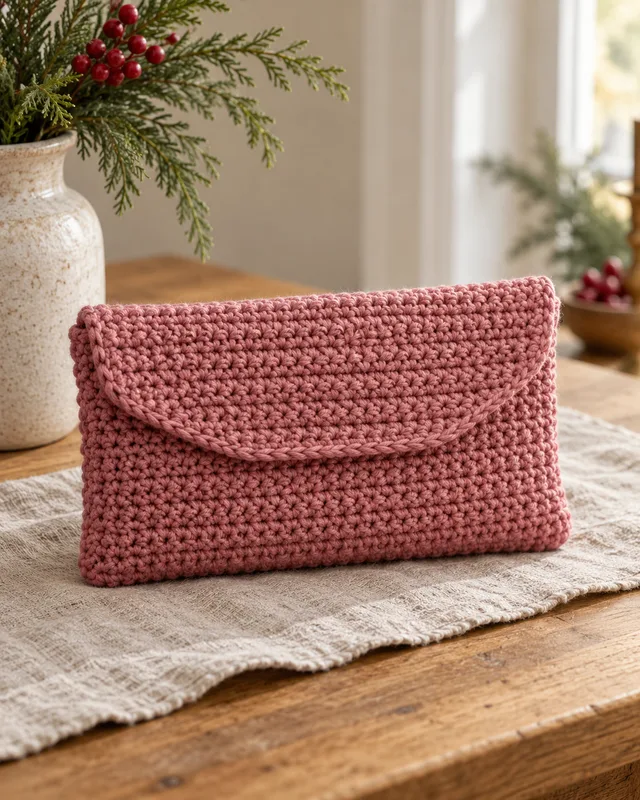
A pouch without a zip lets you focus on panel alignment and a simple flap. Choose a pattern with a clear assembly order and test its usable opening against the intended contents. A flap is not automatically a secure closure, so use the actual design’s finishing method. Avoid adding hardware at the last moment unless the pattern explains how that fitting should be attached.
6. Plain joined ear warmer

A plain ear-warmer loop is a compact fitting project once your rows and joining seam are reliable. Get a useful measurement and select a supported pattern size before beginning. Check its finished stretch and feel rather than tightening the join to compensate for a long strip. A simple unknotted shape leaves room to concentrate on comfort, even width and a tidy inside seam.
7. Two-panel book cover

A two-panel book sleeve makes matching measurements the main lesson. Measure a specific book, including the spine, and work both panels consistently. Check their size after the same finishing process before joining. Keep the first version plain so you can inspect the seam and opening easily. A pocket or lining can be a later project rather than an extra task added to an untested fit.
8. Flat key strap

A short key strap needs a secure folded join around the actual split ring. Read that part of the accessory pattern before choosing the width of the strip. Inspect the completed attachment with the intended keys and secure every end. This is a small finishing project, not a safety tether; its useful role is making ordinary keys easier to identify and locate.
9. Desk coaster pair
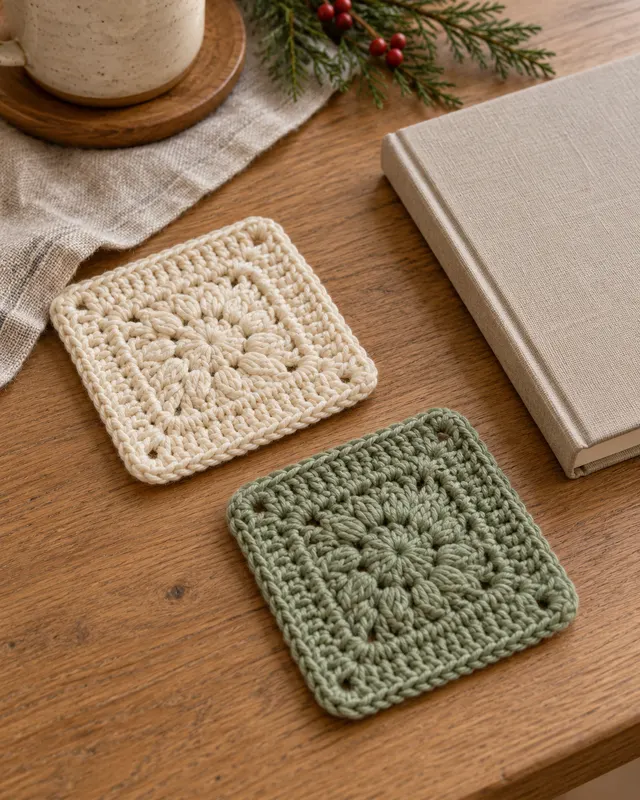
A coaster pair gives you a reason to repeat a successfully finished first piece. Record its dimensions and finishing, then compare the second before wrapping them together. Consistent surfaces and care are more useful than a complicated motif. If your tension changes noticeably, correct the sample before making a whole set; the recipient should receive two usable coasters rather than two different practice stages.
10. Soft tissue cover
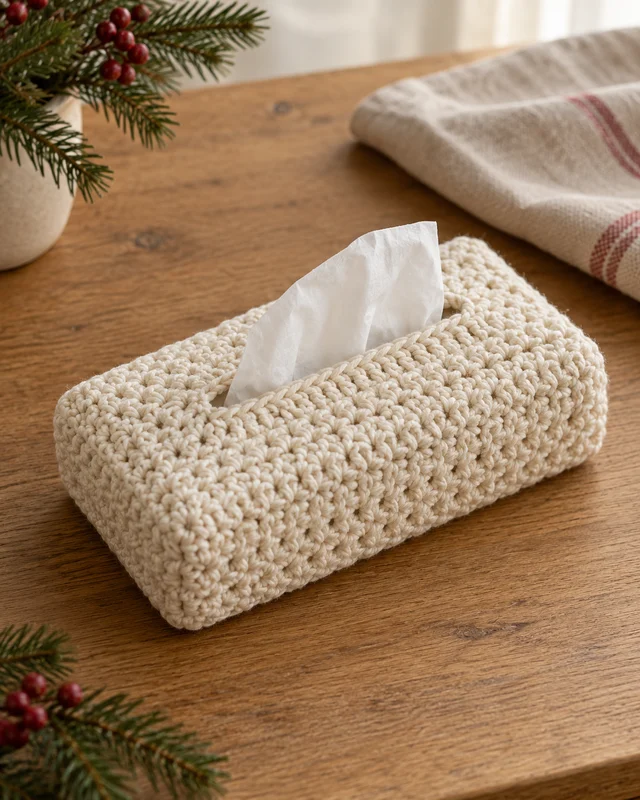
A tissue cover is a straightforward fitting exercise when it matches a particular small packet. Check both the outside dimensions and the position of the opening. The recipient needs to replace the packet easily, so test that step before finishing the last seam. A plain surface can be attractive on its own; keep the opening clear instead of surrounding it with details that catch the tissues.
11. Folded-corner catchall

A folded-corner catchall adds a little volume to a flat square. Make the base evenly, then follow a suitable pattern for joining the corners without twisting them. Check the finished tray on a level surface and keep its walls modest. The project is useful practice in assembly, but a decorative photograph does not prove how rigid the fabric will be with your own materials.
12. Plain pot sleeve

A pot sleeve can be planned around an existing intact container, leaving the pot to handle soil and water. Measure its taper and make the crochet removable for cleaning or watering. Keep the drainage and separate saucer unobstructed. For a beginner, a plain supported shape is a better lesson than inventing increases by eye around an unfamiliar pot and hoping the cover will fit later.
13. Small notions sack
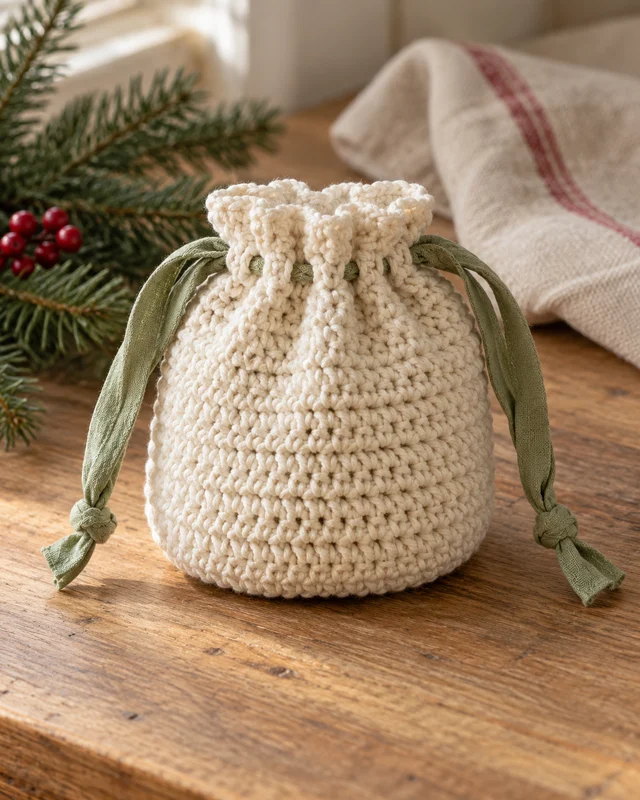
A small notions sack introduces a drawstring opening to a simple bag. Read the channel and cord instructions before completing the body, and test that the closure moves freely. The main skill is a usable opening, not the smallest possible size. Keep sharp tools in suitable cases inside it; an ordinary crochet pouch is not a secure cover for exposed needle points.
14. Notebook pen band

A pen band combines a small sleeve with a fit around a particular notebook. Measure the pen’s widest part and the notebook before choosing the design. Attach the sleeve while you can still reach its reverse, then test both pieces together. The finished band should hold its place without bending the covers or forcing the pen into a pocket that is too tight to use.
15. Straight-edged scarf
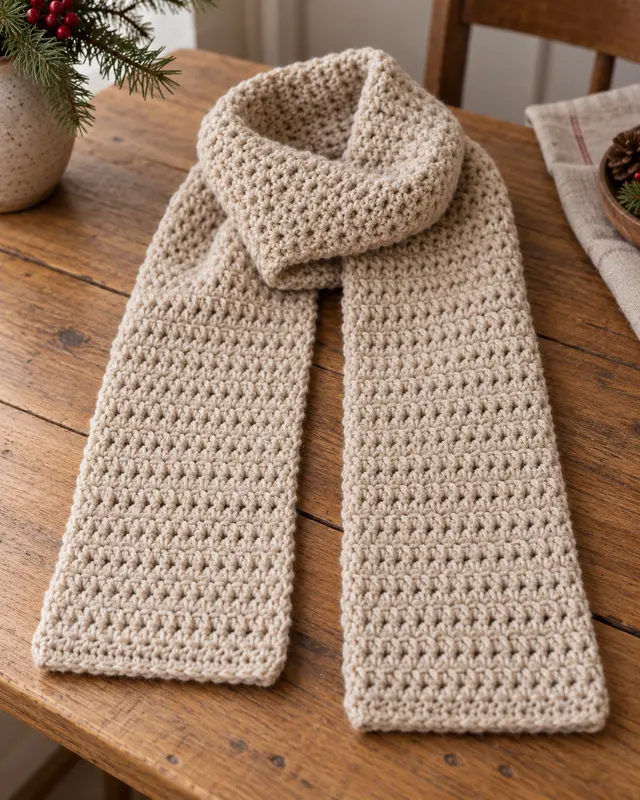
A straight scarf offers a familiar repeat over a longer distance, so use it only when your counting stays consistent through interruptions. Check the actual pattern’s yardage and finished size rather than assuming a narrow shape will be quick. Fringe-free ends can keep the finishing simple. Record your place and inspect the width regularly so a small early change does not become a whole scarf’s problem.
16. Reusable gift band

A reusable band can add a handmade detail to gift wrapping without a fitted wearable. Measure the actual box and follow a closure method that can be opened without cutting the crochet. Keep the width even and the join smooth. This can be a useful finishing exercise, but it still needs enough yarn for the complete band rather than an unfinished strip stretched around the package.
17. Short hook wrap
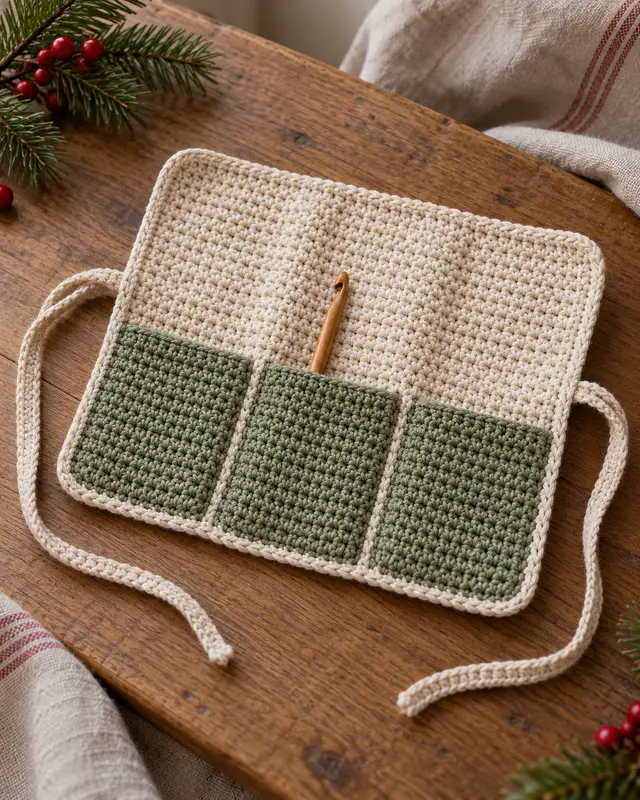
A short hook wrap puts pocket placement and assembly into a manageable format. Measure the actual tool handles and check the folded bulk before sewing every pocket closed. Keep the ties easy to use and store sharp tools in appropriate protective cases. Choose this after plain panels feel comfortable; several small seams can take more attention than the outer rectangle suggests.
18. Practice-square cushion front

Four practice squares can become a small cushion front when their dimensions and joins agree. Use a complete cover pattern to determine the insert, back and closure rather than assuming the front alone is the project. Finish the squares consistently before assembly. This is a later beginner gift: the repeat may be familiar, but joining, fitting and a clean final closure are separate skills to learn.
19. Matched cloth-and-coaster gift
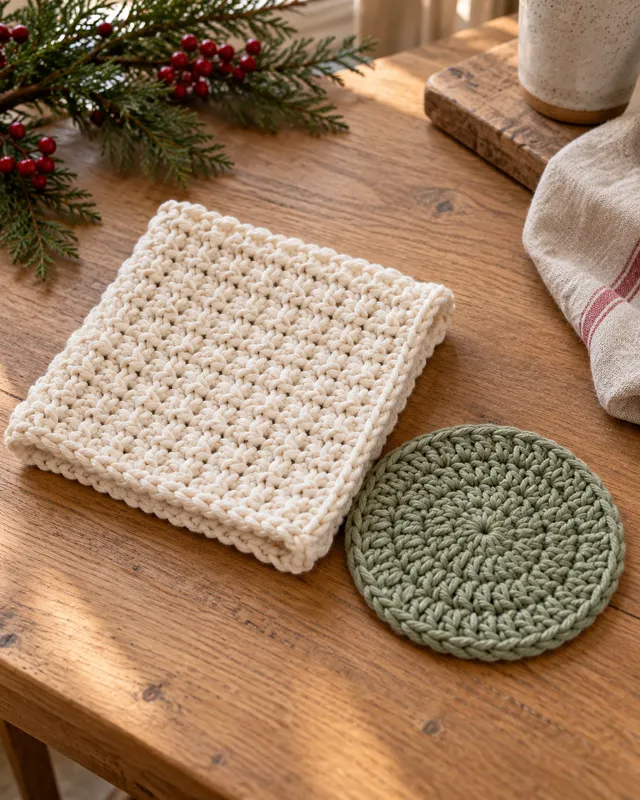
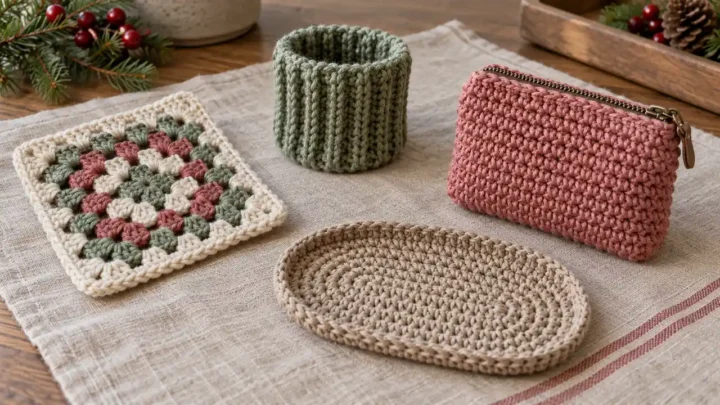
A cloth and coaster set is a way to pair two familiar projects once each works independently. Check the chosen yarn’s suitability and care for both uses, and give each piece a flat, secure finish. The matching colors can connect them without making their dimensions identical. Complete one of each before planning several sets, so the gift reflects a repeatable result rather than a rushed collection of samples.
A handover check in four passes
- Surface: the cloth, coaster or panel behaves as the pattern intends after care.
- Fit: the real object or reliable recipient measurement works with the finished opening.
- Joins: ends, seams and any fittings are secure using the appropriate instructions.
- Care: the actual materials and useful cleaning information go with the gift.
If one pass fails, correct that issue before adding a decorative detail or multiplying the set. A simpler complete gift is a better result than an ambitious object that remains awkward to use.
For recipient choices beyond the beginner skills, browse the gift-planning guide. If a specific technique is still uncertain, choose an exercise from the practice projects before making the gift version.
- 25 Crochet Project Ideas for Learning New Skills
Choose from 25 crochet skill-building project ideas, from color changes and shaped samples to zips, lining, textures and fitted basket lids.
- How to Hold Yarn, Make a Slip Knot and Start a Crochet Chain
Learn to hold crochet yarn, make an adjustable slip knot and build a short chain, with practical counting and troubleshooting checks.
- 11 Crochet Mistakes Beginners Can Avoid with Better Setup
Avoid 11 common crochet setup mistakes with practical checks for yarn visibility, hooks, counting, working space, finishing tools and care information.
- 13 Small Crochet Project Ideas for One Ball of Yarn
Compare 13 small crochet project ideas for a single yarn ball, with a practical yardage-first approach to size, paired pieces, finishing and fit.
- 17 Crochet Practice Projects for Learning Basic Stitches
Find 17 crochet practice projects organized around useful skills: steady rows, counting, shaping, borders and simple joins, with clear checks for progress.
- Crochet Supplies for Beginners: A Simple Starter Kit
Start with one useful yarn-and-hook pairing, a few finishing tools and a pattern you can follow. Add specialist supplies when a real project needs them.
- How to Crochet for Beginners: A First-Project Guide
Choose a manageable first crochet project, understand the supplies you need and build a learning path without buying a cupboard full of yarn.
- 15 Easy Crochet Project Ideas for Beginners
Start with the practice square for counting, the washcloth for a useful rectangle or the envelope pouch when you are ready to fold and join.
- 21 Small Crochet Projects for a Creative Weekend
For the simplest outline, shortlist the page marker or small cloth. For a useful organiser, compare the notions pouch and hook roll. For a decorative project, consider a very short garland.