In this article
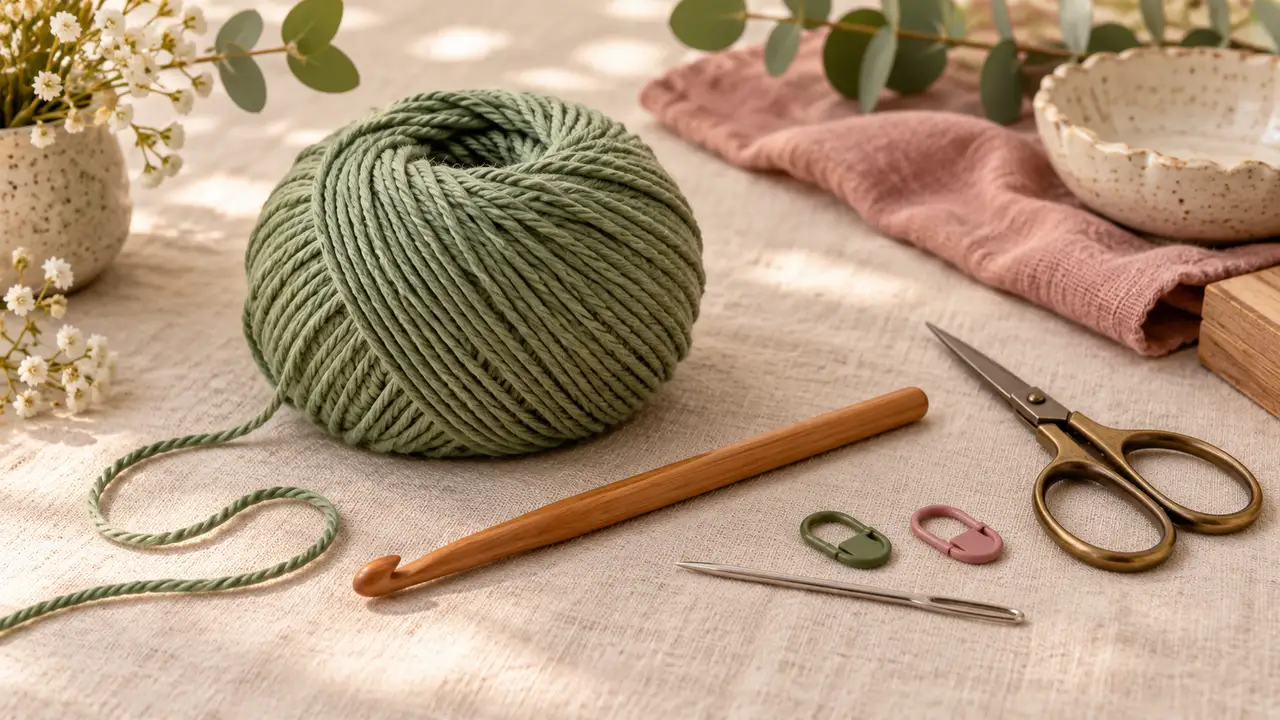
A useful beginner crochet kit can be small: one suitable yarn, one clearly sized hook, a few removable markers, scissors and a yarn needle. Choose those around a practice lesson or a specific first pattern rather than buying a large assortment before you know what you enjoy making. A ruler and a way to keep notes make the kit more useful without adding complicated equipment.
This guide explains what each item helps you do, what to check before purchasing it and which extras can wait. It is a selection guide, not a product test or an affiliate shopping list. Start with materials you can see and handle comfortably, then add tools in response to a real project requirement rather than a promise that every beginner needs the same set.
What you need before the first practice session
| Supply | Why it belongs in a small kit | What to check |
|---|---|---|
| Smooth yarn | Makes the loops and edges easier to inspect | Fibre, thickness, amount, care instructions and a visible colour. |
| One crochet hook | Forms the fabric in the chosen lesson or pattern | Size in millimetres, a smooth surface and a manageable grip. |
| Removable markers | Help identify edge stitches or a counted position | They should open and close without snagging the yarn. |
| Scissors and a yarn needle | Support cutting and securing ends | A suitable needle eye and a blunt tip for the finishing task. |
| Ruler and notes | Make samples repeatable | Record hook size, stitch count, row count and finished dimensions. |
1. Choose the lesson or project before the full kit
Read the complete instructions and make a short requirements list. A plain practice rectangle may need only the core items above. A zipped pouch, lined bag or fitted accessory introduces additional materials and finishing skills. Buying a general starter box does not guarantee those requirements will be covered, so let the actual task guide the list.
Checkpoint: you can identify the yarn, hook, terminology and finishing supplies requested by the lesson. Any unfamiliar special tool has a stated purpose rather than being an unexplained extra.
2. Read the yarn label as a set of decisions
Check the fibre, amount in the ball, yarn-weight category and care instructions. These describe different things: the weight of a ball is not the same as a thickness category. Keep the label with your sample, especially when you may need to buy more of the same yarn. A colour name or photograph alone is not a reliable way to match material later.
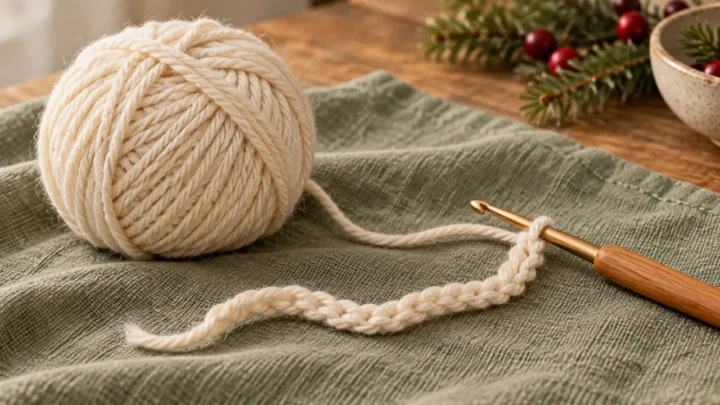
For initial practice, consider a smooth, solid, reasonably light colour. Strong surface fuzz, very dark shades or rapid colour changes can make a stitch harder to recognise. Choose a yarn you can undo without frustration. The goal is to see the fabric you are learning to make, not to choose the most decorative material available.
The Craft Yarn Council’s yarn-weight reference treats hook ranges as guidelines. Use the pattern’s actual material and gauge requirements when making a measured object rather than selecting only from a category number.
3. Choose one hook you can assess
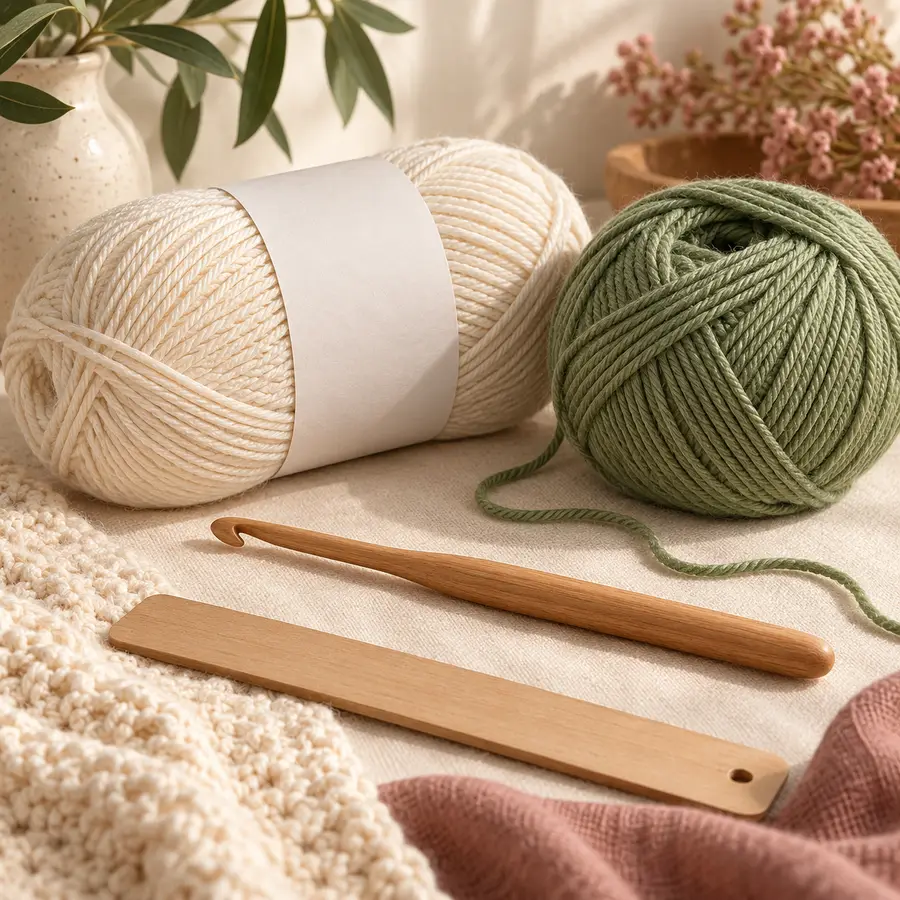
Check the size in millimetres and inspect the surface around the hook head. A comfortable grip and a smoothly formed hook are more useful than a large number of sizes you have never tried. Work with one suitable hook before deciding whether you prefer a different handle shape or material. Keep your choice connected to the yarn and lesson.
The Craft Yarn Council’s sizing guidance recommends comparing metric measurements because letter and number labels can vary between manufacturers. For a project with a stated gauge, the sample determines whether the pairing produces the required fabric.
Checkpoint: you can read the hook’s metric size and form a small sample without needing to force the tool through extremely tight fabric. If you are uncertain about the movements, return to a reliable demonstration before changing several materials at once.
4. Add the small tools that solve real problems
- Use removable markers to identify the first and last stitch as explained by the lesson. They are especially helpful when an edge is difficult to read.
- Choose a yarn needle appropriate to the yarn and finishing task. A needle that splits or drags the fabric is not a useful match.
- Keep scissors safely with the kit and close them when not in use.
- Use a ruler or tape measure for samples, and keep a simple record rather than relying on memory.
An ordinary small container can keep these supplies together. It does not have to be a special project bag. Avoid loose sharp tools at the bottom of a crowded bag, and keep small markers and needles stored appropriately for the people sharing the space.
5. Make one sample before buying project quantities
Use the chosen lesson to make a small flat sample. Record the material and hook, count the stitches and note its dimensions. For a measured pattern, follow its gauge-swatch instructions and the recommended finishing before comparison. A different look after washing or finishing is useful information before the entire project has been made.
Checkpoint: you have a sample you can identify and reproduce, along with the label and measurements. Only then decide whether the material suits the project and how much the actual pattern requires. A fixed universal yardage estimate would be misleading for objects of different sizes and construction.
What can wait until later?
Large hook sets, blocking equipment, specialist needles, winding tools and a shelf of yarn can wait until a project justifies them. Some techniques need a particular hook or support, but that does not make the tool essential for every new crocheter. Keep a wish list if you enjoy browsing supplies, and revisit it after making several samples.
Troubleshooting a starter kit
| Problem | Useful check |
|---|---|
| You cannot see the next stitch | Try a smoother or more visible practice yarn before changing the whole lesson. |
| The hook repeatedly catches | Inspect its surface and review the movement and tension; do not force a damaged tool. |
| The sample changes size | Check counts and tension, then compare the same materials consistently. |
| A purchased set lacks a required tool | Return to the actual pattern’s list rather than assuming a starter label covers every project. |
Frequently asked questions
Do I need a complete hook set?
One appropriate hook is enough for a first lesson. Try it in a real sample before buying several sizes or deciding which handle style you prefer.
Can I practise with leftover yarn?
Yes, if you can identify enough about it to make a sensible pairing and it is usable for practice. For a finished item with care or sizing requirements, known material information is more important.
Is the most expensive yarn better for learning?
Price does not tell you whether its loops are easy to see or whether it suits the lesson. Choose visibility, manageable handling and the project’s requirements over a premium label.
Do I need blocking tools immediately?
Follow the chosen pattern and fibre-care instructions. Some practice lessons do not require specialist equipment; other finished projects depend on a particular finishing process. Let that process establish the need.
Choose one project and begin
Use the beginner crochet guide to choose a manageable direction. Compare fifteen first-project ideas when you are ready for an object, or use the single and half double crochet lessons to focus on a basic fabric. Start with one useful pairing and a sample you understand.