In this article
A coaster is a small place to compare shape and finishing: circles, squares and leaves all make different boundaries on a table. The center still needs to rest naturally beneath the intended cool object. Keeping that practical area separate from the decorative edge makes the comparison more useful.
These nineteen designs are inspiration for complete crochet patterns, not material-performance claims. A yarn surface cannot establish heat protection, waterproofing or compatibility with every table finish. Check the actual materials and intended use independently, then make a finished sample before repeating a set. Familiar stitches and small dimensions can still require careful corners, color ends or seams. The images illustrate appearance rather than counted charts or evidence that the finished mats have been tested.
1. Plain round disk

A plain closed disk gives you a clear starting point for judging flatness and finished diameter. Follow the selected round counts rather than adding increases wherever the edge seems tight. Compare the mat on the actual cool table. The yarn surface alone cannot establish heat protection, waterproofing or compatibility with a delicate finish, so keep those needs separate.
2. Square single-texture coaster

A square coaster emphasizes even rows and tidy corners. Its relaxed outline should remain flat after compatible care. Count the first and last stitches carefully before using a border to frame the piece. A decorative edge can finish a sound square, but it cannot reliably correct a changing row width or a center that was made to inconsistent counts.
3. Hexagonal coaster

A hexagon makes corner placement visible within a compact project. Keep the increases or turns in the positions required by the complete pattern so the six sides remain coherent. Compare the finished mat with the intended cup base. The geometric outline is a style choice and does not establish a performance difference from another flat crochet shape.
4. Oval mug mat

An oval mat can leave space beside a mug without requiring a large rectangle. Check its finished length and width against the real tabletop footprint. The oval increase sequence needs to lie naturally before the outer edge is finished. Keep the use decorative and appropriate to cool objects unless a separately verified design supplies the material performance you require.
5. Small rectangle mat

A small rectangle offers a different footprint for a narrow table space. Decide which direction the rows should run before beginning the selected pattern. Its finished edges should sit flat without curling around the cup base. Make a complete sample with the actual yarn and care, since even a small object can change dimensions after washing or drying.
6. Two-color concentric rings

Concentric colors can make a simple circle visually clear while introducing several ends to finish. Keep the increase count correct across each change. Choose compatible yarns and assess color behavior in an appropriate care sample. A decorative ring pattern should not be interpreted as a measurement guide or evidence that the mat will absorb or resist a particular spill.
7. Granny-square coaster

A small granny square introduces grouped stitches and a visible corner recipe. Check the actual openings against the intended object and surface. The square should rest naturally after its last round and finishing. Use a complete coaster design rather than assuming any decorative motif is suitable for the same use simply because it reaches an approximate cup-sized outline.
Measure the useful center separately from the outline
A flower tip, scallop or broad border adds visible width without necessarily adding a stable resting area. Compare the real mat with a suitable cool object on the actual table. Keep heat protection and material-to-surface compatibility as separate requirements. The home guide connects the decorative choice with practical placement.
8. Moss-texture disk

A finely speckled crochet surface can connect two colors without broad stripes. The actual stitch-and-space repeat determines the edge treatment and finished density. Count the repeat consistently and keep the final ends enclosed appropriately. Evaluate the real fabric against the tabletop rather than assigning absorption, heat resistance or slip prevention from a woven-looking photographic texture.
9. Ribbed square coaster

Shallow ribs give a square a visible direction, but raised lines can change how an object rests. Compare the completed mat with a suitable cool cup and check for rocking on the actual surface. The complete pattern should keep relief appropriate to the intended use. A texture lesson can be better treated as a display swatch if it does not make a stable mat.
10. Scalloped-edge coaster

Small scallops soften the perimeter while a closed center supplies the main resting area. Keep the usable center diameter distinct from the total outer width. The scallop repeat needs a compatible foundation count and relaxed tension. If the edge waves, check that construction before adding more rounds or forcing the piece flat through unsuitable heat or stretching.
11. Flower-shaped coaster

Broad flat crochet petals turn the outer outline into a flower without requiring a raised center. Check that the intended cup rests on a stable continuous area rather than the gaps between petal tips. The pattern should define both the decorative shape and useful center. Keep hot-object protection separate from the flower’s attractive familiar form.
12. Leaf-shaped coaster

A leaf-shaped mat has an asymmetric outline that can remain clear with shallow detail. The center line should not make a cup rock or leave the support area too narrow. Compare the actual finished shape with the object you intend to place there. A botanical silhouette is decorative, and its usefulness still depends on the full fabric and surface relationship.
13. Sunburst coaster

A ray-like outer pattern can create a sunburst without copying a flower head. Keep the center quiet and flat enough for the intended cool object. The decorative points add outer width, so measure the usable resting area separately. Follow the actual repeat and finishing instructions rather than estimating the number of rays from an illustrative photograph.
14. Corner color-block coaster

One corner block gives a square a clear color accent while leaving most of the surface plain. The color change needs tidy internal ends and consistent tension. Compare the yarns for compatible care before making a set. The graphic division should stay within the selected construction rather than becoming a reason to alter the row count or corner treatment casually.
15. Joined-triangle coaster

Six joined triangles turn the mat into a small assembly exercise. Their completed dimensions and seams need to produce a flat hexagon. Make a representative join before completing the whole set. A raised junction may suit display better than a resting surface, so inspect the center with a suitable cool object rather than judging only the front-facing color arrangement.
16. Dense spiral coaster

A spiral line makes the round construction visible and gives a plain palette movement. Keep the round boundary and actual count clear while working. The finished disk should lie naturally without requiring a cup to press it down. Surface appearance cannot establish absorption or protection, so compare the actual material and tabletop needs separately from the decorative line.
17. Rounded-square coaster
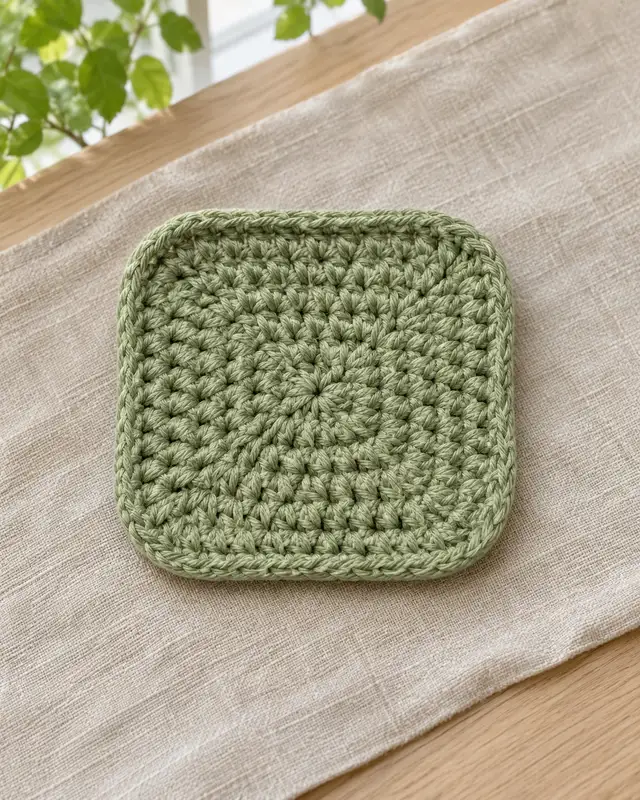
Rounded corners soften a square outline without requiring a full circle. Their shaping and final edge count need a complete method. Compare all four corners before finishing the ends, especially if the rows change direction around them. A small difference can be corrected more easily while the working yarn remains accessible than after a decorative border has been added.
18. Contrast-edge disk

A narrow dark edge can frame a quiet disk and make the outer outline easier to see. Keep its tension compatible with the center so the mat remains flat. Reserve enough edge yarn for the whole set before adding extra rounds. The color boundary is a visual choice, not a separate protective layer with guaranteed performance.
19. Stackable matching set

A matching set benefits from consistent finished size and a useful storage plan. Complete and care for one reference coaster before repeating the remaining pieces. Compare each against it without forcing small differences away. The stack should remain easy to separate and store, while every individual mat still needs a flat surface appropriate to its actual intended use.
Finish and care for one before making four
Keep the actual yarn label, finished dimensions and edge count with the first sample. Use the permitted care method, then compare flatness and seams again. If the sample no longer suits the intended object, change the plan before repeating the set. The washable-fiber guide explains the whole-object care comparison, and the runner and mat ideas extends the footprint choices.
- 15 Crochet Wall Hanging Ideas for Cozy Rooms
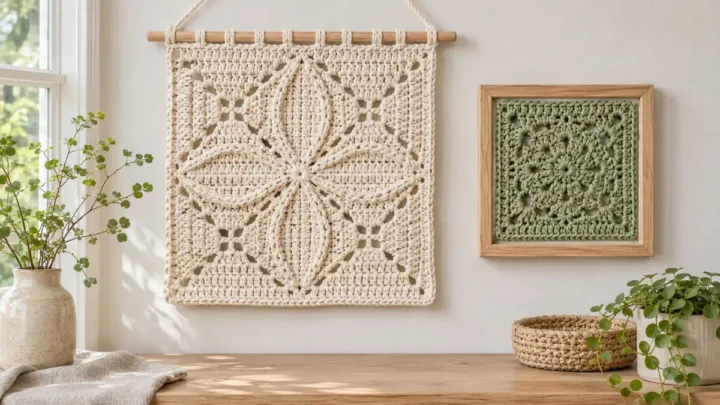
Explore 15 crochet wall-hanging ideas through shape, spacing, backing and mounting, with practical notes on finished dimensions and supported display.
- 21 Crochet Pillow Cover Style Ideas
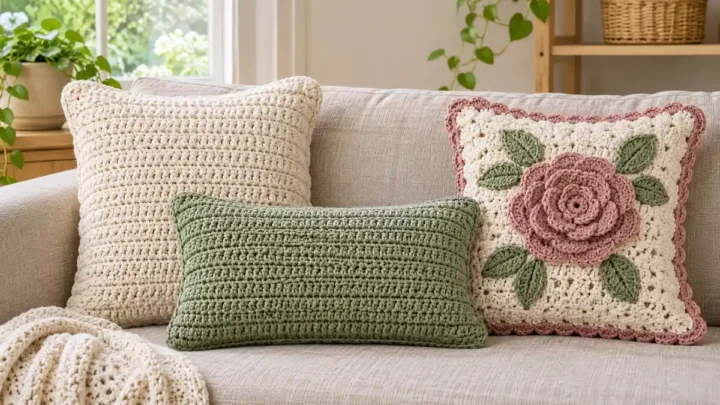
Find 21 crochet pillow-cover ideas by opening, insert shape, texture and panel layout, with practical notes on fit, seams and removable construction.
- 25 Crochet Basket Ideas for Home Organization
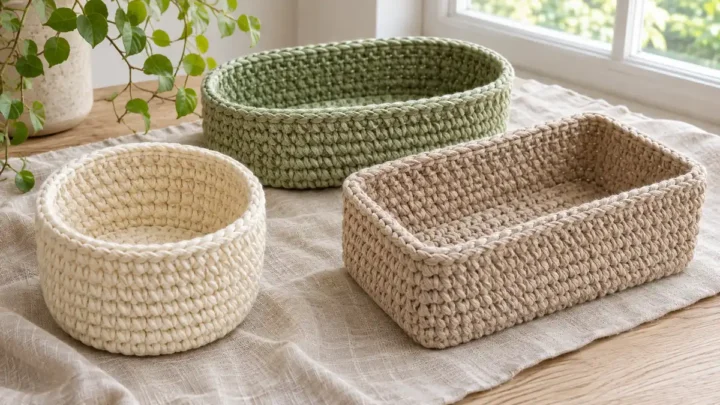
Explore 25 crochet basket ideas by footprint, opening, dividers and lining, with practical checks for storage fit, base shape and complete construction.
- Crochet Home Decor Ideas for Useful Handmade Spaces
Plan useful crochet home decor through storage, cushions, table textiles and wall displays, with practical routes for shape, fit, materials and care.
- 13 Crochet Soap Saver and Bath Accessory Ideas
Compare 13 crochet soap savers and bath accessories with practical notes on openings, dry storage, actual materials, cleaning access and complete patterns.
- How to Choose Fibers for Washable Crochet Home Projects
Choose fibers for washable crochet home projects with actual label care, complete samples, component checks and practical notes for the finished object.
- How to Make Crochet Baskets Hold Their Shape
Diagnose crochet basket shape through the base, sides and rim, then compare materials, transitions and supported finishes with a modest complete sample.
- 23 Crochet Table Runner and Placemat Inspirations
Explore 23 crochet runner and placemat ideas through footprint, repeats, borders and sets, with useful checks for flatness, dimensions and decorative use.
- 17 Crochet Plant Hanger and Pot Cover Ideas
Compare 17 crochet pot sleeves and hanger concepts, separating decorative fit from drainage, actual container weight, mounting and supported construction.