In this article
Learning several stitch names is less useful than understanding what changes when you make a different fabric. This practice list begins with foundations and basic rows, then introduces insertion changes, grouped repeats and a few next-step textures. Work through it according to your present skills rather than trying every option in one sitting. Each entry suggests something to observe and a reason to make a small sample. Easy is relative: later repeats still require counting and clear instructions. The seventeen entries are learning directions rather than a single tested sampler pattern, so use a reliable lesson to learn the movements and correct insertion points.
Quick picks
Begin with a chain and plain single crochet rows. Compare half double crochet next. Save grouped repeats and openwork until keeping a steady count feels comfortable.
Before you choose
- Practise one new movement or insertion choice at a time.
- Mark the first and last stitch according to the lesson, and check every short row.
- Use a solid, smooth yarn so its surface does not hide the positions you are learning to recognise.
1. Chain-stitch foundation
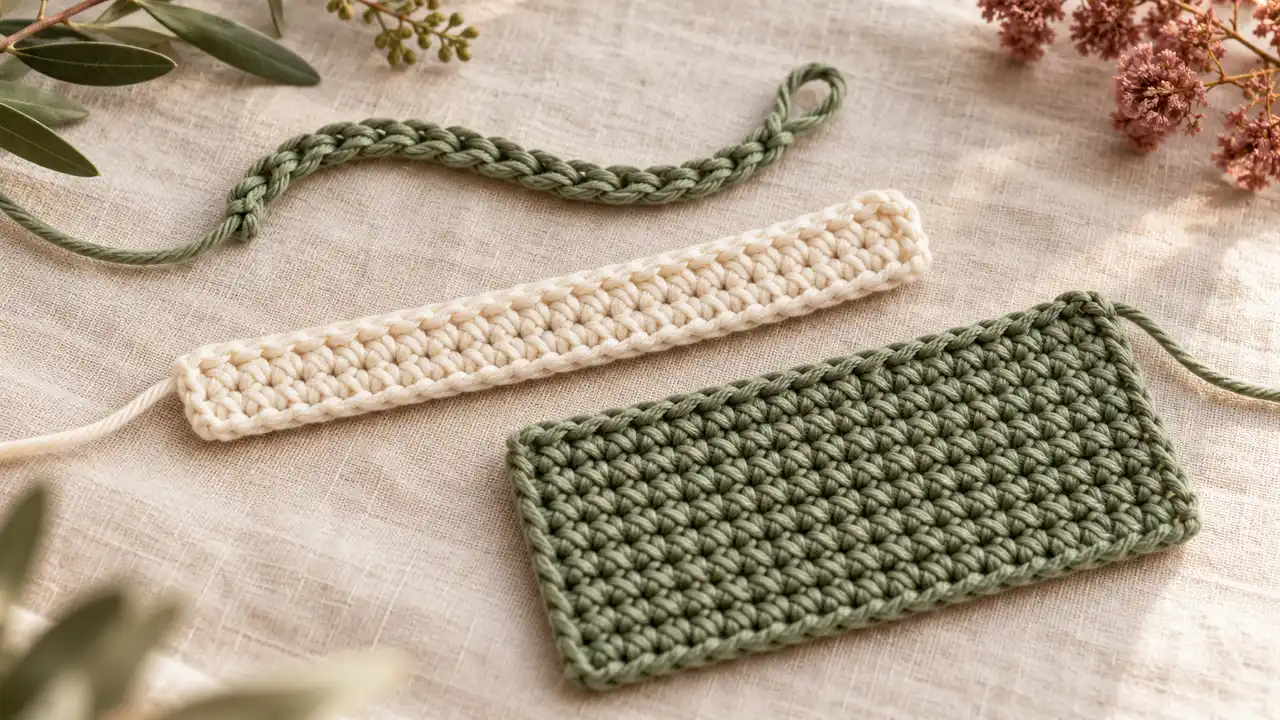
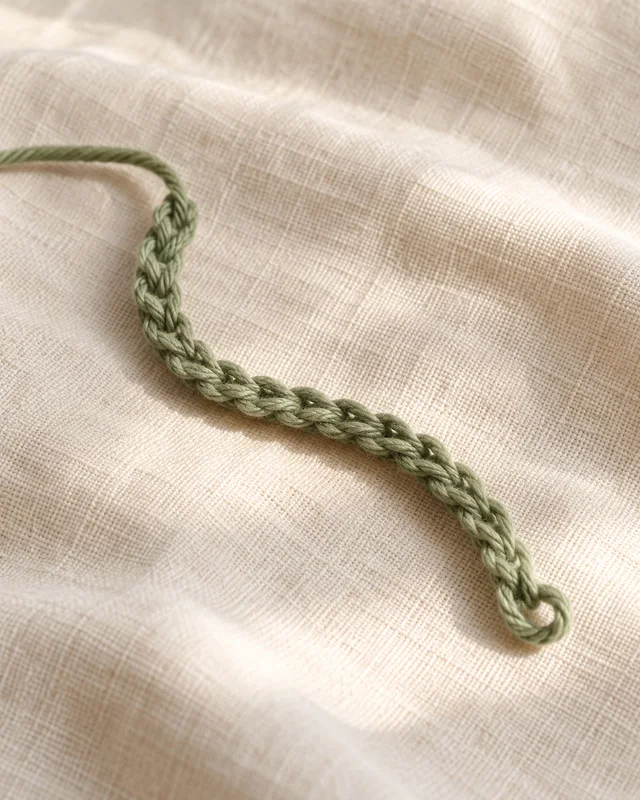
A short foundation chain is a useful practice exercise before trying to produce fabric. The sage curve keeps the individual links visible against a light background. Work slowly enough to recognise one completed chain at a time, and remember that the active loop is not another finished chain. Aim for an even starting edge, not the fastest possible movement of the hook.
2. Slip-stitch practice
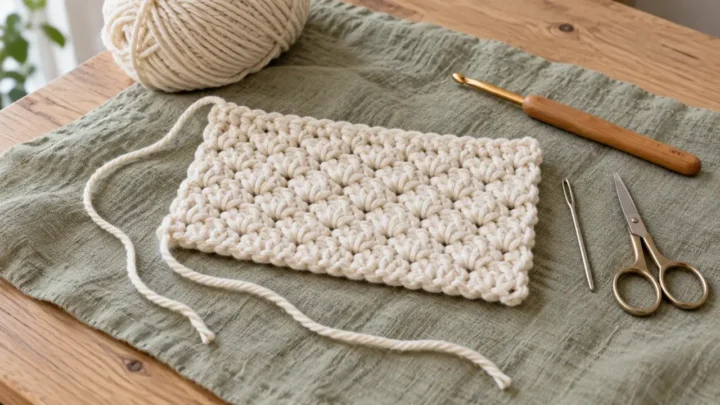
A narrow slip-stitch strip makes a compact practice piece with very little width to manage. The cream example is deliberately plain so counting and insertion remain the focus. Use a dedicated lesson to identify the correct position and finishing motion. Tight stitches can be difficult to enter on the next row, so check comfort rather than assuming a smaller stitch is automatically easier.

3. Single crochet rows
Plain single crochet rows give you a direct way to compare one row with the next. The sage rectangle has no colour changes to hide the edges. Choose a short practice sequence, mark both ends and count after each row. If the outline begins to taper, review the edge positions before adding more fabric; extra length will not correct an earlier count change.

4. Half double crochet rows
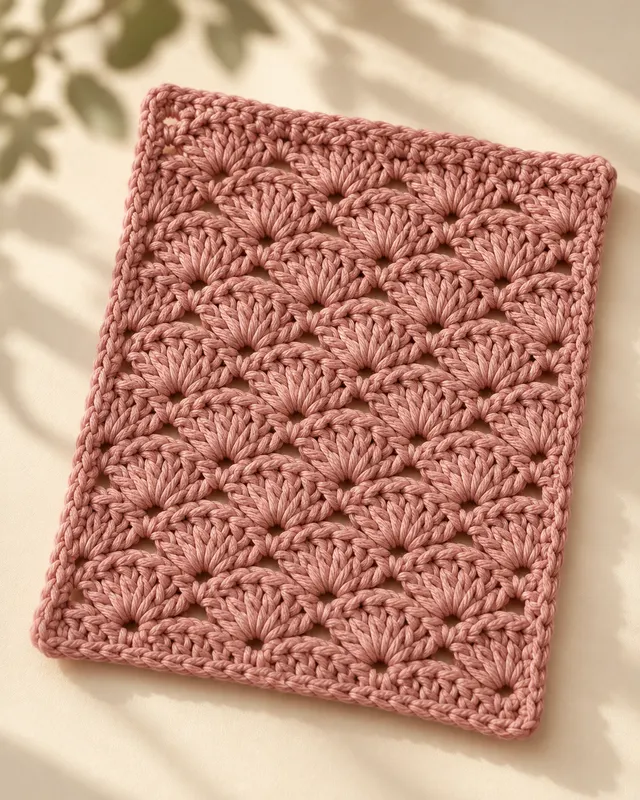
Half double crochet rows introduce a yarn-over before insertion while keeping the fabric fairly straightforward. The rose sample gives you a small surface on which to watch the row height. Follow one lesson's turning-chain convention throughout the exercise. Compare the number of completed stitches at the top of each row, rather than treating every visible strand near the edge as another stitch.
5. Double crochet rows
Double crochet gives a beginner another basic stitch height to practise after the simpler movements feel familiar. The cream example keeps its columns visible without a decorative repeat. Concentrate on the sequence in a reliable lesson and the treatment of both row ends. A straight sample with a steady count is a better checkpoint than matching the appearance of an image.
6. Treble crochet rows
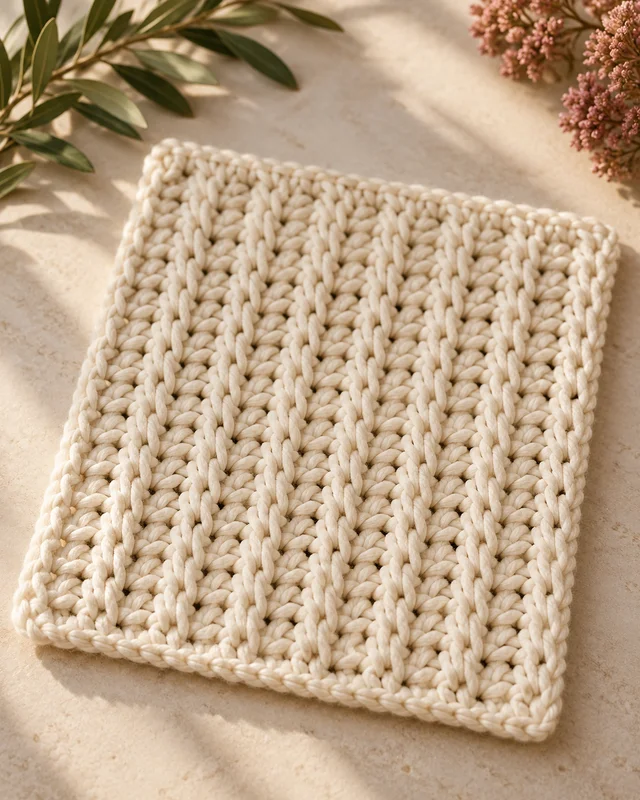
A tall-column practice sample helps separate learning a stitch from choosing a finished object. The sage treble direction may make spaces and height easier to notice, but its additional actions deserve patient practice. Read the complete lesson before starting and check the terminology. In US and UK instructions, similar stitch names can mean different movements, so keep the chosen naming system consistent.
7. Back-loop single crochet rows
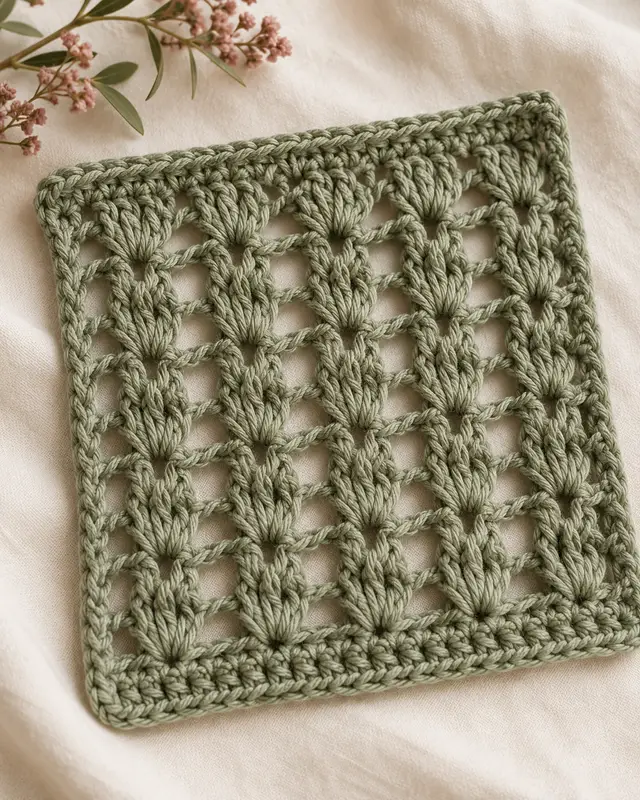
Back-loop single crochet lets you investigate how an insertion change creates visible ridges. The rose direction keeps the same basic flat shape as earlier practice pieces. Identify the back loop clearly before working the row and compare it with a conventional sample. Do not change the insertion point halfway through by accident; the new line should come from an intentional choice.
8. Back-loop half double crochet rows
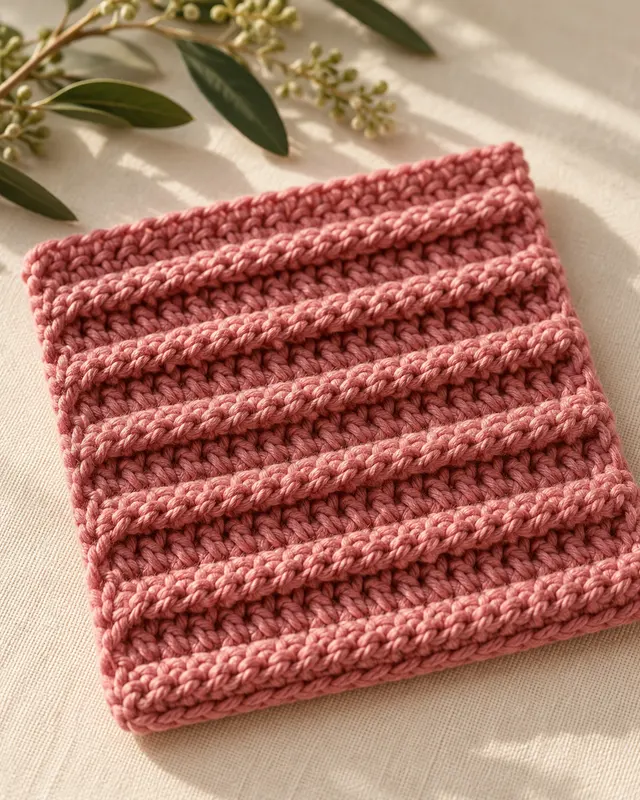
A back-loop half double sample adds a familiar insertion experiment to a taller basic stitch. The oatmeal ribs suggest a surface to compare with the plain version. Make the comparison with the same yarn and hook so the change remains easy to judge. Check both sides and the sample's stretch before deciding whether the texture belongs in a band, cuff or blanket.
9. Front-loop single crochet rows
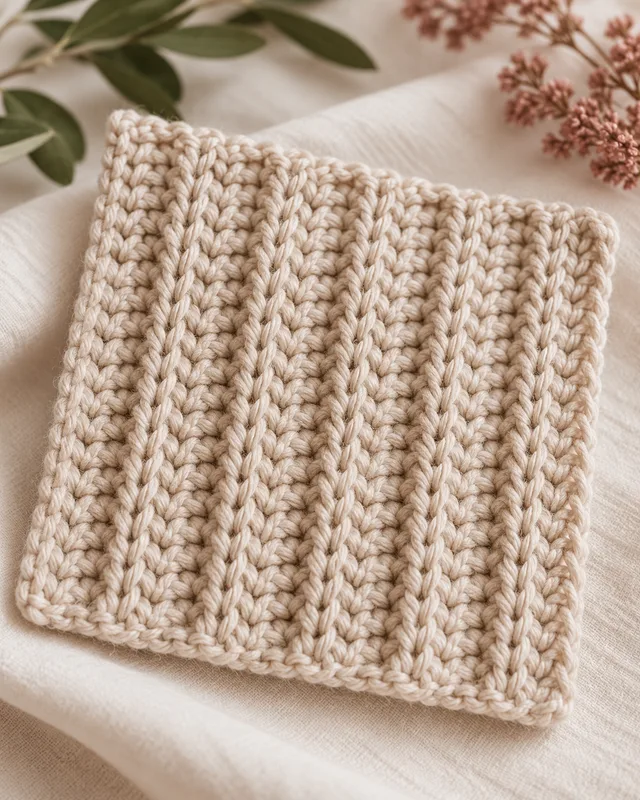
Front-loop single crochet is another small experiment in reading the top of a stitch. The sage illustration keeps the surface fine rather than strongly decorative. Use a lesson that clearly identifies the front loop and watch what remains visible after completing the row. This is a useful observation exercise; it should not become an unplanned substitution inside a pattern with measured dimensions.

10. Alternating single and double crochet
Alternating single and double crochet can create a pebbled-looking surface using two familiar stitch families. The rose concept offers a gentle visual change from plain rows. Follow a specific pattern for the repeat and the next row's placement. Before starting a large piece, make a small rectangle and check that you can identify where the alternating sequence resumes after turning.
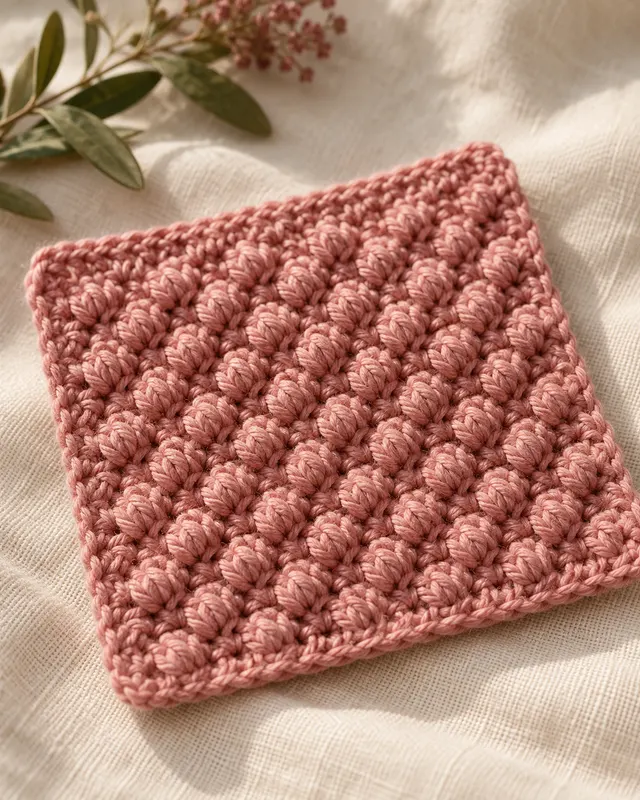
11. Linen or moss stitch rows
A linen or moss direction can introduce repeated chain spaces once basic stitches feel manageable. Cream and sage help separate the rows in this concept. Choose one clearly written version, because names alone do not define the foundation count. Mark the edges and pause after the first repeats to check that you are working into the positions described by the actual pattern.

12. Simple V-stitch rows
A simple V-stitch direction lets you practise a recurring open shape without choosing a full garment or blanket. The rose sample suggests the spacing to consider when browsing lessons. Look for a repeat with explicit edge instructions and foundation requirements. Keep the first swatch small, then examine whether the gaps and drape suit your intended project before committing to more yarn.

13. Basic shell-repeat practice
A basic shell-repeat sample introduces grouped stitches and planned spaces as one small exercise. The cream concept makes each fan-like shape easy to distinguish visually. Use a lesson that defines the shell, where it is placed and what happens between groups. Beginners should expect some counting, so focus on completing an accurate repeat rather than promising a quick finished border.
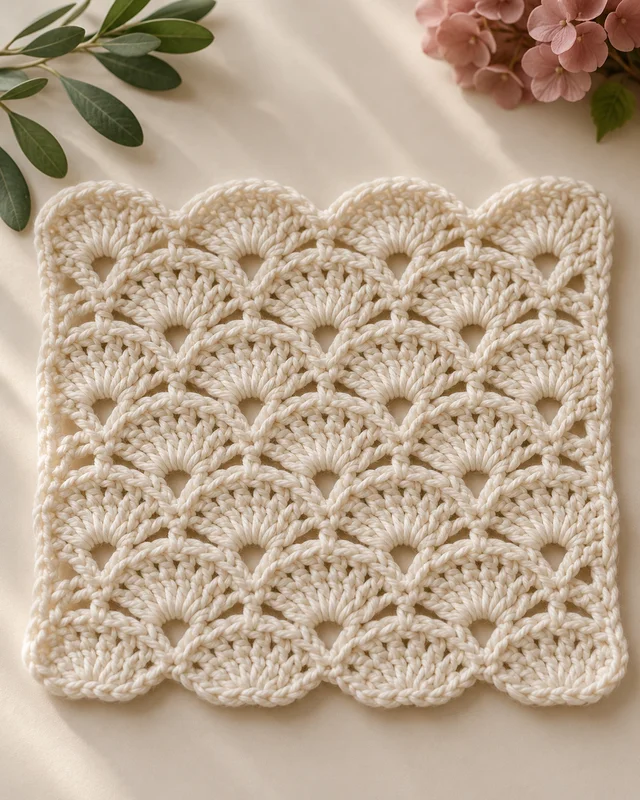
14. Granny-stripe rows
Granny-stripe practice moves familiar grouped forms into straight rows. The sage-and-cream direction keeps the structure clear without a complex palette. Follow instructions for the starting row carefully, since the setup may differ from later repeats. Changing colours also introduces ends to finish; try a single-colour sample first if identifying the group placement is the skill you most need to practise.

15. Mesh stitch practice
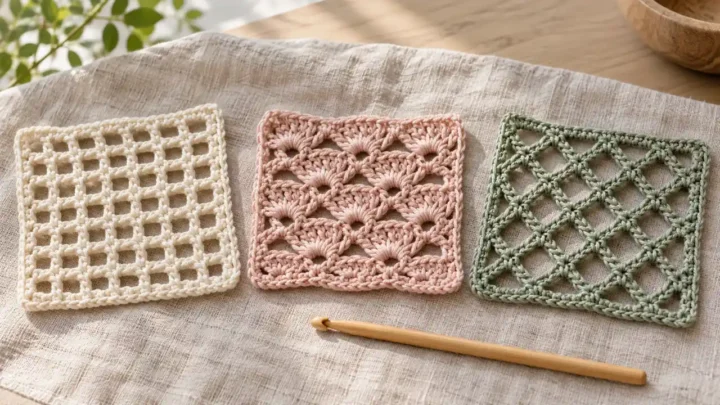
A simple mesh sample makes the empty spaces a deliberate part of the fabric. The sage grid concept helps you decide whether an open texture appeals before choosing a project. Read the pattern's chain and skipped-position instructions together, then count complete repeats. A missed space can shift the structure even when the overall stitch names are familiar, so check each short row.
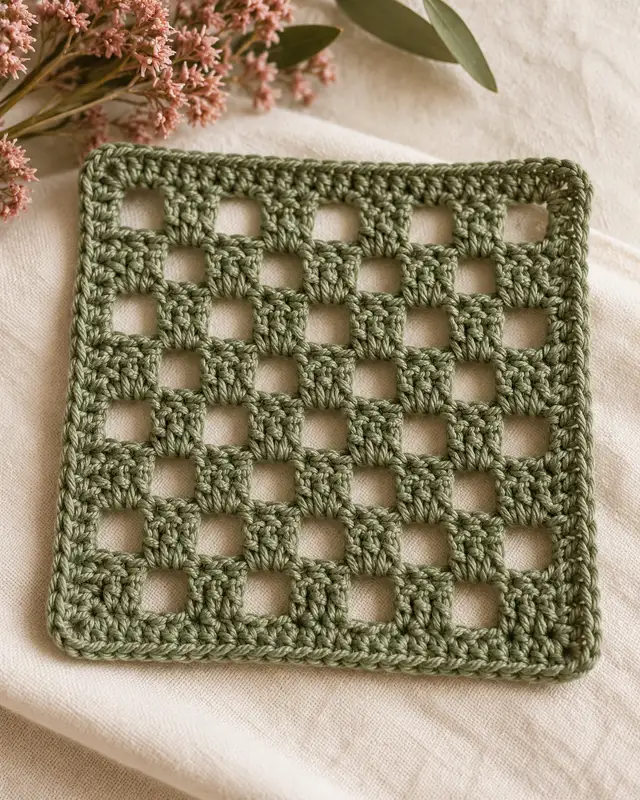
16. Front-post double crochet practice
Front-post double crochet introduces a new placement after ordinary double crochet feels reliable. The rose illustration suggests a raised directional surface rather than demonstrating the hook position. Use a dedicated lesson that clearly identifies the stitch post and the direction of entry. Keep the first sample narrow, then compare its texture and thickness with the plain version before choosing a larger project.
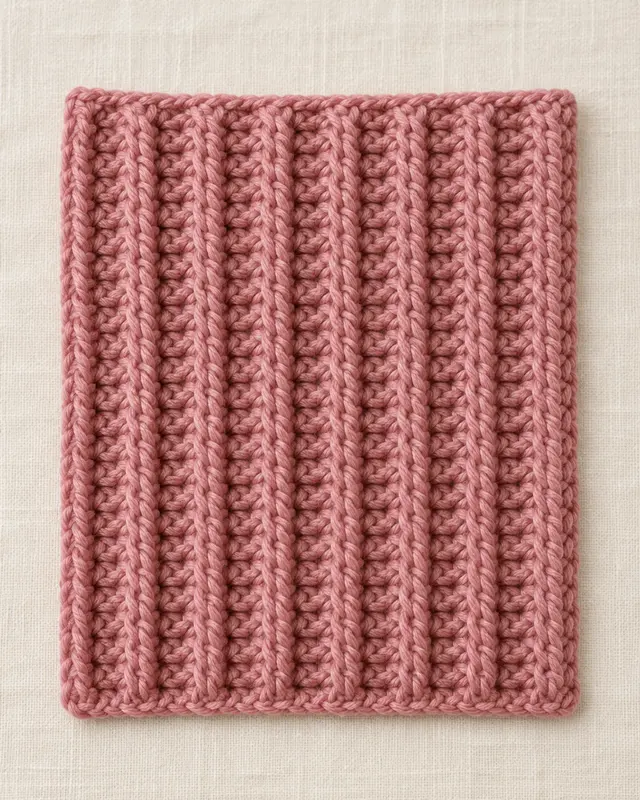
17. Straight-edge stitch sampler
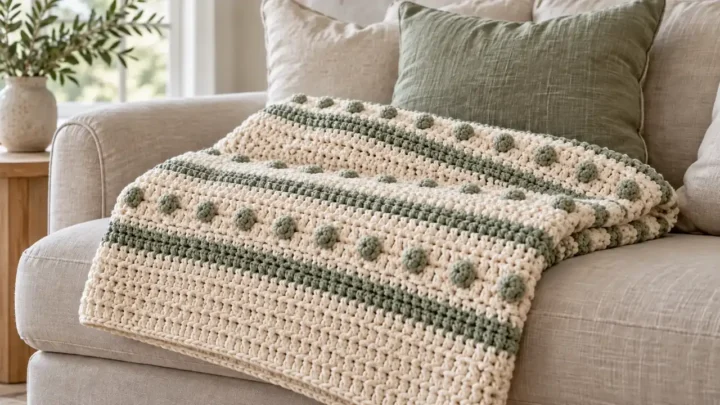
A sampler places several practice sections into one readable record. This cream rectangle suggests broad texture bands rather than a complicated picture. Write down the stitch, hook and row count for each section as you go. Changing stitch height may change the sample's dimensions, so do not force the result into a finished pattern; keep it as a reference for future choices.

Choose the direction that fits your project
Choose the next exercise by the problem you want to solve. Use plain rows for counting, an insertion variation for reading loops, or a short grouped repeat for following a sequence. Keep samples and notes together. They become useful comparisons when a later pattern asks for a texture you have already explored.
Build one new stitch skill at a time
Practice a familiar stitch first, then add one change: a new height, a different insertion point or a short repeat. Keep the same yarn and hook while comparing the samples. That makes it easier to see which change affects the fabric.
Write the terminology and turning-chain rule beside each swatch. Count your stitches after every row until the edges feel predictable. If a repeat becomes confusing, return to the last row you can explain rather than trying to hide the mistake under more rows.
Frequently asked questions
Which crochet stitch should I practice first?
After learning a chain, US single crochet is a useful first fabric to practice. Learn to find the top loops and count the edges before adding more stitch heights or decorative repeats.
Why does my practice swatch get wider?
Check for an extra stitch at the beginning or end of each row. Read whether the turning chain counts as a stitch, and mark the first and last stitch until the rule is familiar.
Do I need to learn every stitch before making a project?
No. Choose a simple pattern that uses a small set of skills, then practice those skills. You can learn another texture when a project gives you a reason to use it.
Frequently asked questions
Are these complete patterns?
No. The entries help you choose an idea and compare its demands. Follow a complete pattern with dimensions, material quantities and construction instructions before making the object.
Can I use a different yarn?
Check the pattern’s permitted substitutions and required gauge. A different fibre, thickness or hook can change the feel and dimensions. Make a suitable sample before deciding on a full quantity.
How long will a project take?
That depends on size, the actual pattern, your experience and its finishing work. Plan around the tasks you already know, leaving extra time for new techniques and assembly rather than treating a title as a time guarantee.
What should I learn next?
Use the essential crochet stitches guide to choose a route, then look for the single and half double crochet lessons. For another design comparison, explore 25 crochet texture ideas.
- How to Fasten Off, Weave in Ends and Fix Uneven Edges
Learn to fasten off, weave in crochet ends and diagnose uneven edges, with clear checks before cutting, trimming or adding a border.
- 23 Decorative Crochet Stitch Combinations for Throws
Find 23 crochet stitch combinations for throws, pairing plain fabric with ribs, cables, bobbles, mesh and motifs while planning stable transitions.
- 19 Openwork Crochet Stitch Ideas for Lightweight Projects
Browse 19 openwork crochet ideas, from mesh and V stitches to loop lace, with practical notes on tools, openings, shaping and finished drape.
- 13 Dense Crochet Stitches for Bags and Home Decor
Compare 13 compact crochet fabric options for bags and home decor, with practical checks for gaps, flexibility, seams, lining and construction.
- 15 Crochet Stitches for Cozy Winter Projects
Explore 15 crochet stitches and textures for winter projects, with practical comparisons of relief, drape, bulk, repeat reading and sample checks.
- 21 Crochet Border and Edging Ideas for Blankets
Compare 21 crochet blanket borders, from narrow frames to shells, picots and sampler bands, with useful checks for corners, spacing and flatness.
- Crochet Stitches: A Guide to Essential Techniques
Understand essential crochet stitch names, choose a fabric for your project and plan a practice swatch before trying more complex textures.
- 25 Crochet Stitches and Texture Ideas to Explore
For a quiet surface, compare the basic rows and linen direction. For relief, look at ribs and raised blocks. For open space, investigate V-stitch and shell repeats.
- Single and Half Double Crochet: Step-by-Step Lessons
Learn the difference between US single and half double crochet, with small-row practice, loop-count checkpoints and clear edge-counting conventions.