In this article
Crochet storage becomes easier to use when each space has a job. The yarn needed tonight belongs somewhere different from a finished sample kept for reference. A hook should be easy to retrieve without tipping loose notions over the current panel. Those ordinary access decisions matter more than making every container match.
These nineteen ideas cover open working spaces, contained tools and longer-term project organization. Choose the actual dimensions, closures and supports for your supplies rather than copying a photograph as a storage specification. Keep materials clean and appropriately dry, protect points and avoid snagging surfaces. The images show possible arrangements; they do not establish mounting strength, carrying limits or preservation conditions.
1. An open active-project basket
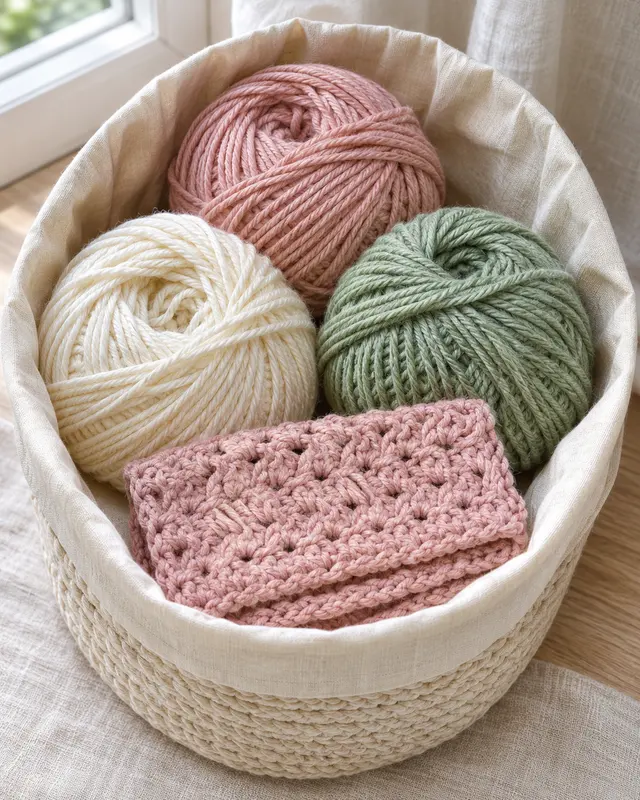
An open basket works best as a visible home for one active project rather than every loose skein in the room. Keep the current yarn, folded fabric and project information together, with pointed tools in a suitable separate case. Choose a smooth interior that does not catch the actual yarn. The cream example makes the contents easy to see without suggesting that open storage protects them from dust.
2. A divided tool tray

A divided tray separates hooks from small notions so finding one item does not require emptying a whole container. Size the compartments around the actual tools, including handle thickness and any protective cases. Keep loose points covered appropriately. A low wooden tray can stay near the working area, but the visible arrangement is an access idea rather than proof that every tool will stay secure during travel.
3. A fabric hook roll

A fabric hook roll suits a collection that benefits from separate pockets and a compact resting place. Check pocket depth with the real tools before closing the roll, particularly if handles vary widely in width. Leave hooks easy to identify through a separate record or suitable labels. A roll with exposed working ends needs appropriate coverage before transport; the photographed open arrangement only shows how the pockets divide the tools.
4. A lined lidded box
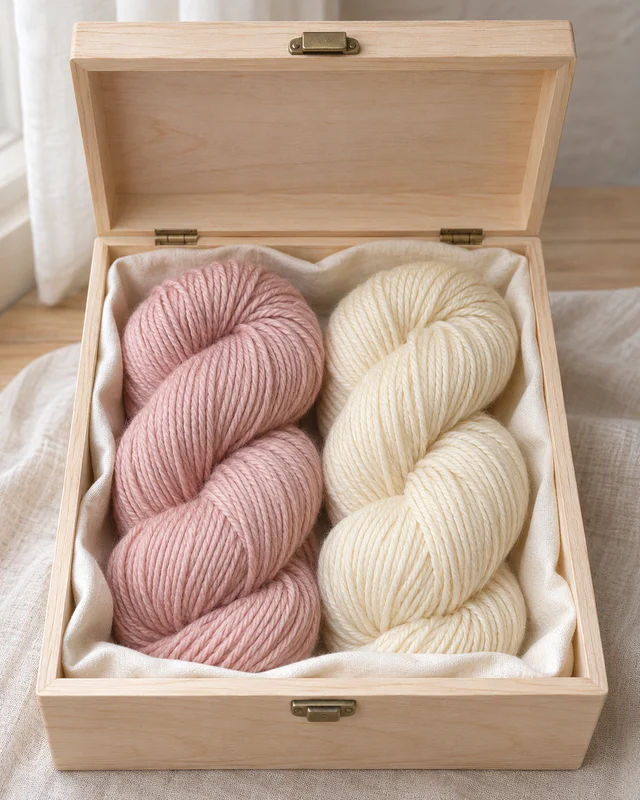
A lined box gives yarn a defined shelf footprint while keeping it separate from a rough wooden interior. Assess the actual finish, lid and contents rather than calling any attractive box archival storage. Put clean, appropriately dry materials away with useful product records. A lid can make the arrangement tidier, but it does not correct an unsuitable location or provide a reason to seal away a damp project.
5. A clear project pouch

A clear pouch helps identify a small project without opening several opaque bags. Keep one known yarn, sample and project card together so the visible contents have a useful identity. Check the zipper path and seams for places that could catch the actual fabric. Avoid overfilling the pouch or relying on transparency as a care plan; clean, dry contents and an appropriate storage location still matter.
6. An upright project bag
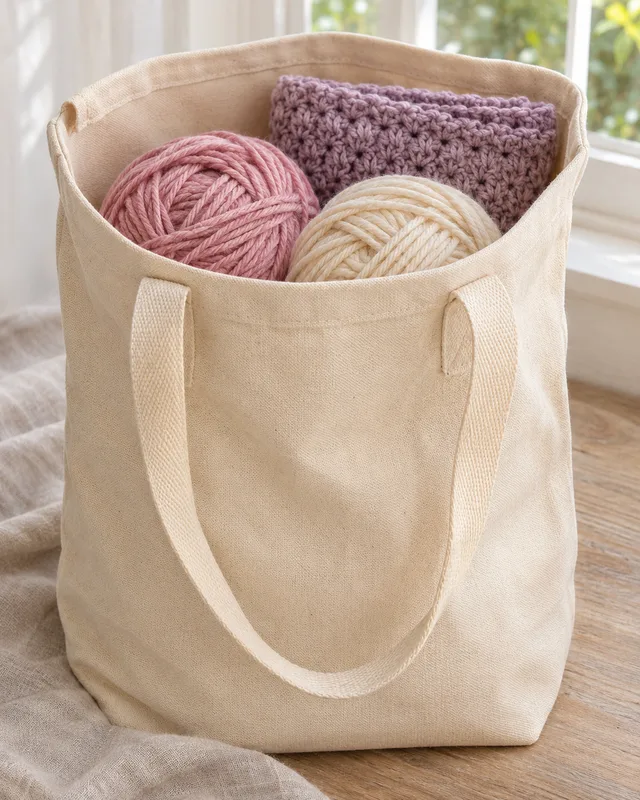
An upright project bag can keep the current panel and working yarn together near the maker’s chair. Choose an opening that allows the fabric to be removed without pulling it through a tight gap. Keep the handle and closure clear of the live loop, and store small tools suitably inside. The open canvas example shows access and grouping, not a tested carrying capacity or a protective seal.
7. Drawer dividers

Drawer dividers let short hooks, yarn labels and small notions have different spaces. Measure the usable drawer depth and the complete tools before buying inserts that only fit an empty drawer. Keep the arrangement low enough that closing it will not press on a hook head or unfinished project. A simple division is often easier to maintain than a dense grid of tiny compartments with no room for changing supplies.
8. Shelf bins for skeins

Shelf bins can give skeins a visible upright arrangement when their actual shape and labels make that practical. Leave enough space to remove one without disturbing the whole row. Separate different projects or clearly identified materials rather than mixing unfamiliar remnants by color alone. The pictured bins suggest a shelf system; they cannot establish that every yarn should be packed vertically or stored under the same environmental conditions.
9. A flat project tray

A flat tray is useful when a project needs a defined place between short sessions. Support the actual panel without folding an important shaping area sharply, and keep the working yarn beside it rather than beneath a heavy stack. Record the stopping point separately. The shallow example favors easy access; longer storage may require a different enclosure and care arrangement for the particular material and condition.
Match the enclosure to the location and contents
Keep clean, appropriately dry materials in a suitable location, with support suited to their shape. The Canadian Conservation Institute textile-care guidance explains why condition, handling and storage environment matter. A decorative container does not settle those questions. For an active project, access may lead the choice; for longer storage, review the actual material and enclosure together.
Use the supplies hub to connect the storage choice to a real working set. A tray that makes hooks easy to find has a different job from a box holding finished dimensional pieces. Keep those jobs explicit before buying matching containers.
10. A rigid travel hook case

A rigid hook case can separate a travel selection from the larger home collection. Try each actual handle in its intended slot and confirm that closing the case does not force the working ends against the shell. Keep the inventory modest enough to see missing tools at a glance. The illustration shows individual positions, but security during travel depends on the real case, fastenings and contents.
11. A hanging pocket organizer

A hanging pocket organizer makes use of vertical space while keeping different kinds of supplies apart. Put yarn in pockets sized for it and long tools in suitable narrower compartments. Choose a real mounting method appropriate to the organizer and intended contents. Avoid making the display so full that retrieving one ball pulls on another pocket; the photographed arrangement is a layout idea rather than a load specification.
12. A closed notions case

A closed notions case gives small markers and suitable needle storage a definite place in the project system. Use compartments that remain separated when the actual case is moved, and keep points appropriately contained. Check the latch rather than assuming a transparent lid will stay shut. Place the case away from children and pets as appropriate, and identify its contents without depending on a large pile of loose accessories.
13. A smooth yarn bowl

A yarn bowl provides an accessible working position for a suitable yarn ball, rather than long-term protection for the whole stash. Check the real bowl’s opening and surface for rough spots that could catch the strand. Keep its footprint stable in the intended work area. The smooth sage example shows a recognizable yarn path; it does not establish a universal fit for every ball size or construction.
14. Stackable shallow containers

Shallow containers can keep separate sample sets visible without burying them beneath a deep pile. Choose actual dimensions that support the pieces and leave closures easy to operate. Keep clean, dry contents and an appropriate location as the first conditions, rather than treating a plastic box as a complete preservation method. Record which sample belongs to which yarn and hook before the containers are stacked.
15. Cubby baskets

Cubbies divide a larger collection into manageable groups with clear shelf boundaries. Assign each basket a practical role, such as active supplies or identified leftovers, instead of filling every opening with an unsearchable mixture. Check the actual basket interior and the ease of sliding it out. Keep heavier or awkward contents in suitable positions; a tidy photograph cannot establish the furniture’s mounting or load requirements.
16. Pegboard pouches
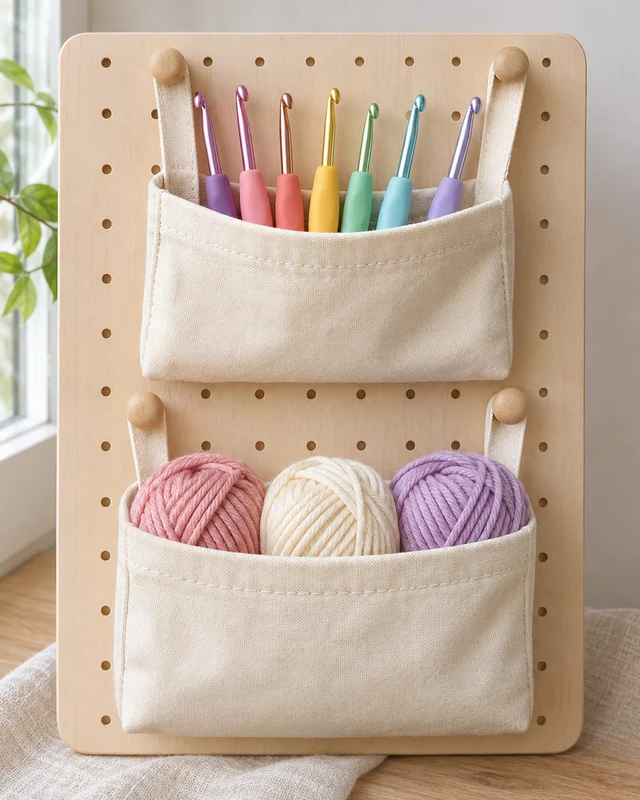
Pegboard pouches give small working groups a visible place above a desk. Use the board’s proper fixings and suitable hooks, then assess the assembled arrangement with its intended contents. A closed or well-contained pouch may suit small notions better than loose objects hanging individually. Keep yarn clear of rough fittings, and leave enough space to remove each pouch without disturbing the crochet project below it.
17. A shallow underbed box
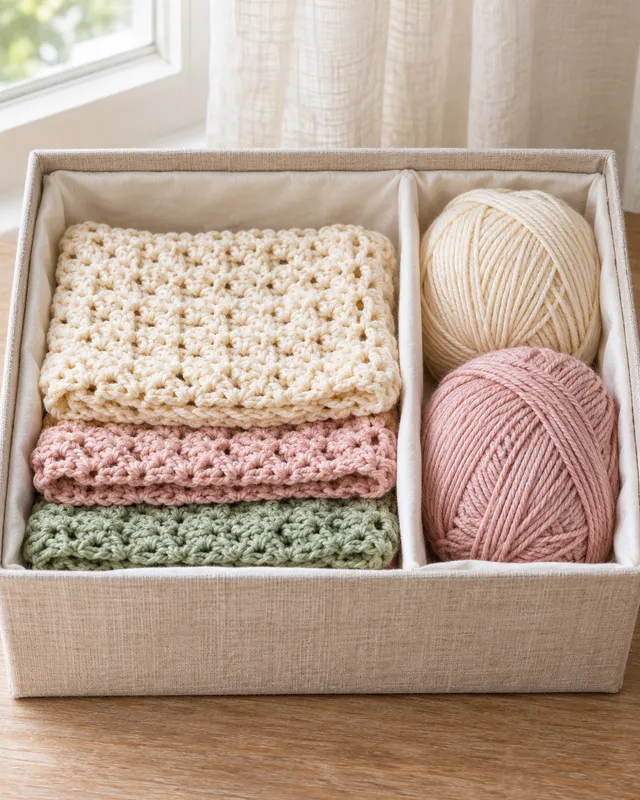
A shallow underbed box can hold folded panels or a seasonal project when the actual space and access make it practical. Support the pieces without compressing dimensional details and keep them clean and appropriately dry. Check that the box can be retrieved without dragging exposed yarn. The low example is a space-planning idea, not a promise that every underbed location has suitable environmental conditions.
18. A portable caddy

A portable caddy groups a small working selection around a central handle. Arrange the actual tools so they remain contained when the caddy is lifted, with points protected and yarn free of snagging edges. Separate current supplies from a general overflow pile. Check the maker’s information and real construction for carrying use; the open wooden example shows compartment access without establishing a safe weight limit.
Give finished samples a retrievable identity
19. A sample file box

A sample file box is most useful when each piece has a real identity behind its divider. Keep the yarn, hook, stitch and relevant care record with the finished sample rather than filing it by color alone. Support thicker pieces with enough space that the lid does not crush them. Plain cards in the illustration stand for your own notes; no measured gauge or product information can be recovered from the photograph.
Leave a usable record inside the system
Name the project, actual yarn and hook, and the last verified stopping point. Keep care labels with their materials. The counting-aid guide helps preserve progress, while the gauge guide explains why a finished sample needs more than a color label. Review the system after ordinary use and change a compartment that repeatedly hides the item it should reveal.
- Yarn Weights Explained: Match Yarn to Project and Gauge
Understand yarn-weight categories 0–7, separate package mass from thickness and compare actual yarn, hook and finished gauge before substituting.
- 15 Crochet Starter Kit Ideas for Different Project Goals
Plan 15 crochet starter kits around specific project goals, with notes on complete patterns, suitable yarn, hook choice and finishing needs.
- Crochet Hook Size Chart: US, Metric and UK Reference
Compare selected crochet hook sizes in metric, US and UK references, with source notes, steel-hook distinctions and practical gauge guidance.
- 21 Useful Crochet Accessories for Organized Projects
Find 21 useful crochet accessories for organized projects, with task-specific notes on markers, finishing tools, records and contained storage.
- 11 Crochet Tools That Help with Stitch Counting
Compare 11 crochet counting aids, from start markers to manual counters and line guides, with clear routines for recording and verifying progress.
- 17 Yarn Types for Crochet Blankets and Throws
Compare 17 yarn types for crochet blankets and throws through actual labels, construction, care and finished fabric samples.
- 13 Yarn Choices for Crochet Bags and Accessories
Compare 13 yarn choices for crochet bags and accessories, including cords, ribbons and blends, with notes on gauge, joins and complete construction.
- 15 Crochet Hook Features Beginners Should Compare
Compare 15 crochet hook features, from head and shaft to handle and storage, using real tools, metric references and a controlled stitch sample.
- Crochet Yarn and Hook Guide for Different Project Types
Compare crochet yarn and hooks by project type, actual labels, metric references and complete fabric samples, with useful tools and reading routes.