In this article
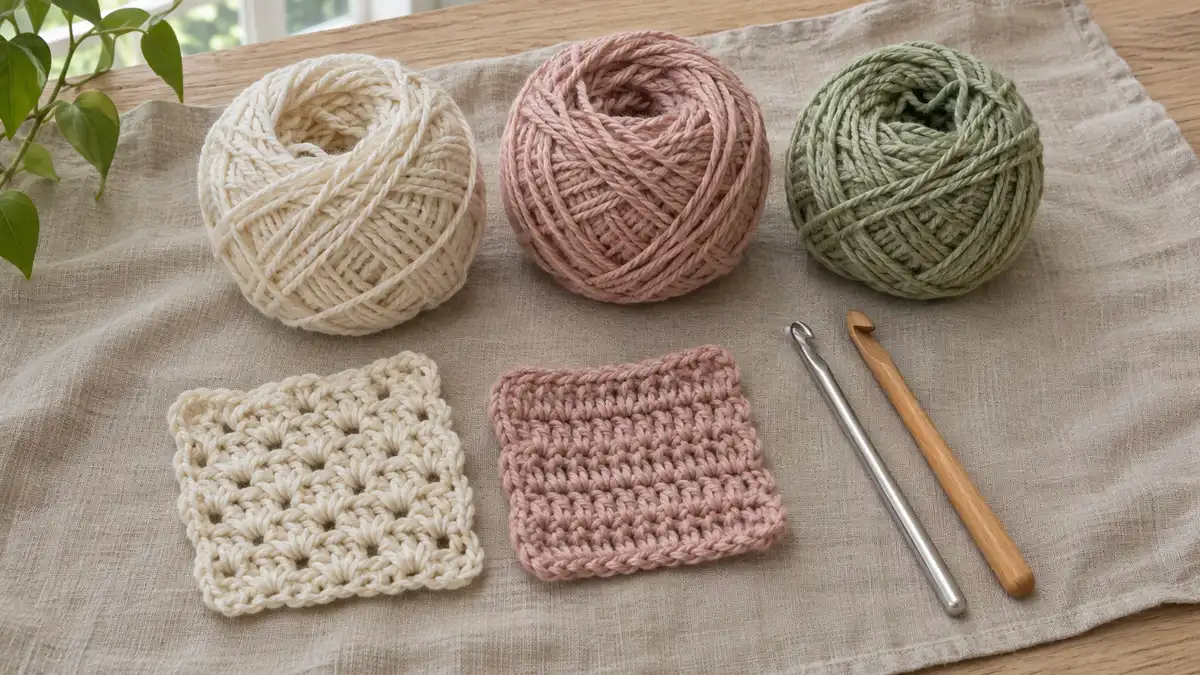
Yarn and hook choices become easier when they begin with the fabric a project needs. A soft shoulder layer, a firm-looking basket and an open wall panel do not ask the same questions of a sample. Start with the actual object and complete instructions, then compare the material, tool and finished fabric together instead of treating a label or a favorite hook as a universal answer.
This hub organizes the main choices for different crochet project types and routes the wider yarn-and-tools reading plan. It is not a product ranking, a copied pattern or a guarantee of fit and performance. The illustrations are original concepts, with no counted chart or proof of hidden construction. Check the actual yarn and tool information, read the pattern’s terminology key and use a representative finished sample before committing to a larger project.
Describe the fabric before selecting the supplies
Write down what the finished object must do in ordinary use. A wearable needs dimensions and drape appropriate to its wearer and pattern. A bag needs a suitable opening and complete supported construction. A table textile needs a measured footprint, while a display panel needs appropriate mounting. Keep protective or structural performance separate from appearance; a dense-looking picture does not establish heat resistance, waterproofing or carrying strength.
| Project family | First comparison | A representative sample includes |
|---|---|---|
| Wearable | Finished size, ease and intended drape | Main stitch plus important edge or motif join |
| Blanket or throw | Actual fabric, dimensions and care | Repeat, border transition and permitted finish |
| Bag or container | Opening, base and full assembly | Base-to-side or panel connection |
| Flat household textile | Usable footprint and actual surface | Main field and outer edge |
| Display object | Outline, support and storage | Shaped section and its attachment |
The table is a way to name a task, not a substitution formula. Two projects in the same family can need different fabric. Keep the complete chosen design in view, including the final band, lining, filling or closure. A swatch that answers only the easiest part of the object can leave the most important material decision unresolved until assembly.
Read the yarn label as product information
Record the known fiber content, amount, weight category and care instructions for the actual yarn. Keep color and batch information where it affects a planned set. A familiar fiber name is useful vocabulary, but it does not specify one washing method or establish that another product will make identical fabric. Include every contrasting yarn and attached component in the care plan rather than treating a narrow accent as exempt.
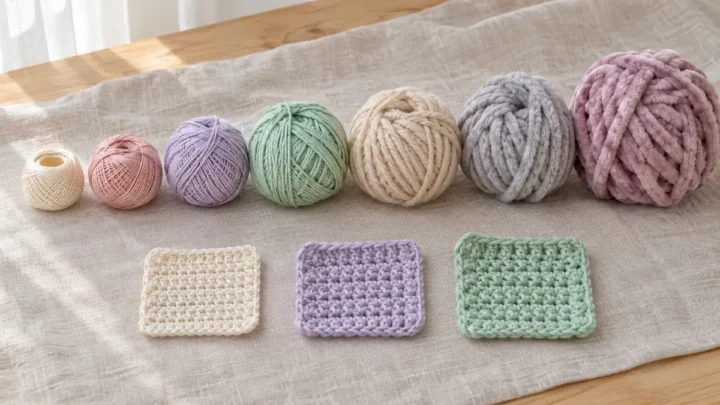
The Craft Yarn Council weight system gives broad categories and starting ranges, with the actual pattern’s gauge taking precedence. Use the category to organize a first comparison. The amount needed, the behavior of the finished fabric and the suitability of a substitution still need the selected design and your real representative sample.
The reading plan includes yarn types for blankets and throws and yarn choices for bags and accessories. These are different project questions rather than reasons to assign one best fiber to all crochet. Resources in the wider plan may still be awaiting publication; the related-reading module below identifies the articles currently available to readers.
Identify the working hook, then compare its shape
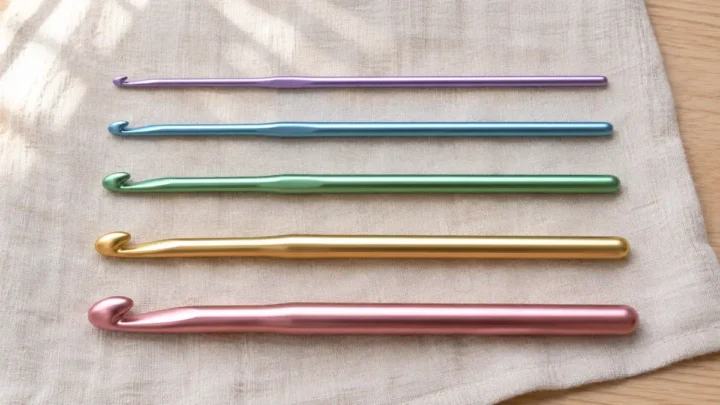
Use the maker’s metric designation and the actual pattern as the starting hook reference. Handle width, color and a photograph’s apparent scale do not tell you the working shaft size. Keep the specific hook used for a successful sample in the project record. Letter and number labels need an appropriate reference, and steel hooks have their own sizing system rather than following an assumed regular-hook sequence.
15 Crochet Hook Features Beginners Should Compare separates head, throat, shaft and handle questions. Compare one meaningful difference at a time with the intended yarn and stitch. A larger handle or a particular head profile can feel different without being universally better. No illustration or ergonomic label establishes a medical benefit, personal comfort or the actual condition of the tool you will use.
Let the complete sample answer the next question
Measure the fabric the pattern actually asks for
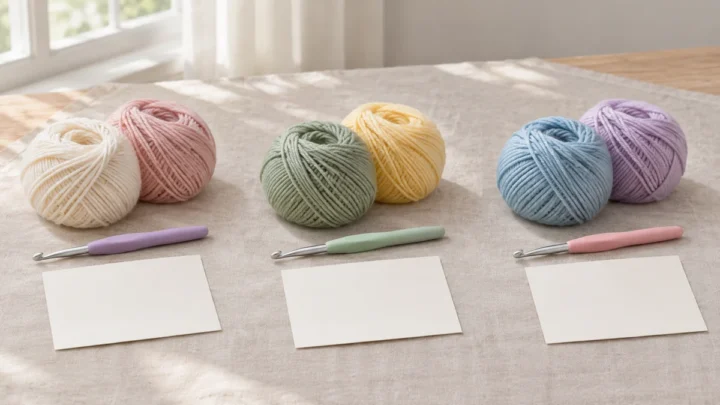
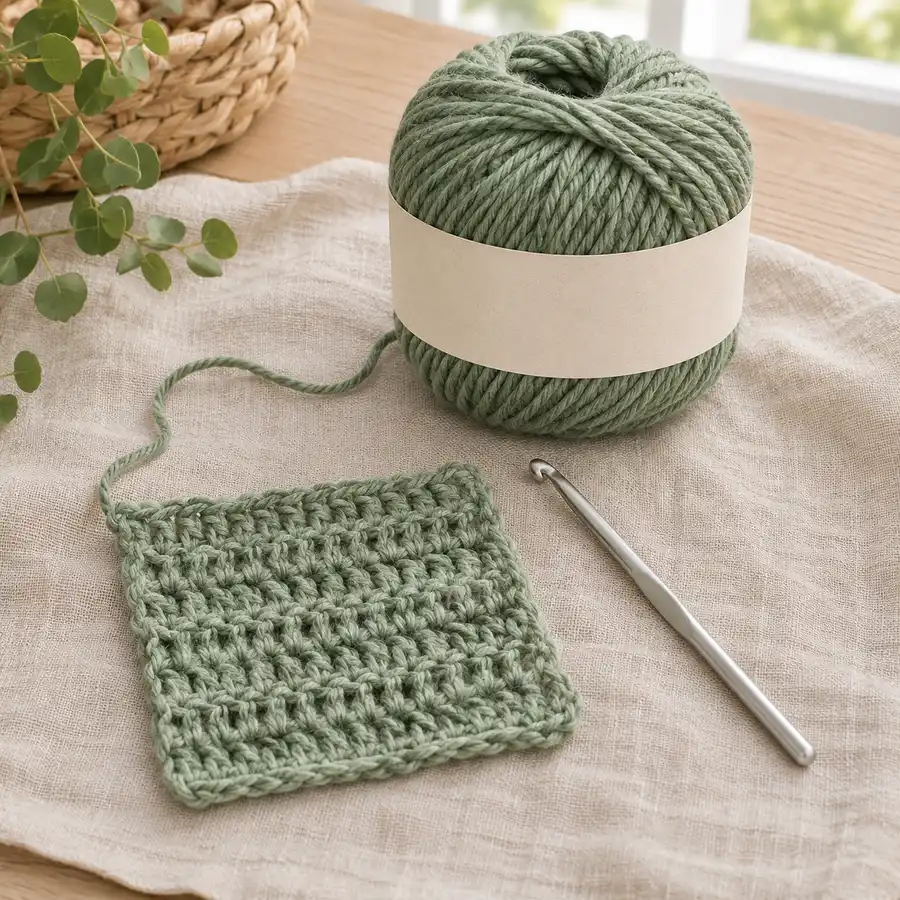
Work the specified stitch and sample size through the intended permitted finish, then compare it with the pattern’s gauge and dimensions. Keep the measurement area and method clear. If a change is needed, adjust one relevant variable and make another comparable sample. A label range or a standard chart can suggest where to begin, but it cannot replace the real fabric produced by your own yarn, tool and stitch.
Include the junction that will matter later
A motif project needs a representative join; a bag may need a base-to-side transition; a removable cover needs its opening. Try that section before making a large stack of units. Compatible sample dimensions are more useful than equal starting counts when different stitches or yarns behave differently. Keep the result with the schematic so any supported adjustment remains connected to the complete design rather than a detached improvisation.
The planned references Crochet Hook Size Chart: US, Metric and UK Reference and Yarn Weights Explained: Match Yarn to Project and Gauge address vocabulary and starting comparisons. A reference chart is distinct from a pattern recommendation, and neither can certify the finished dimensions of a different material combination. Confirm the actual published resource and its scope before relying on a conversion.
Choose a small tool system around the project
Keep the supplies needed for the actual counting, finishing and storage tasks together. A simple marker or written row record is useful when it fits your pattern and habits. More accessories do not automatically make a project easier. Start by naming a recurring problem, such as losing the first stitch or misplacing the working hook, then choose a clear way to address that task.
The wider plan routes storage ideas for yarn and hooks, useful project accessories and tools for stitch counting. Starter-kit ideas for different project goals keeps a first set connected to one kind of work. These are resource routes, with availability determined by their actual publication status rather than a promise that every planned article is already complete.
Keep one usable record when the sample succeeds
- Actual yarn identity and compatible care.
- Specific hook and the maker’s metric designation.
- Stitch instructions, pattern version and any supported adjustment.
- Finished sample dimensions and important assembly trial.
- The project purpose, recipient or measured location.
A record makes the next decision easier without turning one sample into a universal result. Use the wearable yarn-and-gauge guide for garment planning, the washable-home-project guide for complete care combinations and the beginner hub for foundational learning. Choose the route that answers the actual object’s question, then return to the complete design before buying or making the full quantity.
- Yarn Weights Explained: Match Yarn to Project and Gauge
Understand yarn-weight categories 0–7, separate package mass from thickness and compare actual yarn, hook and finished gauge before substituting.
- 15 Crochet Starter Kit Ideas for Different Project Goals
Plan 15 crochet starter kits around specific project goals, with notes on complete patterns, suitable yarn, hook choice and finishing needs.
- Crochet Hook Size Chart: US, Metric and UK Reference
Compare selected crochet hook sizes in metric, US and UK references, with source notes, steel-hook distinctions and practical gauge guidance.
- 21 Useful Crochet Accessories for Organized Projects
Find 21 useful crochet accessories for organized projects, with task-specific notes on markers, finishing tools, records and contained storage.
- 11 Crochet Tools That Help with Stitch Counting
Compare 11 crochet counting aids, from start markers to manual counters and line guides, with clear routines for recording and verifying progress.
- 19 Crochet Storage Ideas for Yarn and Hooks
Explore 19 crochet storage ideas for yarn and hooks, from active-project trays to sample files, with practical access and material-care notes.
- 17 Yarn Types for Crochet Blankets and Throws
Compare 17 yarn types for crochet blankets and throws through actual labels, construction, care and finished fabric samples.
- 13 Yarn Choices for Crochet Bags and Accessories
Compare 13 yarn choices for crochet bags and accessories, including cords, ribbons and blends, with notes on gauge, joins and complete construction.
- 15 Crochet Hook Features Beginners Should Compare
Compare 15 crochet hook features, from head and shaft to handle and storage, using real tools, metric references and a controlled stitch sample.