In this article
Yarn weight is a category of yarn thickness, while the grams on a ball describe how much material is in that package. Two balls can weigh the same amount and contain different lengths of very different yarns. Separating those ideas makes a pattern’s material list easier to read before a tempting color becomes an accidental substitution.
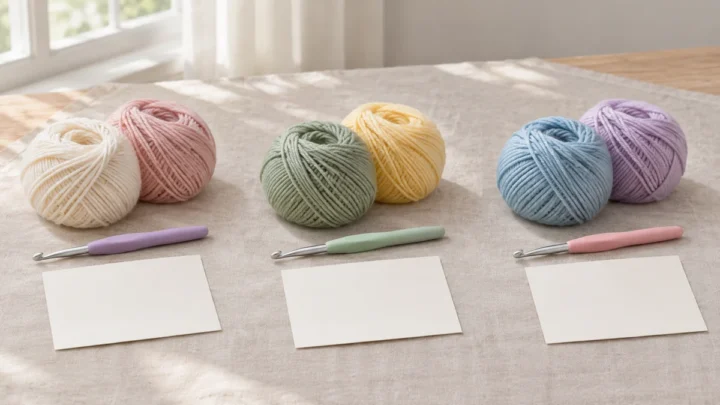
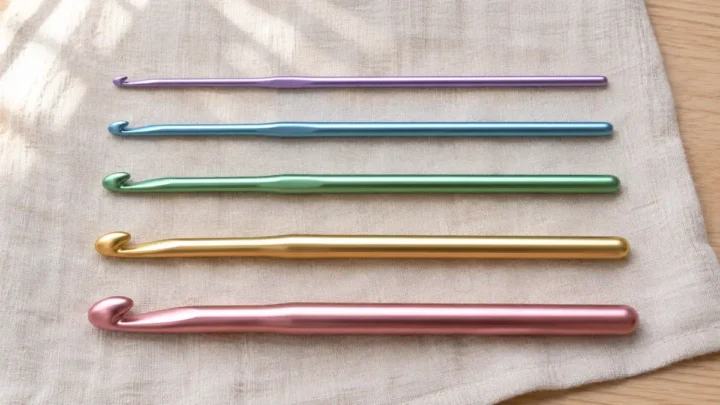
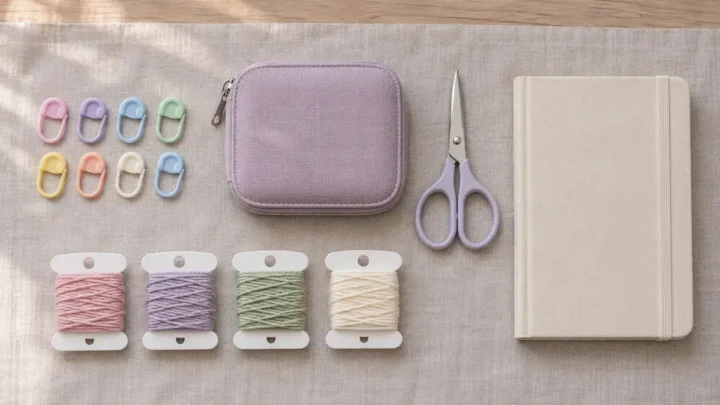
Start with the complete project’s fabric requirement, then use the category as a way to narrow the search. This guide explains the standard category names and a practical sample-based comparison. It does not assign one universal hook to each yarn or promise that matching a category guarantees fit. The photographs show possible strand and fabric appearances, without measured thickness, certified fiber identity or usable gauge counts.
Choose the fabric job before the ball
Write down what the object needs to do in the actual design. A draped scarf, a shaped bag and an open decorative panel are different fabric questions. The desired result cannot be read from yarn thickness alone. Keep the intended dimensions, stitch, finishing and care alongside the material choice, so a change in one area does not disappear behind an apparently matching category number.
Look at the pattern’s stated yarn and gauge together. If you already own suitable material, compare it with that complete brief before deciding the pattern can accept it. If you are buying yarn, keep the required quantity in the pattern’s relevant units and the actual product’s length per package visible. A broad project name such as blanket is not enough to calculate either the hook or the amount.
The eight category names
The Craft Yarn Council standard yarn-weight system uses categories 0–7. These names describe broad groups, not exact product dimensions. Its hook and gauge ranges are guidelines; the pattern’s own gauge remains the relevant target. The table gives the category names without turning those guideline ranges into fixed rules.
| Category | CYC name |
|---|---|
| 0 | Lace |
| 1 | Super Fine |
| 2 | Fine |
| 3 | Light |
| 4 | Medium |
| 5 | Bulky |
| 6 | Super Bulky |
| 7 | Jumbo |
Keep the category number and its name together in the notes. Read the actual product information when regional yarn terms or a manufacturer’s description use different wording. A familiar term can help locate candidates, but do not silently treat every product marketed with that word as interchangeable. If no category is provided, preserve the product’s real specifications and compare the fabric rather than assigning a confident number from a picture.
Read three separate pieces of label information
| Information | Question it answers |
|---|---|
| Package mass and length | How much of this particular yarn is in the package? |
| Listed fiber composition | What ingredients does the manufacturer declare? |
| Care instructions | How does the maker instruct you to care for this product? |
Add the exact product name, colorway and available lot identification to those details. A photograph of an anonymous ball cannot recover them later. Keep blend percentages where they are listed rather than shortening every blend to its most familiar ingredient. The same category can include visibly different constructions, so also note whether the actual strand is smooth, ribbon-like, chainette or another form relevant to the chosen stitch.
Retain the actual care label rather than replacing it with a fiber-wide washing rule. The CYC care-symbol reference helps interpret the label’s vocabulary. Include lining, filling, hardware and additional yarns when deciding the finished object’s compatible care. A material record is useful only when it remains attached to the right project.
Make the sample answer one clear question
Use the complete pattern’s swatch instructions, stitch and measuring method. Keep a large enough representative area for the required measurement rather than counting a tight edge or shaping section as if it were plain fabric. Prepare the sample to the specified finished state before comparing it. Record stitch gauge and row gauge separately when the instructions require both, with their units visible.
An original arithmetic example shows why the unit matters: a hypothetical fabric with 20 stitches across 10 cm has a different width per stitch from one with 16 stitches across 10 cm. Those are made-up comparison figures, not recommended gauges for any yarn category. Do not use them to size a real garment. The complete pattern supplies the target, and the actual sample supplies the observation.
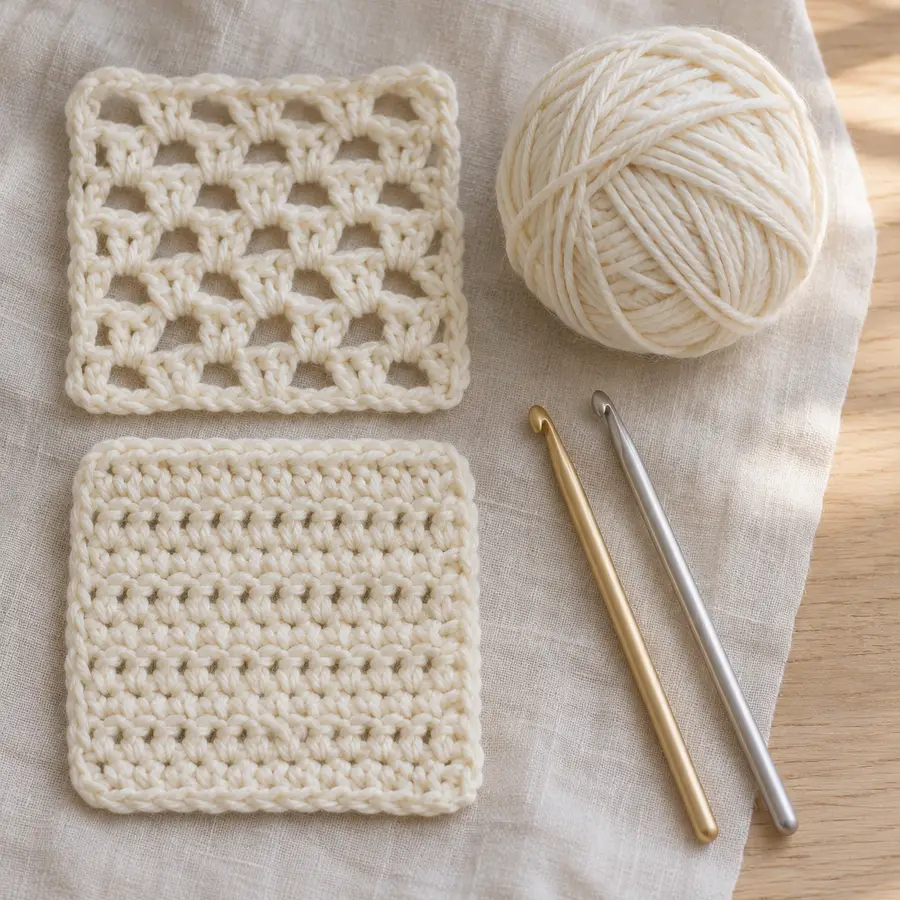
If a new hook or yarn is tried, identify the new sample and compare again. Avoid changing several things while keeping only one unexplained measurement. Check the resulting fabric as well as the number: a sample that reaches a dimension but has an unsuitable surface for the chosen project still needs a design decision. Keep any necessary seam, edge or junction trial in the record too.
Substitute by evidence, then calculate the purchase
First compare the actual product specifications and the finished fabric required by the design. Category matching helps narrow candidates, but the pattern may depend on strand construction or a specific effect that a replacement does not provide. Keep the required length distinct from ball count: equal numbers of packages do not establish equal available material when package lengths differ. Resolve the chosen design’s requirements before placing the final order.
For a real substitution, record the accepted sample and the exact replacement product before estimating the full quantity from the applicable instructions. Include borders, joins and other components the design requires. Keep any uncertainty visible rather than presenting an invented percentage allowance as universal. The blanket-yarn comparison and the bag-material shortlist help frame different fabric jobs without promising interchangeable results.
Keep the accepted combination together
A useful final record connects the yarn, physical hook, pattern and finished sample. Add the actual care information and any approved changes to construction. When you return to the project, those details should explain why the material was chosen and what fabric it produced. The hook-size reference helps decode tool labels, while the yarn-and-hook hub connects the record to the next project decision.
- 15 Crochet Starter Kit Ideas for Different Project Goals
Plan 15 crochet starter kits around specific project goals, with notes on complete patterns, suitable yarn, hook choice and finishing needs.
- Crochet Hook Size Chart: US, Metric and UK Reference
Compare selected crochet hook sizes in metric, US and UK references, with source notes, steel-hook distinctions and practical gauge guidance.
- 21 Useful Crochet Accessories for Organized Projects
Find 21 useful crochet accessories for organized projects, with task-specific notes on markers, finishing tools, records and contained storage.
- 11 Crochet Tools That Help with Stitch Counting
Compare 11 crochet counting aids, from start markers to manual counters and line guides, with clear routines for recording and verifying progress.
- 19 Crochet Storage Ideas for Yarn and Hooks
Explore 19 crochet storage ideas for yarn and hooks, from active-project trays to sample files, with practical access and material-care notes.
- 17 Yarn Types for Crochet Blankets and Throws
Compare 17 yarn types for crochet blankets and throws through actual labels, construction, care and finished fabric samples.
- 13 Yarn Choices for Crochet Bags and Accessories
Compare 13 yarn choices for crochet bags and accessories, including cords, ribbons and blends, with notes on gauge, joins and complete construction.
- 15 Crochet Hook Features Beginners Should Compare
Compare 15 crochet hook features, from head and shaft to handle and storage, using real tools, metric references and a controlled stitch sample.
- Crochet Yarn and Hook Guide for Different Project Types
Compare crochet yarn and hooks by project type, actual labels, metric references and complete fabric samples, with useful tools and reading routes.