In this article
A scrap basket becomes more useful when the yarn is sorted by what it can actually finish. One short length may frame a coaster, while several compatible remnants can make a small pouch or a patchwork mat. Giving each color a specific job helps the result feel considered rather than like the last place to put an unwanted tail.
These twenty-seven ideas are original gift concepts with practical selection notes, not complete tested patterns. Identify the known yarn, compatible care and intended recipient before combining remnants. Use full instructions for the chosen construction and reserve material for joins, edges and closures. The images suggest designs; they cannot establish exact quantities, hidden assembly, fit or performance.
Sort the useful remnants before choosing a gift
Keep known fiber, care and finished fabric together, then separate very short accents from lengths that can complete a whole body. Unknown yarn belongs in an exploratory sample rather than a gift with an invented care claim. The recipient-selection guide helps give each remnant a real destination.
1. Striped bookmark
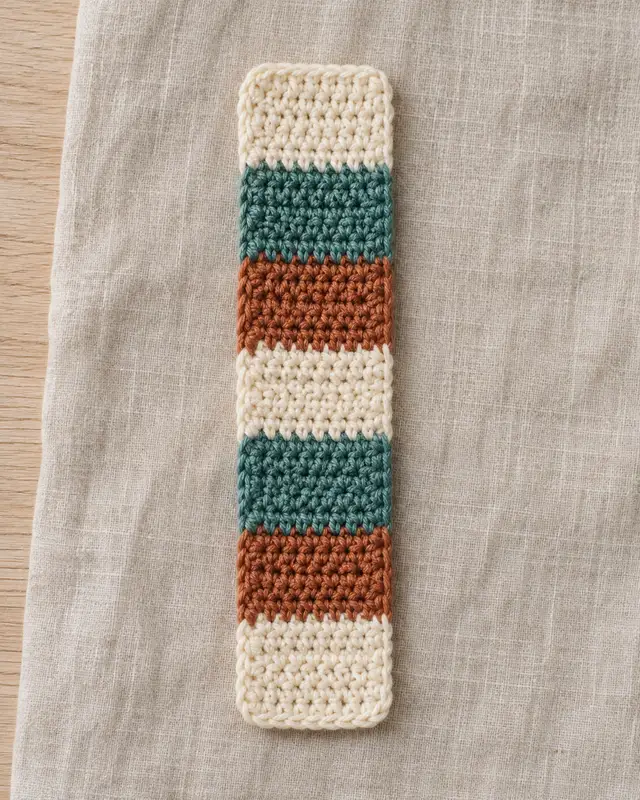
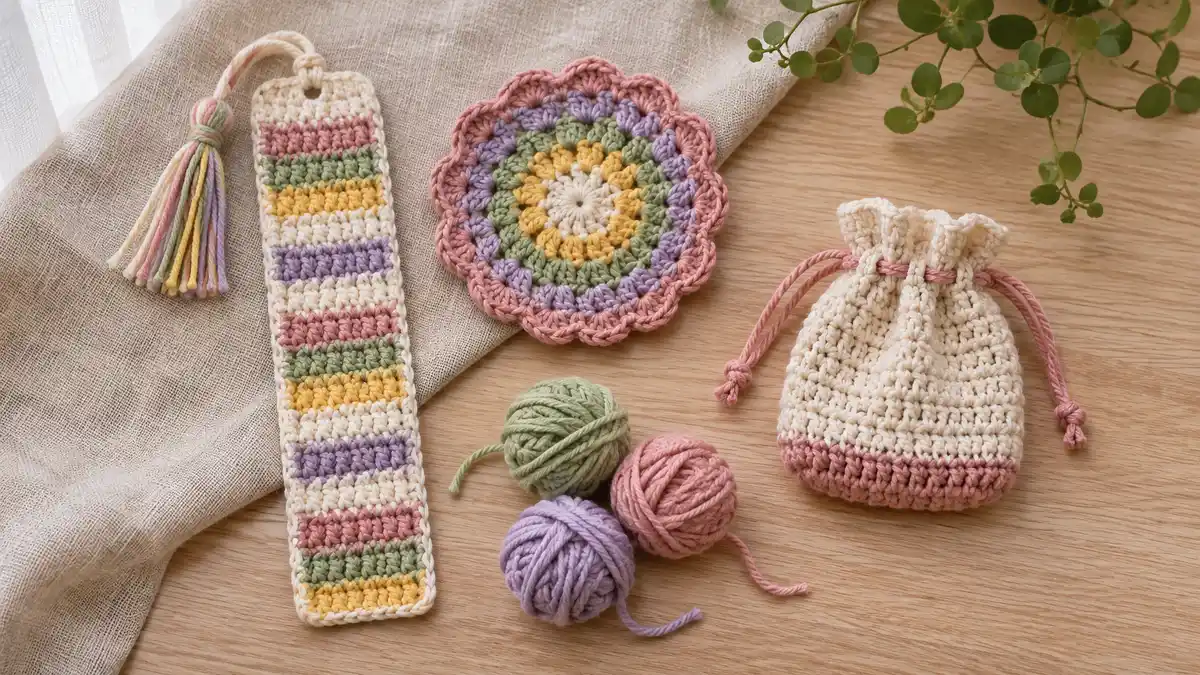
A striped bookmark gives short lengths an orderly job instead of asking them to cover a whole garment. Choose a narrow, flat construction that will sit comfortably between pages, and join colors at deliberate boundaries. Keep thick knots away from the reading surface. Before making several gifts, place the finished sample inside an ordinary book and check that its edges and ends lie quietly.
2. Corner page pocket
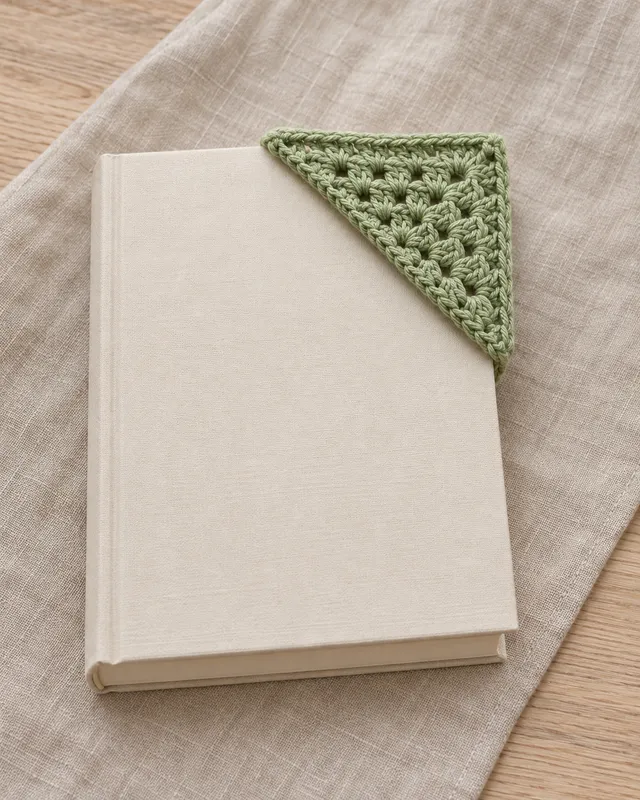
A corner pocket uses shape rather than a long tail to mark a page. Its two layers must form a usable opening without gripping the paper tightly. Work from a complete corner-bookmark design and keep the joining edge smooth. A small gift like this suits a known reader best when you also check the thickness of the books they usually carry or leave open.
3. Small coaster pair

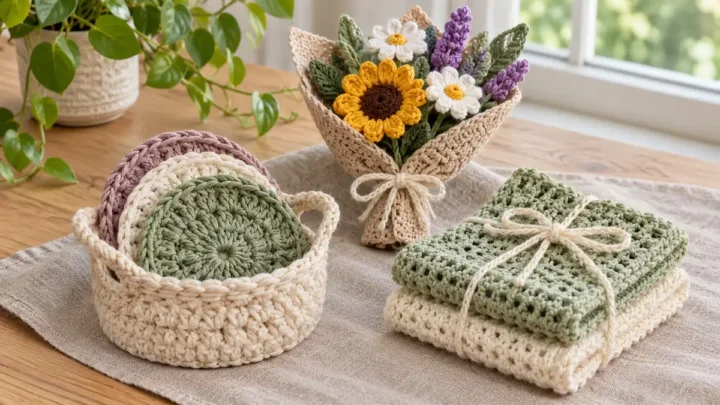
Two coasters can turn several compatible remnants into a gift that looks intentionally paired. Repeat the same center or border color on both rather than exhausting every scrap in the first disk. Finish them to matching relaxed dimensions. These small mats are decorative resting surfaces; their actual fabric and the table finish need assessment, and the photograph does not establish waterproofing or heat protection.
4. Patchwork mug mat

Four small squares make a patchwork mat manageable when no single remnant is large. Their finished widths and joining edges matter more than making each square a different color. Lay the units together before assembling them and try the proposed seam on two samples. Keep raised joins away from the main resting area if the finished mat will be used beneath a suitable cool mug.
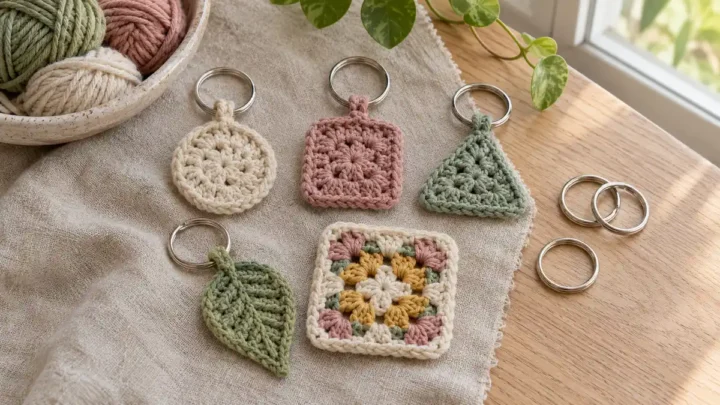
5. Mini granny square key tag
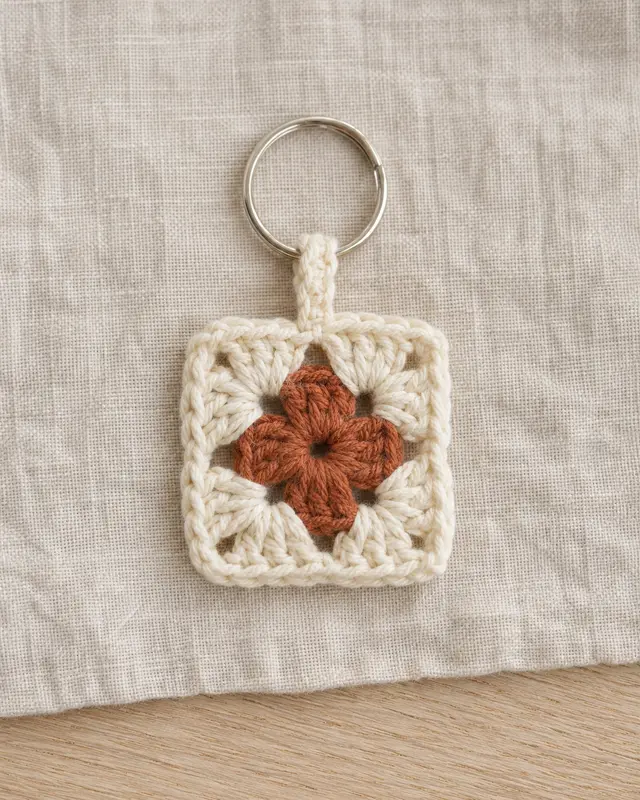
A miniature square tag makes a recognizable gift without needing a large palette. Reserve enough of one yarn for the joining edge and the short attachment loop before working the center. Inspect the connection to the actual ring from both sides. This is an accessory concept for an appropriate recipient, and the small hardware and repeated pulling deserve attention beyond the appeal of the motif.
6. Leaf bag charm

A leaf shape can make a tiny leftover color feel chosen rather than incidental. Keep the outline distinct with a complete shaping sequence, then finish the stem and attachment as separate practical decisions. A thick center ridge may work as decoration here because the piece is a charm rather than a cup mat. Check that the short connection is secure and the ends are enclosed.
7. Buttonless cord wrap

A broad wrap can tidy an unpowered cable without turning a long crochet cord into another tangle. Fit the band to that actual coil and use a fastening method supplied by the selected design. Keep the ends short and the closure easy to release. Do not put the wrap around a connected cable, conceal damage, or treat a soft band as electrical protection.
8. Tiny coin envelope

A tiny envelope is a useful place to combine two short colors while keeping its outline simple. Decide what it will hold before choosing the opening and flap depth. Loose coins can escape through decorative spaces, so a suitable lining or a different closed fabric may be necessary. Check the assembled pocket with its intended contents instead of judging capacity from the flat front panel.
9. Striped needle sleeve

A narrow needle sleeve can use remnants that would not make a broad pouch. The finished holder needs an appropriate closed lining and a clear way to contain the actual tools. Keep points protected and avoid relying on open crochet alone to retain them. Measure the longest needle and test removal before gifting; an attractive striped exterior is only one part of a usable organizer.
10. Scissor sleeve

A scissors sleeve is most useful when fitted to a particular closed pair. Protect the blade tips with a suitable inner construction, leaving the handles accessible without forcing the crochet opening. Account for that lining before deciding how much fabric to make. Choose the complete sleeve and scissors combination for an appropriate recipient, and keep the finished organizer away from children or unsecured travel pockets.
11. Plain pin cushion
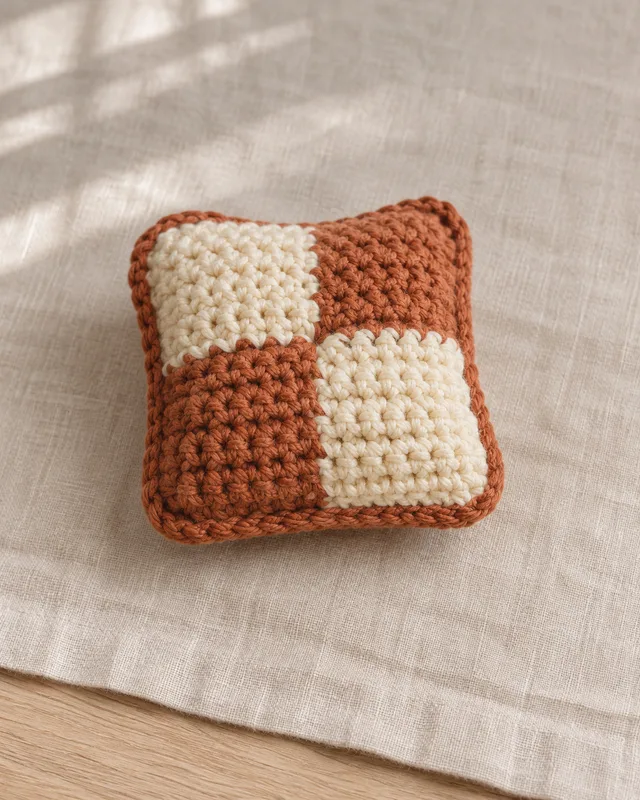
A small pin cushion can turn four compatible remnants into a deliberate checker of color. Choose a complete filled-cushion construction with an appropriate inner case rather than pushing stuffing directly through a loose surface. The corners should hold their shape without hard exposed knots. Give it to someone who actually uses pins, with the finished purpose clear and the points stored and handled appropriately.
12. Yarn-tail sampler card
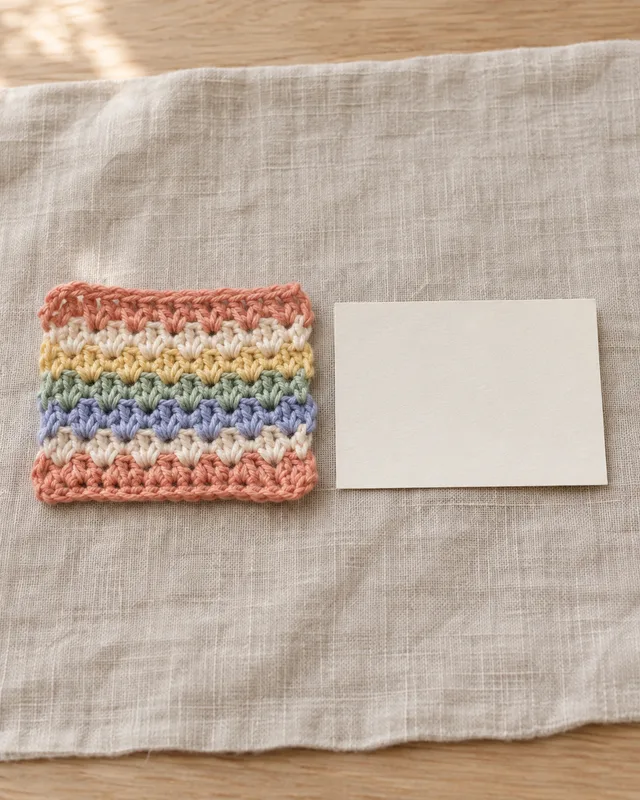
A texture card gives a fellow maker a sample to touch rather than an unfinished project to decipher. Mount a small, finished rectangle loosely enough that its surface can still be felt, and include the known yarn information separately. Choose one useful contrast, such as a plain field beside shallow ridges. Unknown fiber remnants belong in an exploratory sample rather than an item needing a promised care routine.
Reserve the last useful length for finishing
A small body still needs its final edge, join or closure. Keep that material aside before adding a new decorative stripe. Weigh or measure the actual available yarn through an appropriate method if the chosen pattern requires it, rather than promising a project from a photograph of a tiny ball. The time-planning guide also keeps assembly in the gift plan.
13. Napkin band

A napkin band can make a very short color repeat feel complete. Measure it around the folded napkin rather than a generic circle, and consider whether it will slide off easily for setting and clearing the table. Keep the inner surface smooth. A coordinated pair or small set is more useful when all pieces share dimensions and compatible care, even if their accent colors differ.
14. Small catchall bowl
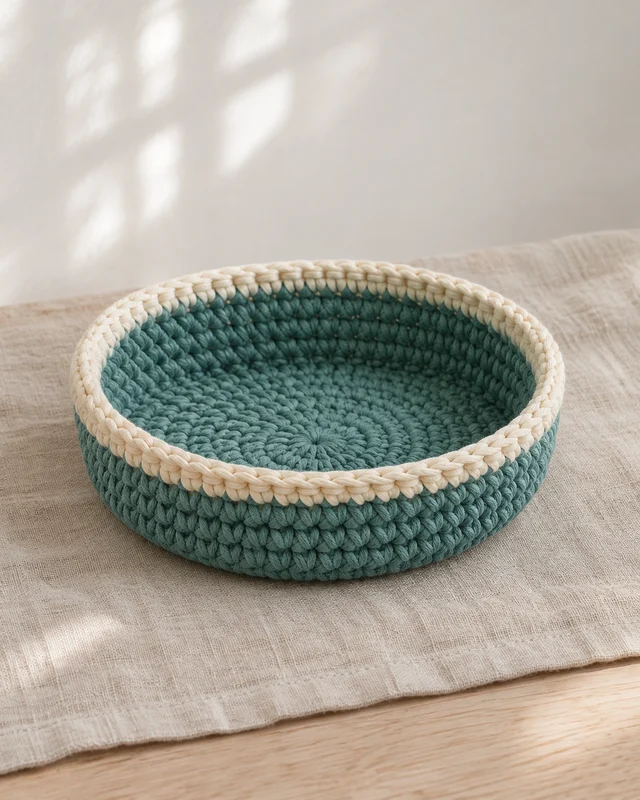
A shallow catchall lets a small amount of contrasting yarn frame the rim. Choose contents that suit the actual openings and footprint, and set the empty bowl down before filling it. If the base rocks, solve that construction issue first. A decorative rim cannot supply the firmness of a different base, and an attractive photograph does not establish a weight limit for the finished bowl.
15. Two-color mini basket
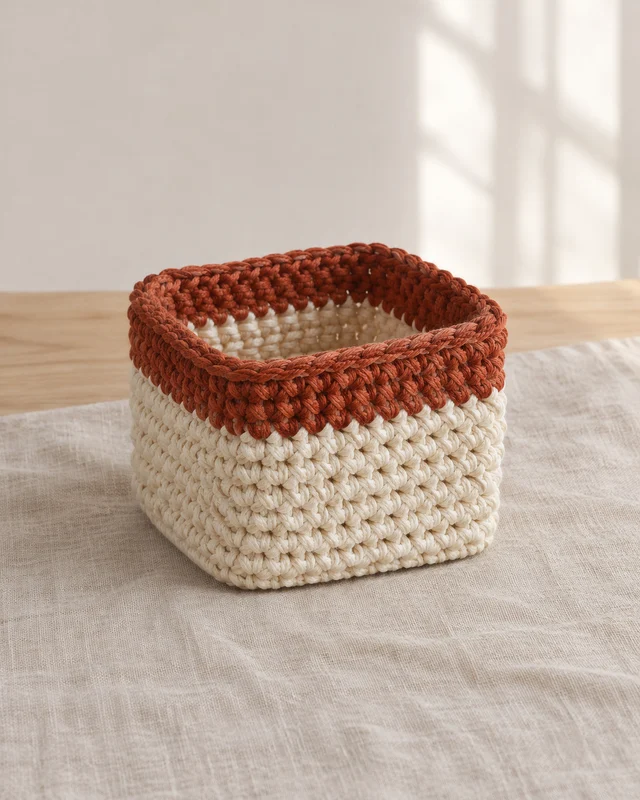
A two-color mini basket gives the remaining upper-band yarn a clear role. Keep enough of the main color to finish the base and lower walls before changing shades. The corner construction should belong to a complete basket pattern. Try the relaxed basket empty on the intended shelf; stretching a tight upper band over an uneven body rarely gives a neat or dependable result.
16. Drawstring gift pouch

A small gift pouch works well when the available yarn can complete the whole body and opening. Plan the tie channel before beginning, especially if a broad fabric tie will replace a yarn cord. Keep the ends short and the contents separately wrapped where appropriate. The recipient should be able to open and close it without pulling directly on a decorative edge or a single loose loop.
17. Removable jar band

A removable jar band can dress a container while leaving the glass responsible for containment. Fit it to a clean, dry, closed jar and make removal straightforward. Do not place this version around a candle, a hot vessel or a jar needing visible warning information. Share the band as decoration, with the container and its actual intended use assessed independently of the crochet exterior.
18. Flat flower patch

A flat flower patch is a way to spend one accent remnant without committing to a large floral project. Keep the petals and center low if the patch will sit against a bag or another handled surface. Finish the detached motif first, then plan its attachment to the actual base. A decorative sample is easier to position accurately than a partly sewn flower with unfinished ends.
19. Leaf applique pair

Two leaves can be more versatile than one large applique because the recipient can choose their spacing. Make the pair in compatible fabric, finish the tips, and keep any attachment thread separate until placement is agreed. A small contrast between sage and ochre can suggest a seasonal palette without extra ornament. Include known care information for both leaves rather than assuming similar-looking yarns behave alike.
20. Geometric bag patch

A geometric patch uses a color boundary as its main feature. Keep the changing edge tidy and make the finished square flat before adding a backing or sewing it to another item. Compare its dimensions with the actual bag panel. Patch corners receive handling, so the attachment needs to support the perimeter rather than depend on a few stitches hidden under an appealing diagonal design.
Use measured fit and display purpose for the remaining lengths
21. Short headband

A short headband needs enough yarn to complete a measured ring and a suitable join. Match the finished circumference and intended stretch to the actual adult wearer rather than choosing a size from a photograph. Make a representative sample through the stripe changes. If the remnants cannot provide consistent fabric and compatible care, use them for a flat accessory instead of forcing a wearable fit.
22. Hair-tie cover

A hair-tie cover uses a small remnant around a separate working elastic. Choose an appropriate complete construction, leaving the elastic responsible for its intended stretch rather than expecting the crochet ruffle to do that job. Check the connection and remove loose ends before gifting. Consider the recipient’s hair accessories and handling habits; decorative bulk can be less useful than a modest, easily managed outline.
23. Cup sleeve

A cup sleeve must fit the specific cool container and remain clear of its lid, rim and any important markings. Measure the actual vessel and finish the crochet edge so it is easy to remove. This idea is decorative: yarn alone does not establish protection from hot contents or a secure carrying grip. Keep those performance needs separate when choosing the complete gift.
24. Pocket tissue sleeve

A tissue sleeve gives a small rectangle a practical opening to organize. Fit it around the packet the recipient actually buys, leaving the dispensing slot usable without dragging the crochet. Make the closure and refilling method clear. A dense exterior can still change dimensions after care, so compare the finished sample with the packet before repeating the same size for several gifts.
25. Mini bunting pennant

One bunting pennant can be a small display gift on its own or the start of a coordinated set. Keep the top edge level and decide how its tabs will attach before finishing the triangle. A single well-made piece is preferable to a long strand assembled from incompatible scraps. Any hanging arrangement still needs appropriate support and placement away from children, pets, heat and moving doors.
26. Joined-square hanging
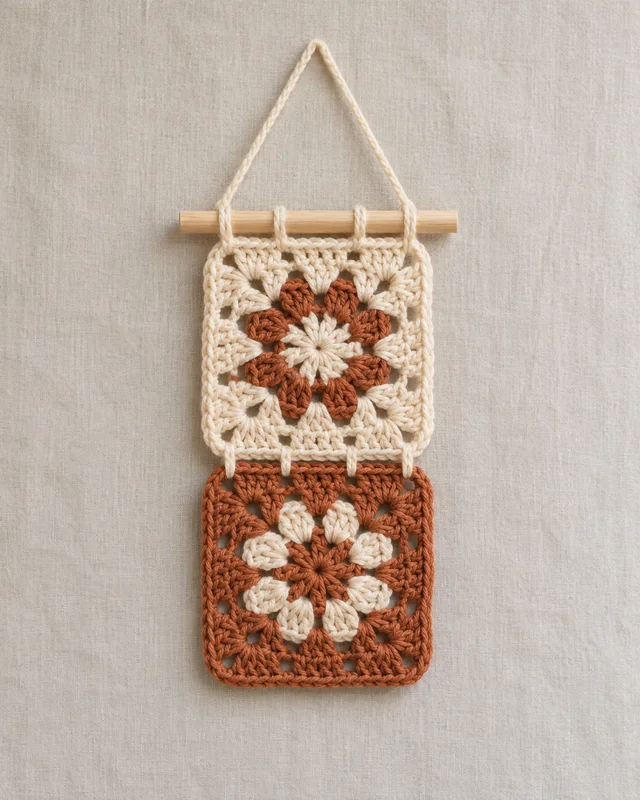
Two joined squares make a compact wall accent when the available remnants cannot support a long garland. Compare the finished units before deciding their order, and use a join that lets them hang without twisting. Support the upper edge across a suitable short dowel. Keep the display light and purpose clear; neither the join nor the mount can be assessed from the front photograph alone.
27. Contrast-edge cloth

A contrast edge can bring several modest remnants into one otherwise plain cloth. Reserve enough border yarn to complete each selected round without an improvised halfway change. The body and border should share compatible care and make a useful fabric for the intended task. A small completed sample can reveal a pulling or waving edge before you spend the last of the available colors.
Send the material information with the object
Keep the known labels and compatible care with the finished gift, including any lining, tie or hardware. Inspect the opening and joins before presentation. The gift and small-project hub connects these modest ideas with other useful scopes; the right scrap project is one that can be completed and understood by its actual recipient.
- 17 Crochet Keychain and Bag Charm Ideas
Find 17 crochet keychain and bag-charm ideas through flat geometry, miniature objects and supported loops, with practical finishing notes for adult accessories.
- 15 Crochet Gifts for Housewarming Parties
Compare 15 crochet housewarming gift ideas by real space, useful fit, cleaning and presentation, with notes on complete constructions and care records.
- How to Estimate Crochet Project Time Before Gifting
Estimate crochet gift time from an ordinary sample, named assembly tasks and real calendar sessions, with clear example arithmetic and no fixed promises.
- How to Choose the Right Crochet Gift for a Recipient
Choose a crochet gift from the recipient’s actual use, dimensions, care and available time, then finish a useful sample and handover record.
- 19 Practical Crochet Gift Ideas for Men
Explore 19 crochet gift ideas for men, including fitted accessories, book sleeves and desk organizers, chosen around real habits rather than stereotypes.
- 23 Small Crochet Gifts for Coworkers and Teachers
Compare 23 small crochet gifts for coworkers and teachers, with useful desk and reading ideas plus practical notes on batch making, care and gift policies.
- 21 Cute Crochet Gifts for Friends
Find 21 crochet gift ideas for friends, from reading accessories to project bags and cushions, with thoughtful ways to match a gift to real preferences.
- 25 Small Crochet Gift Ideas for a Creative Weekend
Browse 25 small crochet gift ideas for a creative weekend, with practical notes on fit, materials, finishing and choosing a project for your available time.
- Crochet Gift Ideas by Recipient, Budget and Time
Plan a crochet gift around the recipient, full materials budget and time available. Compare useful projects, fitting needs, finishing and care before choosing.