In this article
A free weekend is a useful chance to make a thoughtful gift, but it is not a reliable time estimate for every crocheter or pattern. The best choice is often a familiar shape with a clear purpose: a coaster for a regular desk, a sleeve for measured glasses or a small pouch for a known hobby.
These twenty-five ideas help you compare the whole project, including seams, lining, hardware and care. Start with the recipient and choose a complete pattern before buying materials. Use your own pace on a sample to judge what fits the time you have. The gallery offers design directions, so a pictured item does not establish exact instructions, a finished size or a guaranteed completion deadline.
Choose the weekend project before choosing the yarn
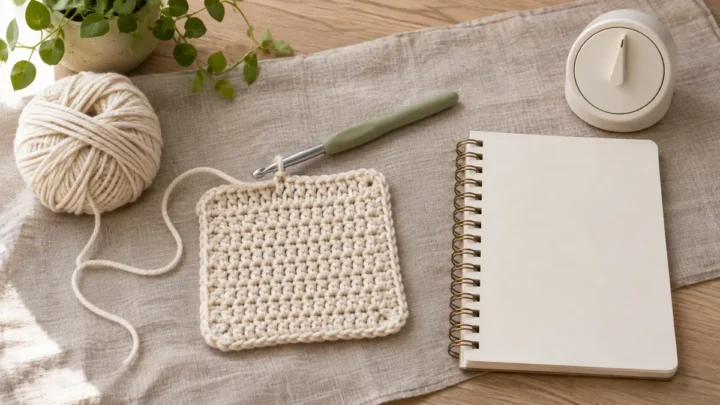
Choose a pattern using skills you already know if the deadline matters. Time one representative section, then include joining, weaving ends, washing or drying where needed and packaging. A small object with a zip can demand more attention than a larger plain rectangle. If you are making a set, finish the first item before multiplying the estimate.
- Use a familiar construction if the gift has a fixed deadline.
- Include a practice zip or seam when that finishing skill is new.
- Reduce the number of pieces before rushing a final join.
1. Mug rug with a cutlery pocket

A mug rug gives a drink a defined place on a desk, and a small pocket adds room for a spoon or wrapped tea sachet. Measure both the usable surface and the pocket before choosing a pattern. Keep the finished fabric flat so the cup sits steadily. The extra pocket seam adds finishing time, so include it when deciding whether the project fits your available weekend.
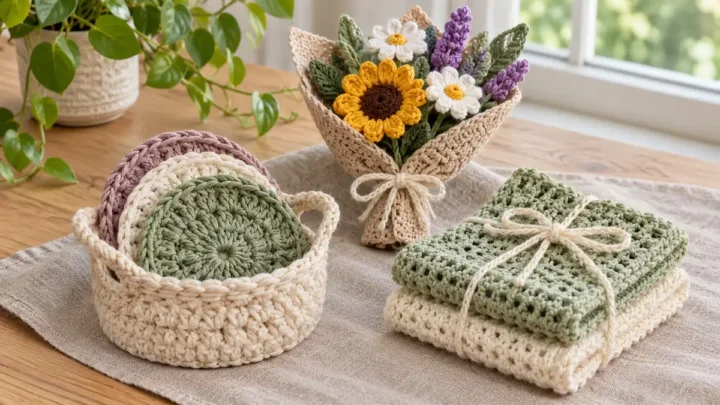
2. Round coaster set

A small coaster set lets you repeat one familiar shape and build a coordinated gift. Finish the first coaster before starting the rest, then check that its edge stays flat after the intended care process. Use the same materials and tension for the set. A tight deadline is easier to judge once you know the time for one complete coaster, including weaving in its ends.
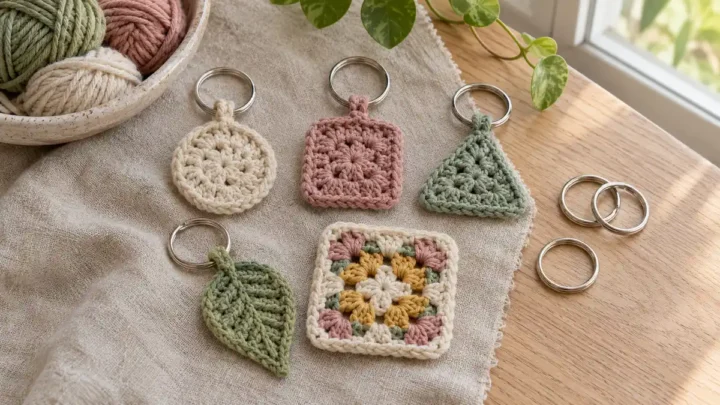
3. Single-loop key fob

A short key fob uses little fabric but depends on the join around its split ring. Choose a complete accessory pattern with an attachment method suited to the actual hardware. Check the width against the ring and keep the inside smooth. The strap is a practical way to identify keys; it should not be presented as a safety tether or a way to carry a heavy load.
4. Flat bookmark with tab

A flat bookmark with a small top tab makes a compact gift for someone whose reading habits you know. Choose fine enough fabric that it does not force the book open, and secure the ends without thick knots. Test the finished thickness in a spare book. The tab should help locate the page without turning into a bulky decoration that presses against the spine.
5. Cotton washcloth pair

A washcloth pair makes a useful gift when the recipient welcomes reusable cloths and can follow their care instructions. Compare the yarn label with the intended washing routine and finish a sample before repeating the texture. Keep the edging flat and avoid a dense ridge where it is not wanted. Two well-finished cloths can be a better deadline choice than a larger unfinished bathroom set.
6. Soap-saver drawstring pouch

A soap pouch combines an open fabric with a simple closure, so measure it around the soap size the recipient actually uses. Follow a pattern intended for this purpose and check the care requirements of both yarn and cord. Allow the pouch to dry fully between uses. If you include soap, keep its original ingredient information rather than treating a handmade cover as a replacement label.
7. Plain ribbed ear warmer

An ear warmer avoids the crown shaping of a hat while still needing a comfortable fit. Measure the intended circumference or use a reliable size option from the pattern. The joining seam should lie neatly and the finished band should stretch as intended without feeling tight. A familiar stitch can make this manageable over a weekend, but fitting and finishing still belong in the schedule.
8. Short button-free cowl

A short cowl gives a plain texture enough space to show without the length of a full scarf. Check the opening and finished height before choosing the yarn. A fabric that looks soft on the ball may feel different around the neck, so handle a sample if possible. Use the pattern’s dimensions and care guidance rather than assuming one small loop will suit every recipient.
9. Book-band pen holder
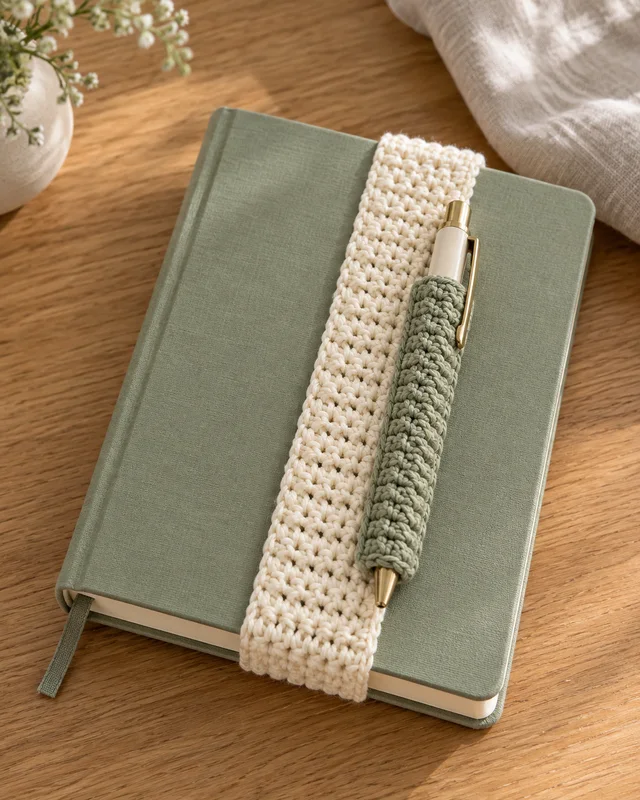
A book-band pen holder suits a notebook user who likes to keep a pen nearby. Measure the actual notebook and pen, including the clip, before selecting or adapting a pattern. The band must hold its place without bending the covers, and the sleeve should allow easy removal. Test both functions after finishing; an attractive flat sample does not show whether the assembled band fits.
10. Mini desk basket

A mini desk basket can gather small everyday objects without requiring a fitted size. Its base and lower corners still need to sit flat, so follow the increase and side-wall transition carefully. Decide what it will hold before choosing the dimensions. A small basket is a useful trial for a new construction, but avoid promising rigidity from a photograph or from yarn thickness alone.
11. Glasses slip sleeve

A glasses sleeve makes a personal gift when you can measure the recipient’s frames in their folded position. Allow for the arms and the thickness of any lining, then check that the opening does not catch. A soft crochet sleeve helps organize glasses but does not provide the impact protection of a rigid case. Keep that distinction clear when deciding how the recipient will use it.
12. Tissue-box cover

A tissue-box cover gives an everyday object a reusable textile outer layer. Check the box dimensions and the position of its opening before choosing the pattern. Make one cover and try replacing the box so the recipient can refill it easily. Keep the slit clear and the lower edge accessible; decorative corners should not interfere with removing tissues or changing the container.
Covers, organizers and small sets to compare
13. Plant-pot outer sleeve

A plant-pot sleeve changes the outside of an existing container without needing to make the yarn handle soil or water directly. Measure the intact pot and keep its drainage route and saucer working normally. Follow the yarn’s care instructions and remove the sleeve when needed for watering or drying. The crochet is a decorative outer layer, not a waterproof pot or a substitute for drainage.
14. Simple zip notions pouch
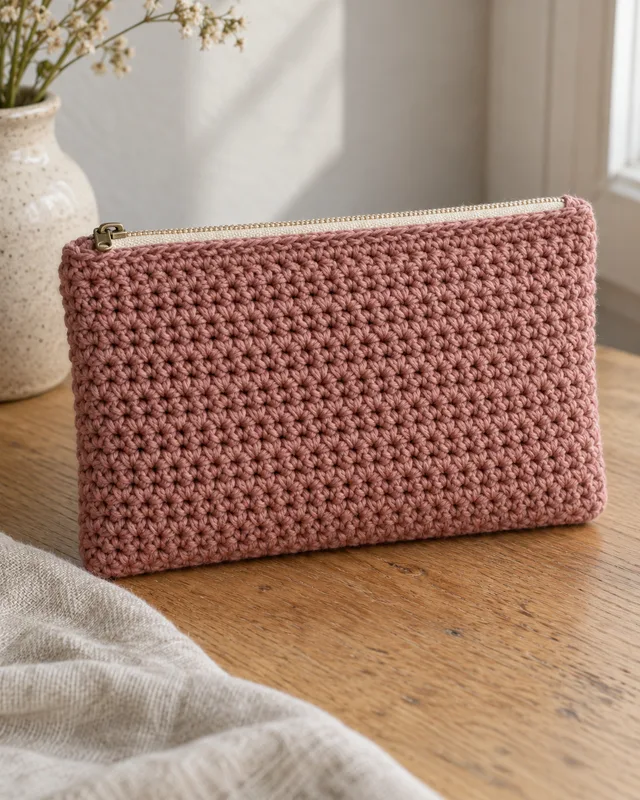
A plain zip pouch makes the opening the main finishing task rather than adding pockets or shaped corners. Choose a zipper that fits the finished crochet panels and install it according to compatible instructions. Fit the lining before closing inaccessible seams. If a zip is new to you, reserve time for a practice seam; the crochet rectangle may be the quickest part of the gift.
15. Cord keeper with slot

A slotted cord keeper uses a small strip of fabric to keep an unplugged cable organized in a bag. Match its length to the actual coil and test the slot without stretching the stitches out of shape. It should release easily and avoid putting a sharp bend into the cable. Remove it before charging or using equipment; its role is storage, not electrical protection.
16. Fold-flat dice tray

A shallow tray gives dice or other small objects a defined place on a table. The base needs to stay flat and the corners need a consistent join. Check the actual size of the intended contents and choose a fabric with an appropriate feel. If you are making it for a particular game, confirm the dimensions with the recipient instead of assuming every tabletop setup is the same.
17. Cup sleeve with joined seam

A joined cup sleeve is a small project whose fit can be checked early. Measure the particular cup rather than relying on a generic circumference, and follow the pattern’s guidance on stretch. Keep it clear of the lid and drinking edge. A crochet sleeve is decorative and tactile; it does not establish heat protection or make a hot container safe to handle.
18. Small gift-card envelope

A gift-card envelope adds a reusable handmade layer around a simple present. Measure the actual card and any paper carrier so the flap closes without stretching. Check any button and loop attachment, keeping the opening easy to use and the edges tidy. Keep the envelope fairly flat if it will be mailed, and check the complete package dimensions before choosing postage.
19. Crochet flower bookmark

A flower bookmark combines a small motif with a long stem that marks the page. Keep the section inside the book thin and secure the join between the flower and stem. This can be a useful small gift if you already know the motif’s stitches. Read the finishing instructions first, since a tiny flower can involve more ends and shaping than a plain rectangular bookmark.
20. Travel jewelry roll

A jewelry roll gives you a reason to plan the inner pockets before closing the outside. Ask what the recipient carries and avoid assuming open crochet will contain tiny earrings without a suitable lining. Fit each pocket and choose a closure that works with the rolled shape. This is a finishing-focused project; allow for sewing and checking rather than judging the time by the outer rectangle alone.
21. Reusable facial round set

A few reusable facial rounds make a compact gift when the recipient prefers washable cloths. Choose a yarn and texture appropriate to their preferences and follow the care label. Finish one sample, wash it as intended and check its shape before repeating the set. Keep any storage pouch easy to open and clean. Do not make skin-care or exfoliation claims from the yarn’s appearance.
22. One-skein scarf strip

A narrow scarf keeps the construction simple but still involves a long repeat. Use the actual pattern yardage rather than assuming any single ball will be enough. Work and measure a sample to judge the drape and estimate your own pace. Fringe-free ends can reduce finishing work, but the chosen dimensions and your available yarn determine whether the project fits a weekend.
23. Hook-and-needle sleeve

A hook sleeve is useful when its length and opening suit the recipient’s actual tools. Measure the widest handle as well as the shaft, and include a lining if the pattern or use calls for one. A soft sleeve is an organizer, not a secure cover for a sharp needle. Keep pointed tools in appropriate cases and make the closure easy to inspect.
24. Reusable wrap band

A reusable wrap band makes the packaging part of the gift without requiring a large item. Measure the box and choose a join or tie that can be opened without cutting the crochet. Keep the fabric clear of any information the recipient needs on the package. It is especially practical when you know the box size in advance and can finish the band before wrapping day.
25. Coordinated coaster and basket

A small basket with two matching coasters creates a coherent set from familiar shapes. Complete one coaster and the basket base before repeating anything, so you can compare the finished scale. The basket can hold the coasters when they are not in use. Count all the joins and yarn ends in the time estimate; a coordinated set still contains several separate finishing tasks.
Keep a time note for the whole gift
| Part of the project | What to record |
|---|---|
| Crochet | Your time for a representative piece or repeat |
| Assembly | Seams, ends, lining and any hardware |
| Ready to give | Care, full drying and packaging |
Check the usable materials you already own. A partial ball can suit a small accent, but check yardage and care compatibility before combining leftovers. Buying one new fitting or lining fabric may affect the budget and timetable more than the yarn itself.
If the deadline arrives first
A pair of well-finished coasters is a more useful gift than a rushed assortment with loose ends. Inspect the actual opening, seams and fit with the intended object. Add the yarn care information and leave enough time for the item to dry fully if you have washed it.
Keep the promise tied to its purpose. A pouch can organize electronics without protecting them from drops, and a cup sleeve does not establish heat resistance. Choose a useful ordinary role rather than adding claims that the materials or construction have not been tested to support.
Start with the recipient, budget and time planner, then select one item whose fit you can check. Compare small workplace thank-you gifts if you need several, or gifts for friends when you want to connect the choice to a particular hobby.
- 17 Crochet Keychain and Bag Charm Ideas
Find 17 crochet keychain and bag-charm ideas through flat geometry, miniature objects and supported loops, with practical finishing notes for adult accessories.
- 15 Crochet Gifts for Housewarming Parties
Compare 15 crochet housewarming gift ideas by real space, useful fit, cleaning and presentation, with notes on complete constructions and care records.
- How to Estimate Crochet Project Time Before Gifting
Estimate crochet gift time from an ordinary sample, named assembly tasks and real calendar sessions, with clear example arithmetic and no fixed promises.
- 27 Scrap-Yarn Crochet Gift Ideas
Explore 27 scrap-yarn crochet gift ideas, with practical ways to sort remnants, reserve finishing yarn and choose a useful small project.
- How to Choose the Right Crochet Gift for a Recipient
Choose a crochet gift from the recipient’s actual use, dimensions, care and available time, then finish a useful sample and handover record.
- 19 Practical Crochet Gift Ideas for Men
Explore 19 crochet gift ideas for men, including fitted accessories, book sleeves and desk organizers, chosen around real habits rather than stereotypes.
- 23 Small Crochet Gifts for Coworkers and Teachers
Compare 23 small crochet gifts for coworkers and teachers, with useful desk and reading ideas plus practical notes on batch making, care and gift policies.
- 21 Cute Crochet Gifts for Friends
Find 21 crochet gift ideas for friends, from reading accessories to project bags and cushions, with thoughtful ways to match a gift to real preferences.
- Crochet Gift Ideas by Recipient, Budget and Time
Plan a crochet gift around the recipient, full materials budget and time available. Compare useful projects, fitting needs, finishing and care before choosing.