In this article
A crochet blanket is easier to plan when you decide how it will be used before choosing a striking stitch. A small lap throw, a decorative sofa blanket and a joined-square keepsake create different questions about dimensions, care and construction. Start with the intended place and person, then choose the kind of fabric and the skills you want to use.
This guide brings those decisions together so you can browse blanket inspiration with a clearer purpose. It separates plain and textured fabrics, rows and motifs, restrained palettes and graphic layouts. It is a route through the blanket topic rather than a complete pattern or a universal yarn calculator. Use a complete pattern for quantities and measurements, and a finished sample to judge the fabric’s feel.
What belongs in Blankets & Throws?
This topic includes project-selection guides, visual idea collections and planning questions for larger pieces of fabric. Some articles focus on how a blanket will look in a room; others explore repeated motifs, colour placement or material decisions. A small decorative piece and an everyday throw may share a stitch but still need different care and dimensional choices.
Keep three roles separate while browsing. A gallery helps you choose a direction, a pattern explains how to construct it, and a sample helps you check what that construction produces in your hands. Choose a resource that matches the decision you need to make. Choose the resource that answers the decision in front of you instead of treating an attractive design as complete instructions.
Choose by purpose and finished size
| Purpose | Start by deciding | Then check |
|---|---|---|
| Lap throw | Who will use it and where it will rest | Weight, coverage and ease of handling. |
| Sofa accent | How it looks draped and folded in the room | Both sides, palette and the direction of the pattern. |
| Larger blanket | Actual coverage and finished dimensions | Gauge, total material and a manageable finishing plan. |
| Joined-square project | Motif size and the planned grid | Compatible edges, joining width and the final border. |
| Small keepsake | Recipient expectations and intended use | Care information, secure finishing and any use-specific requirements. |
Measure the intended space rather than relying on a general size label. A throw that hangs over an armchair may need a different proportion from one folded at the foot of a sofa. Include any border in the finished dimensions and allow for how the fabric behaves after the recommended finishing.
Compare the main construction styles
Rows and simple rectangles
A rectangle can be a useful starting point when you want to repeat a familiar action and watch the edges. Its simplicity depends on the chosen stitch, colour changes and border. A wide plain row still requires consistent counting; a complex surface does not become easy simply because the outer shape has four straight sides.
Growing shapes and diagonal construction
A growing square or corner-to-corner direction changes the way you measure progress. Read how the pattern forms corners, increases and decreases before choosing it. These methods can offer an engaging structure, but you need to understand the setup and final shaping instead of judging difficulty from the finished silhouette.
Motifs and joined panels
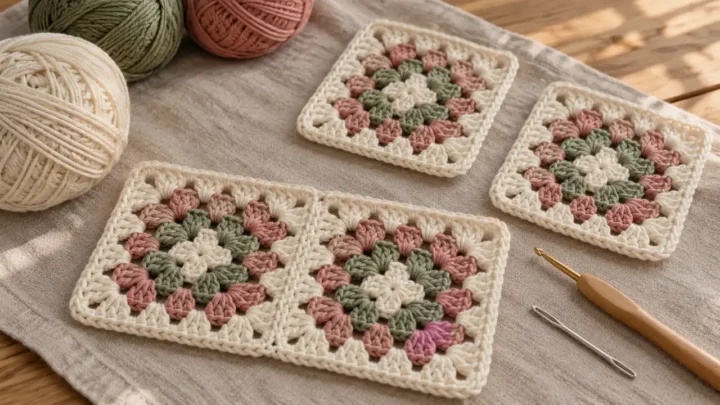
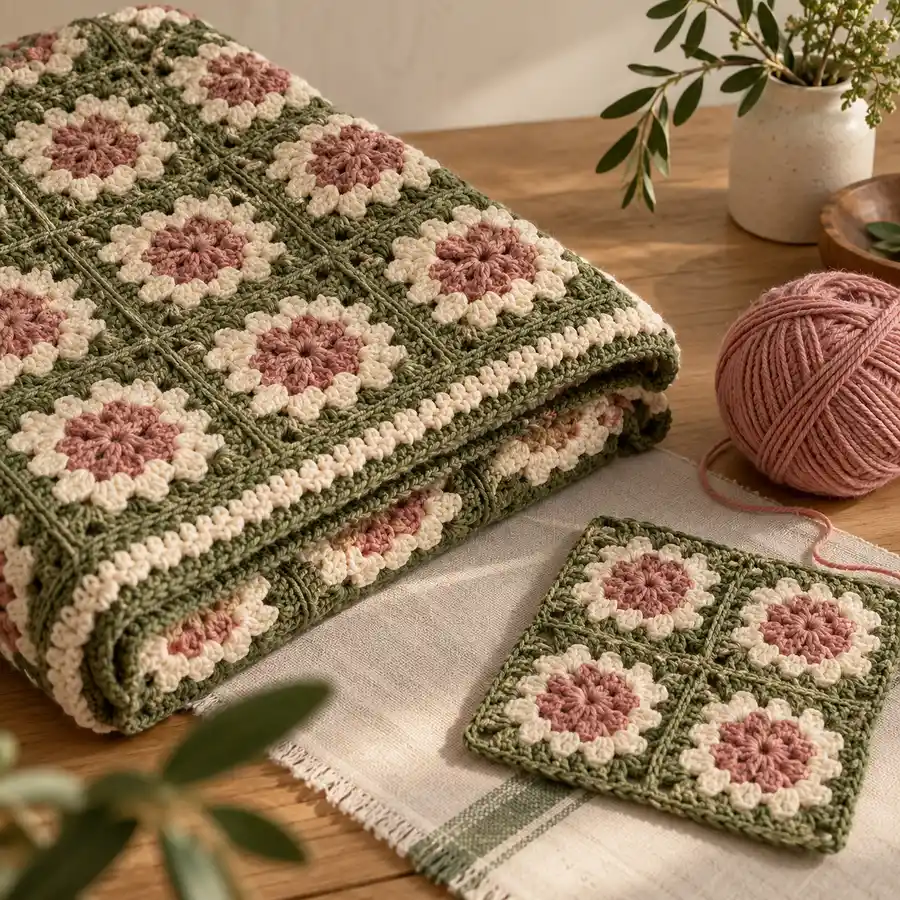
Separate squares or panels break a large project into smaller pieces. The trade-off is assembly: every piece needs compatible dimensions and a clear joining method. Make representative samples and a small joined group before producing all components. The join contributes width, texture and yarn use, so it belongs in the original plan.
Plain, ribbed, raised or open fabric
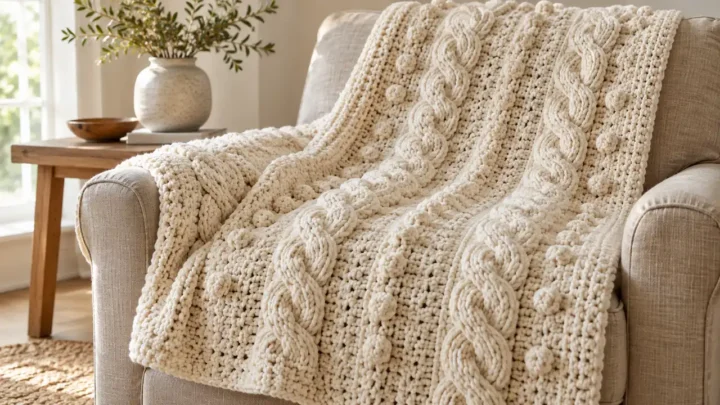
Choose the surface in relation to its use. A strongly raised fabric may feel substantial, while an open one may drape differently and be more vulnerable to snagging. These are questions to investigate through samples, not guaranteed properties inferred from a stitch name. Compare the reverse side as well as the front.
Start here: collections and practical guidance
- Modern living-room blanket ideas for room style, surface and everyday placement.
- Small baby-blanket design directions for keepsake inspiration with explicit limits on infant sleep use.
- Granny-square layout and colour ideas for planning motifs before joining them.
- Blanket yarn, hook and yardage guidance when material planning is the next question.
- How to Join Granny Squares and Finish Blanket Edges
Plan a granny-square blanket join with a four-square practice sample, seam checks, junction guidance and a deliberate foundation for the blanket border.
- 27 Scrap-Yarn Crochet Blanket Ideas for Leftover Yarn
Plan 27 scrap-yarn crochet blanket layouts, from motifs to stripes and panels, with practical checks for compatibility, usable lengths, joins and borders.
- 23 Textured Crochet Blanket Ideas with Raised Stitches
Compare 23 raised-texture crochet blanket ideas, from ribs and waffles to cables and motifs, with useful checks for weight, reverse sides and joins.
- 15 Striped Crochet Blanket Color Combinations
Explore 15 striped crochet blanket palettes with clear color roles, contrast and stripe-width ideas, plus a practical way to test a repeat before starting.
- 17 Chunky Crochet Throw Ideas for Cozy Bedrooms
Explore 17 chunky crochet throw ideas for a cozy bedroom, from ribbed bed-end accents to patchwork blankets, with practical notes on weight and finishing.
- How to Choose Blanket Yarn, Hook Size and Yardage
Choose blanket yarn and a hook using your pattern and a finished swatch. Learn a practical way to estimate yardage, borders and the number of balls to buy.
- 25 Modern Crochet Blanket Ideas for Living Rooms
For restrained pattern, compare the quiet grid and windowpane direction. For bold shape, shortlist the offset blocks. For tactile depth, investigate a ribbed or waffle-style surface.
- 21 Crochet Baby Blanket Ideas for Beginners
For a first rectangular project, compare the plain keepsake and broad bands. For a joining lesson, look at the four-panel direction. Save diagonal construction until you can follow its shaping.
- 19 Granny Square Blanket Layout and Color Ideas
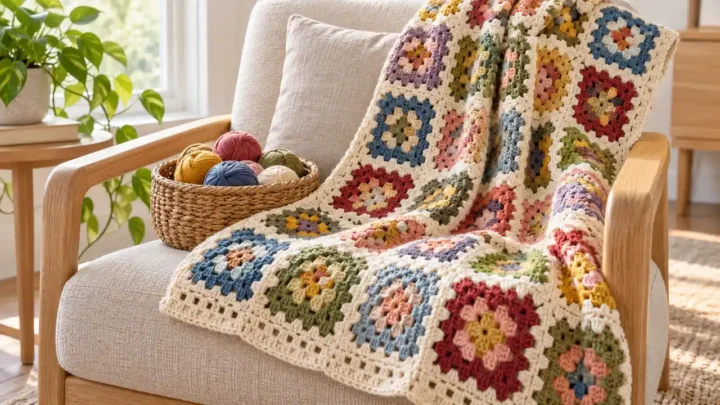
For a first layout, choose an equal straight grid. For a strong colour plan, compare diagonal bands and the centre diamond. For more assembly, examine the mixed-size direction.
If you are still learning to keep a rectangular sample even, use the beginner learning route first. If texture is the main decision, compare the essential stitch families before choosing a whole blanket around a surface you have not yet sampled.
Yarn, hooks and a material plan
Begin with the pattern’s fibre, thickness, gauge and care requirements. Consider whether the intended user can follow that care routine. A heavy texture or a large area can use substantial material, so keep the initial practice stage separate from buying a full project quantity. Record the label information and the hook size in millimetres.
The Craft Yarn Council’s yarn-weight guide provides a shared reference for thickness categories, not a universal quantity for every blanket. The actual pattern and a finished sample remain necessary for dimensions and material decisions.
- Choose the use and measure the finished area you want.
- Shortlist a complete pattern with construction you can follow.
- Make the recommended sample, keeping the yarn label and hook information.
- Finish and measure it as the pattern instructs.
- Calculate or confirm project quantities using that pattern, allowing for joins, edges and any changes.
- Keep a record of the palette, repeat and progress so you can resume accurately.
Questions and common blanket-planning mistakes
Is a small blanket automatically a beginner project?
No. A small piece can still involve complicated texture, shaping or many joins. Judge the complete skill list. A clear rectangle with one familiar stitch may be more manageable than a tiny motif project with unfamiliar assembly.
Can I substitute a favourite stitch in any blanket?
A different stitch changes the fabric and can change its dimensions, material use and border requirements. Choose a pattern written for the surface you want, or treat the substitution as a new design that needs careful sampling and recalculation.
How much yarn will I need?
There is no responsible single quantity for every blanket. Size, fibre, yarn thickness, stitch, gauge, joins and borders all contribute. Start with a complete pattern and its stated quantities, then account for any changes before buying the full amount.
Can an inspiration image confirm baby-blanket safety?
No. The US Consumer Product Safety Commission advises keeping blankets out of infant sleep spaces. A pretty crochet object does not change that advice or prove suitability for another use. Keep the intended use and real material information separate from the image.
Why does the edge ripple or pull inward?
Inspect the count and the relationship between the centre, border and corners in the actual pattern. Adding an edging is not simply a matter of fitting any repeat onto any perimeter. Test a small section and use a reliable lesson before extending a problem around the whole blanket.
Choose your next blanket decision
Choose a plain or textured direction, then decide whether you prefer continuous rows or separate pieces. Use the Blankets & Throws archive for published resources, or return to Yarn, Hooks & Supplies when materials are the obstacle. A measured sample and a complete plan make the next step clearer than another saved image alone.